

Why Does a Reliable Medium Filter Make the Difference in Air Quality Control?
2026-02-26
When I first began working closely with industrial air purification systems, I quickly realized how underestimated a Medium Filter can be. Over time, as Jiangsu Grandfort Purification Equipment Co., Ltd. gradually introduced more advanced filtration technologies into practical production environments, I saw firsthand how a well-designed Medium Filter bridges the gap between primary filtration and high-efficiency systems. It is not just a middle layer. It is a performance stabilizer, a cost controller, and often the quiet protector of downstream equipment.
In this article, I want to share my professional perspective on how choosing the right Medium Filter can solve real operational pain points in commercial and industrial settings, and why this component deserves far more strategic attention than it usually receives.
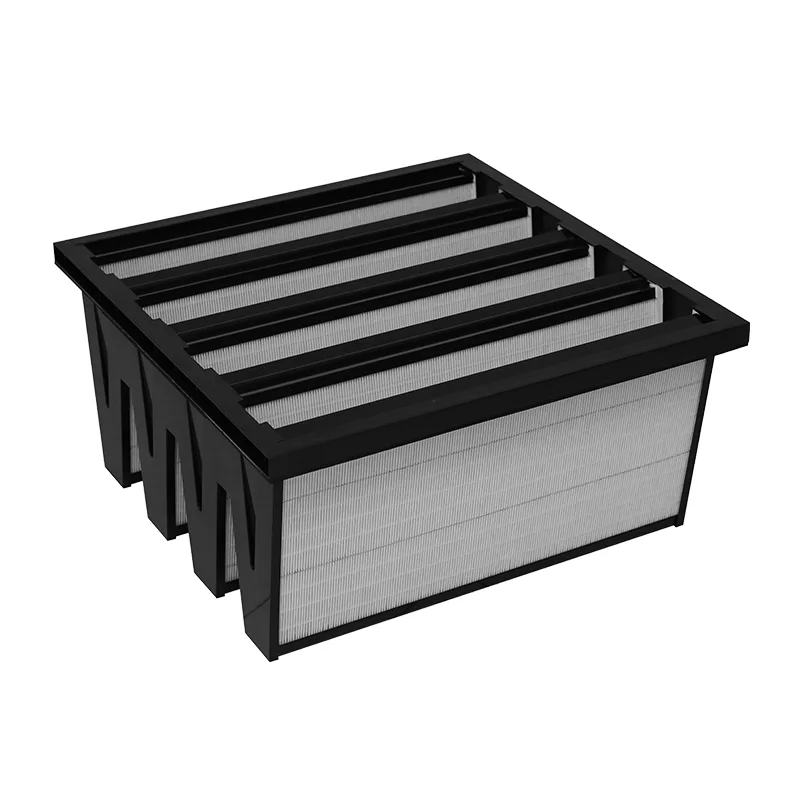
Are You Losing Efficiency Because of Inadequate Intermediate Filtration?
Many facility managers tell me the same story. Their HVAC systems consume too much energy. HEPA filters clog faster than expected. Maintenance cycles are unpredictable. When I audit these systems, the issue often lies in the intermediate stage. A poorly specified Medium Filter allows excessive fine particles to reach final filters, reducing overall system efficiency.
I have seen production lines in pharmaceutical workshops, electronics factories, and food processing plants where dust loads fluctuate heavily. Without a stable Medium Filter, downstream filters face uneven pressure drops and shortened service life.
- Frequent HEPA replacement
- Rising energy consumption
- Unstable airflow balance
- Unexpected shutdowns for maintenance
- Higher total lifecycle cost
Once we optimized the intermediate filtration stage, these problems reduced significantly.
How Does a Medium Filter Protect Your High-Efficiency System?
I often describe the Medium Filter as the strategic buffer of a filtration system. It captures medium-sized particulates that would otherwise overload fine filters. This buffering effect improves both filtration stability and cost control.
From a technical perspective, a properly engineered Medium Filter offers:
- Balanced filtration efficiency in the MERV 8–14 range
- Low initial pressure drop
- High dust holding capacity
- Uniform airflow distribution
- Structural stability under varying humidity
In my experience, the dust holding capacity is particularly important. A filter that clogs too quickly not only raises resistance but also disturbs airflow dynamics throughout the ventilation network.
What Performance Indicators Should You Compare Before Buying?
Whenever I evaluate filtration solutions for clients, I rely on measurable indicators rather than marketing claims. Here is a simplified comparison framework that I typically use when selecting a Medium Filter.
| Performance Factor | Why It Matters | Operational Impact |
|---|---|---|
| Filtration Efficiency | Determines particle capture rate | Protects downstream HEPA filters |
| Initial Pressure Drop | Affects system airflow | Controls energy consumption |
| Dust Holding Capacity | Indicates lifespan | Reduces replacement frequency |
| Frame Material | Ensures structural durability | Prevents air leakage |
| Media Quality | Defines consistency of filtration | Maintains stable indoor air quality |
When these parameters are properly balanced, the Medium Filter becomes an efficiency enhancer rather than a consumable burden.
Why Does System Compatibility Matter More Than Price?
I have encountered buyers who focus only on unit price. However, filtration performance cannot be isolated from the system environment. A cheaper filter with inconsistent media density may initially save money, but it often increases total cost over time.
Compatibility considerations include:
- Airflow velocity of the ventilation system
- Operating humidity and temperature
- Installation configuration such as bag or panel structure
- Required cleanliness standards
- Maintenance schedule capacity
A well-matched Medium Filter integrates seamlessly into the airflow design and prevents bypass leakage. In my projects, system compatibility consistently proves more valuable than minimal upfront savings.
Can the Right Medium Filter Improve Energy Efficiency?
Energy efficiency is a growing concern for manufacturing and commercial facilities worldwide. Air handling units consume substantial electricity. Even a slight increase in pressure drop can translate into measurable operating costs.
By selecting a Medium Filter with optimized media structure and stable airflow resistance, I have helped facilities reduce fan energy consumption while extending service intervals. Over a 12-month period, these improvements often outweigh the initial filter investment.
Energy efficiency benefits include:
- Reduced fan load
- More consistent airflow balance
- Lower carbon footprint
- Improved equipment longevity
These operational gains are particularly important in industries with 24-hour continuous production.
How Does Quality Manufacturing Influence Filtration Reliability?
From my perspective, consistent manufacturing standards determine whether a Medium Filter performs as expected. Uniform pleating, secure frame sealing, and durable synthetic or fiberglass media ensure that filtration performance does not degrade prematurely.
I have visited production facilities where quality control testing includes airflow simulation, pressure resistance checks, and dimensional accuracy verification. These procedures significantly reduce the risk of leakage and structural deformation during operation.
Reliable production practices translate into predictable on-site performance, which is what most engineers ultimately require.
Are You Ready to Upgrade Your Filtration Strategy?
If your facility experiences high filter replacement frequency, rising energy costs, or inconsistent indoor air quality, it may be time to reassess your intermediate filtration stage. In my professional experience, upgrading the Medium Filter is often one of the most practical and cost-effective improvements available.
I encourage you to evaluate your current system and explore how a properly engineered Medium Filter can stabilize performance and reduce long-term expenses. If you would like technical guidance, product specifications, or customized recommendations tailored to your operating conditions, please contact us today. Our team is ready to discuss your project requirements and help you select the right filtration solution for your facility.