

What Is the Difference Between DIN9 and DIN13 Welding Helmet Settings?
2026-03-25
Why Do DIN9 and DIN13 Settings Matter in Welding Applications?
In professional welding environments, selecting the correct shade level is essential for both safety and productivity. The DIN scale is widely used across Europe and many international markets to define the darkness level of Welding Helmets lenses. DIN9 and DIN13 represent two commonly used shade ranges, each designed for different welding intensities and applications.
DIN9 is typically suitable for low to medium amperage tasks such as TIG welding and light MIG operations. In contrast, DIN13 is designed for high-intensity arc welding where brightness levels are significantly higher. Choosing the wrong setting can result in eye strain, reduced visibility, and long-term vision damage.
At Taizhou Huawo Industry and Technology Co., Ltd., our factory emphasizes correct shade selection as part of a complete safety solution. Our engineering approach ensures that our products align with real working conditions, allowing operators to maintain visibility while protecting against harmful arc radiation.
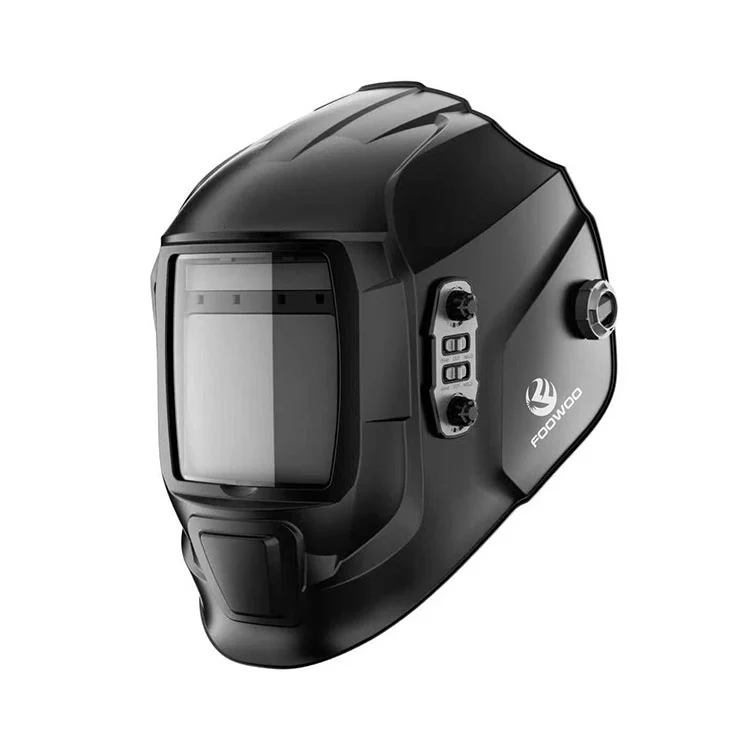
How Do DIN9 and DIN13 Differ in Real Welding Conditions?
The primary difference between DIN9 and DIN13 lies in their light filtration capability. DIN9 allows more visible light to pass through, making it suitable for precision work where visibility of the weld pool is critical. DIN13 provides maximum protection against intense arcs, often used in heavy industrial welding.
In field applications, welders often adjust between these settings depending on material thickness and current levels. For example, sheet metal fabrication may require DIN9, while structural steel welding often demands DIN13.
| Parameter | DIN9 | DIN13 |
| Shade Level | Light | Very Dark |
| Typical Amperage | 60A – 160A | 250A – 500A |
| Application | TIG, Light MIG | Arc, Heavy MIG |
| Visibility | High clarity | Reduced brightness |
| Eye Protection | Moderate | Maximum |
Our factory designs Welding Helmets with adjustable shade ranges, allowing seamless transitions between DIN9 and DIN13. This flexibility is especially important in workshops handling multiple welding processes.
What Technical Features Should Be Considered When Choosing Welding Helmets?
Modern Welding Helmets are more than just protective gear. They integrate advanced optical filters, sensors, and ergonomic designs to enhance user experience and safety. When selecting equipment, professionals should evaluate several key parameters.
| Feature | Specification | Benefit |
| Viewing Area | 100 mm x 60 mm | Improves weld visibility |
| Response Time | 1/25000 sec | Instant eye protection |
| Shade Range | DIN9 – DIN13 | Versatile applications |
| Power Supply | Solar + Lithium Battery | Extended service life |
| Sensor Count | 2 – 4 Arc Sensors | Reliable arc detection |
Taizhou Huawo Industry and Technology Co., Ltd. integrates these features into our product lines to ensure consistent performance in demanding environments. Our factory focuses on durability, optical clarity, and compliance with international safety standards.
How Do Harsh Working Environments Affect Welding Helmet Performance?
In many industrial settings, welders operate in environments exposed to dust, heat, and corrosive media. These conditions can degrade equipment performance over time. While much attention is given to lens technology, sealing components and material durability are equally important.
In environments involving corrosive substances, standard sealing materials may fail prematurely. Advanced gasket solutions made from expanded PTFE or graphite-reinforced composites provide enhanced chemical resistance and long-term stability. These materials help maintain internal protection for Welding Helmets, ensuring consistent performance.
Our factory applies strict quality control to ensure that sealing systems maintain integrity under pressure and temperature variations. Proper assembly, including controlled bolt load and surface finishing, contributes to long-lasting performance and prevents contamination inside sensitive components.
FOOWOO continuously improves product design to address these challenges, helping users maintain safety and operational efficiency even in harsh industrial environments.
How Can Proper Usage and Adjustment Improve Welding Safety and Efficiency?
Correct usage of Welding Helmets plays a critical role in reducing fatigue and improving welding quality. Operators should always match the shade level to the welding current and material type. Using DIN13 for low-intensity work can reduce visibility, while using DIN9 for high-intensity arcs can expose eyes to excessive brightness.
Our factory recommends regular inspection of lens clarity, sensor responsiveness, and battery performance. These checks ensure that the helmet reacts instantly to arc ignition, providing uninterrupted protection.
Training is another important factor. Experienced welders understand how to adjust shade levels dynamically, improving both precision and safety. By combining high-quality equipment with proper usage practices, our clients achieve better weld consistency and reduced rework rates.
FAQ
What is the main difference between DIN9 and DIN13 in welding helmets?
DIN9 provides lighter shading suitable for low to medium amperage welding, offering better visibility of the weld pool. DIN13 is significantly darker and designed for high-amperage welding, providing maximum protection against intense arc light and radiation.
Can I use DIN9 for all welding applications?
DIN9 is not suitable for high-intensity welding tasks. Using it in such conditions may expose the eyes to harmful light levels. It is best used for TIG or light MIG welding where lower amperage is involved.
How do I choose the right welding helmet shade setting?
The correct shade depends on welding current, material type, and working environment. Adjustable helmets with DIN9 to DIN13 range provide flexibility, allowing users to adapt to different tasks while maintaining safety and visibility.
Conclusion
Understanding the difference between DIN9 and DIN13 is essential for ensuring both safety and performance in welding operations. Each setting serves a specific purpose, and selecting the right one can significantly reduce eye strain, improve weld accuracy, and enhance overall efficiency.
Our factory is committed to delivering reliable solutions tailored to real industrial needs. If you are looking for high-performance welding protection equipment, contact our team today to explore suitable options and receive professional guidance for your applications.