

Are Prototype Moulds the Fastest Way to De-Risk Your New Product Before Mass Production?
2025-12-26
When I’m working on a new part that needs real-world proof fast, I often lean on Moldor to bridge the gap between “nice CAD” and “reliable production.” The reason is simple: Prototype Moulds let me validate fit, function, assembly, and manufacturability with molded parts—before I commit serious time and budget to a full production tool.
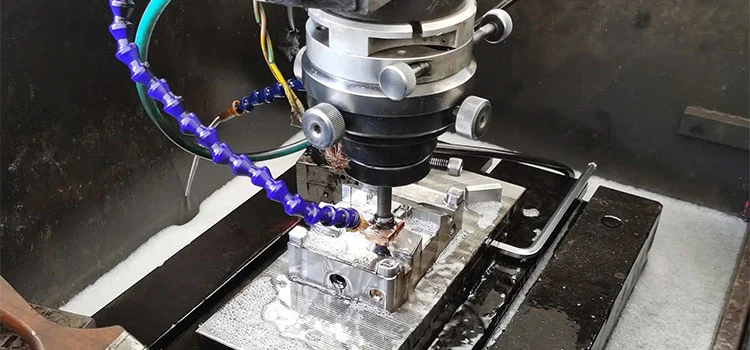
Why do Prototype Moulds matter when a drawing still looks perfect?
Because drawings don’t snap together, seals don’t leak on paper, and plastic doesn’t warp in a PDF. The pain usually shows up late: tolerance stack-ups, sink marks, weak ribs, sticky eject, gate blush, or parts that pass inspection but fail in assembly. With Prototype Moulds, I can run a controlled, practical test loop early—when changes are still cheap.
- Faster learning cycles when design revisions are expected
- Real molded parts for functional and assembly testing
- Earlier DFM feedback to avoid redesigning the production tool
- Cost control before investing in long-life tooling
Which headaches do Prototype Moulds solve for buyers and engineers?
If you’re sourcing parts, you’re probably juggling deadlines, budget pressure, and the fear of “one hidden mistake” that wrecks a launch. I use Prototype Moulds to address the most common buyer pains:
- Uncertain design that needs physical proof
- Unclear surface expectations until you see real plastic
- Assembly risks like clips, snaps, hinges, seals, and boss strength
- Material behavior doubts like shrink, warp, brittleness, or flow marks
- Quote surprises because the part is harder to mold than it looks
In short, Prototype Moulds help me replace assumptions with evidence—and that’s what keeps projects from turning into expensive arguments.
How do Prototype Moulds compare with production molds in a decision you can defend?
I like to make this decision with a simple comparison: expected quantity, timeline risk, and how likely the design is to change. Here’s the way I explain it to teammates and stakeholders.
| Decision Factor | Prototype Moulds | Production Molds |
|---|---|---|
| Best use case | Design validation, rapid iteration, pilot runs | Stable design, long-term mass production |
| Tooling objective | Learn fast and reduce uncertainty | Maximize durability, consistency, and cycle efficiency |
| Lead time expectations | Typically shorter for quicker feedback | Typically longer due to higher precision and robustness needs |
| Cost profile | Lower initial investment, optimized for speed | Higher investment, optimized for long life and output |
| Design change tolerance | High, built for updates and iteration | Lower, changes can be disruptive and costly |
| Part goals | Functional evaluation and assembly validation | Final appearance, tight tolerances, stable quality at scale |
When do I personally choose Prototype Moulds instead of 3D printing or CNC?
3D printing and CNC are great, but they don’t always represent injection-molded reality. I choose Prototype Moulds when the process itself is part of the test—especially for snap fits, living hinges, thin-wall flow behavior, cosmetic requirements, and repeatability.
- If molding behavior matters, I want molded parts, not “similar-looking” parts
- If I need a small batch for pilot builds or early customer feedback
- If tolerances are sensitive, I want to test shrink and assembly fit
- If the design may change, I want to learn early and adjust confidently
What information makes a Prototype Moulds quote accurate instead of optimistic?
If you want a quote that holds up, I recommend treating it like a technical handoff, not a casual inquiry. When I ask for Prototype Moulds, I prepare details that prevent back-and-forth and pricing surprises.
- 3D files plus critical dimensions and tolerance notes
- Material choice or acceptable alternatives for evaluation
- Target quantity for the prototype run and any pilot builds
- Surface expectations like texture, gloss, or “must-hide” cosmetic areas
- Functional requirements including load, snap retention, sealing, or assembly constraints
- Timeline reality including your revision window and approval speed
With that input, I can usually get a clear recommendation on whether Prototype Moulds are the right move—or whether a different approach will hit my goals faster.
How do I keep Prototype Moulds from turning into a hidden cost trap?
The trap isn’t the tooling—it’s unclear expectations. I avoid wasted cycles by aligning upfront on what “success” means for the prototype stage.
- Define the test plan before cutting steel: what must be proven in the prototype run?
- Prioritize what matters: function-first, cosmetics-second unless aesthetics are the requirement
- Lock a change process: how many revisions are likely and how they’ll be approved
- Ask for DFM feedback early: gate position, draft, wall thickness, ribs, and ejection strategy
Used correctly, Prototype Moulds aren’t an extra cost—they’re the cheapest insurance policy you can buy before production tooling.
Ready to validate your part with Prototype Moulds and move faster with less risk?
If you’re trying to shorten development time, reduce redesign pain, or prove your concept with real molded parts, I’d take the next step now. Share your drawings or 3D model and your target quantity, and we can map the most practical tooling approach for your project. Contact us to discuss your timeline and request a quote—if you’re ready, contact us today and I’ll help you turn uncertainty into a clear manufacturing plan.