

Yuchai Generator Sets: The Professional Choice for Reliable Backup Power
2026-05-10
Power outages don't just stall productivity—they can cripple operations when you least expect it. That's why seasoned professionals turn to Yuchai generator sets, offered by Hichai Power, as their frontline defense against downtime. But what elevates these units beyond a mere backup plan? It's the fusion of rugged design, fuel efficiency, and rapid load response that keeps critical systems humming. Stick around as we explore why Yuchai generators aren't just an option—they're the benchmark for reliable standby power.
Engineered to Outlast the Unexpected
It’s easy to promise reliability, but our approach goes deeper—we build for the moments that aren’t part of the plan. Every component is chosen and tested to handle extreme temperature shifts, sudden impacts, and prolonged exposure to moisture. The result is a device that doesn’t just survive the unexpected; it keeps performing as if nothing happened.
From reinforced seals to shock-absorbent internal architecture, we’ve packed decades of field-testing insights into a design that stays one step ahead. Rain, dust, and accidental drops are no match for the protective layers that shield critical electronics. Even when you push past recommended limits, the system adapts, redistributing stress to prevent lasting damage.
We’ve all faced that moment when equipment fails at the worst possible time. That’s why our engineering philosophy refuses to cut corners. Instead of relying on a single safeguard, we layer multiple defenses—redundant circuits, corrosion-resistant materials, and smart diagnostics that alert you before small issues grow. It’s not just durability; it’s an unspoken guarantee that you can stop worrying about what might go wrong.
Where Continuous Operation Meets Quiet Confidence
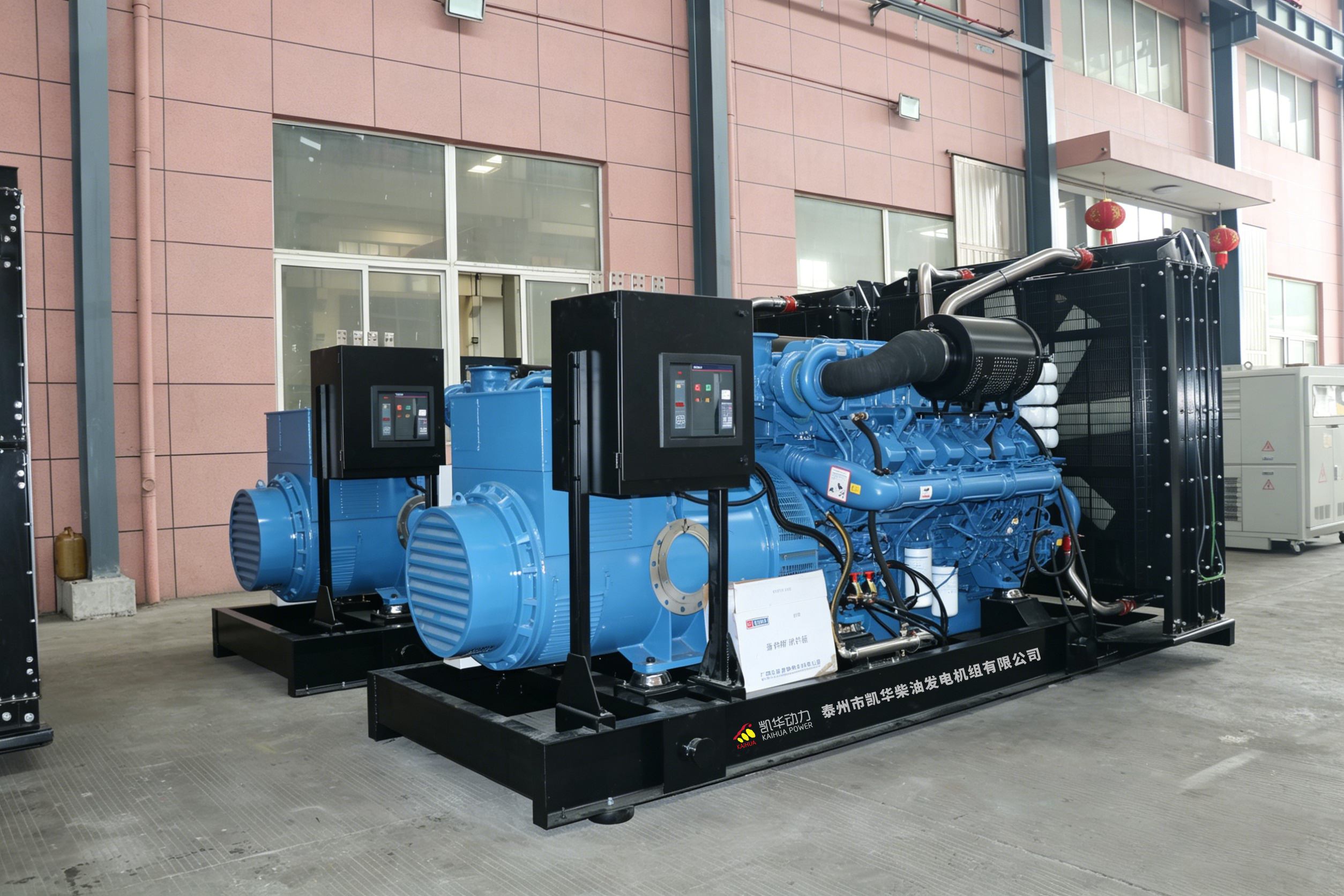
In industries where silence is golden and uninterrupted power is non-negotiable, our systems deliver both without compromise. The low hum of our engines barely registers, yet the energy flows with a steadiness that lets you focus on what matters—no distractions, no doubts.
This isn't just about decibels; it's about reliability you can feel. Every component is engineered to run hour after hour without skipping a beat, wrapped in a design that absorbs vibration and sound. The result? A presence that's felt only in the confidence of a backup that never backs down.
Tailored Power Strategies for Modern Demands
The old one-size-fits-all approach to energy no longer cuts it. Businesses today face fluctuating loads, sustainability targets, and cost pressures that generic plans simply can’t address. A tailored strategy starts with a deep look at your actual usage patterns—peak demands, idle waste, and seasonal shifts—to shape a plan that fits like a glove.
Instead of reacting to bills after the fact, you can shift usage to times when rates are lower, tap into on-site generation or storage, and build in resilience against grid disruptions. This isn’t about buying more power; it’s about aligning every kilowatt-hour with how you actually operate, turning energy from a fixed overhead into a flexible asset.
The real advantage comes when your energy approach evolves alongside your business. As you add new equipment, expand facilities, or set bolder climate goals, the strategy adjusts automatically. That means your power setup actively supports growth rather than holding it back, giving you a quiet but powerful edge in a fast-changing landscape.
From Factory Floors to Remote Outposts
The shift from centralized manufacturing hubs to far-flung operational sites has redefined how industries think about logistics and infrastructure. On the factory floor, precision and repetition once reigned supreme, but the same mindset falls apart when applied to a remote outpost where supplies are sporadic and conditions are unpredictable. Companies have learned that the tools and processes that streamline a production line can become liabilities when faced with the isolation of a desert station or an arctic research base.
Adaptability becomes the central currency. In the factory, a broken machine pauses a line; at an outpost, it might mean a weeks-long wait for a replacement part. This reality forces a different kind of planning—one that emphasizes modular, repairable components and local improvisation. The most successful operations are those that empower workers on-site with decision-making autonomy, trading the efficiency of a controlled environment for the resilience needed to keep things running when the nearest supply depot is hundreds of miles away.
Beyond the tactical adjustments, there’s a cultural shift. The factory floor thrives on uniformity, measuring success by output per hour. Remote outposts measure it by continuity of operations against the odds. This gap has given rise to hybrid roles—engineers who double as logistics coordinators, managers who handle both personnel and emergency repairs—blurring the line between technical skill and survival instinct. Ultimately, the journey from the conveyor belt to the outpost shelf has reshaped not just supply chains, but the very definition of industrial reliability.
A Legacy of Excellence in Energy Solutions
From pioneering offshore projects to optimizing onshore operations, our team has consistently delivered energy solutions that balance innovation with reliability. Each initiative draws on decades of hands-on experience, ensuring that complex challenges are met with practical, future-ready strategies.
What truly sets us apart is a relentless commitment to precision engineering and environmental stewardship. We don’t just deploy technology—we refine it through continuous collaboration with field experts and stakeholders, crafting systems that perform under pressure while respecting ecological boundaries.
This legacy isn’t defined by accolades but by the trust earned across generations of clients. Whether streamlining production or integrating renewables, our approach remains grounded in integrity, adaptability, and a deep understanding of the evolving energy landscape.
Real-World Resilience Across Industries
From manufacturing floors to digital storefronts, the ability to bounce back from disruptions varies dramatically across sectors. A decade ago, resilience meant having backup power and a few alternative suppliers. Today it involves real-time risk sensing, diversified sourcing networks, and operational flexibility that can pivot within hours. While automotive companies grapple with semiconductor shortages by redesigning control units on the fly, healthcare systems are turning elective surgery cancellations into accelerated training cycles for staff. No two industries share the same threat profile, but they all converge on one insight: static contingency plans are no longer enough.
Consider how the energy sector has quietly reinvented its approach to physical and cyber threats. After a wave of ransomware attacks disabled critical pipeline operations, operators didn't just add firewalls. They rewired their entire industrial control systems to allow manual overrides that isolate compromised segments without shutting down entire networks. In parallel, extreme weather events have forced utilities to rethink grid design—embedding distributed storage and microgrids that can disconnect from the main system and keep community essentials running. The shift isn't about preventing every failure, but about containing damage so a localized incident never cascades into a regional blackout.
Retail and logistics reveal a different facet of resilience: the human one. When a major shipping route was blocked for weeks, companies that had already cross-trained warehouse staff to double as last-mile drivers regained delivery speeds faster than those relying on gig-economy platforms. But beyond tactical moves, the real staying power came from transparent communication with customers. Brands that openly admitted delays and offered flexible alternatives—like pickup-point rerouting—built trust that outlasted the crisis. Across industries, resilience is increasingly measured not just by uptime, but by the quality of relationships maintained when uptime is impossible.
FAQ
Yuchai generators are engineered to support a wide range of settings—hospitals needing uninterrupted power for critical equipment, data centers that can't afford downtime, agricultural operations with remote power demands, and construction sites where durability under rough conditions is a must. They're also commonly found in hotels, retail centers, and manufacturing plants where a sudden power outage would disrupt operations.
Reliability comes from a combination of robust diesel engines, rigorous factory testing, and features like auto-start capability. The engines are built with high-grade components to withstand continuous operation, and many models include remote monitoring so you can keep an eye on performance even when you're not on-site.
Absolutely. Yuchai integrates advanced fuel injection systems and engine management technology that optimize combustion, which translates to lower fuel consumption per kilowatt-hour. This not only keeps running costs down but also extends the time between refueling during long outages.
Maintenance is designed to be straightforward. Routine checks include oil and filter changes roughly every 250 to 500 operating hours, coolant level inspections, and periodic testing under load. Yuchai provides clear service intervals in the manual, and authorized dealers can set up a schedule that matches your usage patterns.
Yes, they are equipped with weather-resistant enclosures and engine heaters for cold climates, as well as high-ambient cooling packages for hot environments. Whether it's a freezing winter or a scorching desert, these generators are tested to start and run reliably.
Definitely. You can configure the enclosure type, control panel options, exhaust systems, and even integrate with existing building management systems. If you need a containerized solution or a trailer-mounted unit, Yuchai can accommodate that.
Many models come with sound-attenuated enclosures that reduce operating noise to levels suitable for urban settings. Depending on the series, noise ratings can be as low as 65 dB(A) at 7 meters, making them a neighbor-friendly choice without sacrificing power output.
Yuchai has an extensive global network of service centers and parts depots. Support includes commissioning assistance, warranty coverage that typically ranges from one to two years, and optional extended service contracts. Response times are prioritized to get your backup power back online quickly if a problem arises.
Conclusion
Yuchai generator sets are built to handle the unexpected with rugged engineering that goes beyond typical backup solutions. Each unit is designed for continuous operation, delivering steady power with remarkably low noise levels, ensuring comfort even in noise-sensitive environments. Rather than a one-size-fits-all approach, Yuchai offers tailored power strategies that align with modern energy demands, whether for critical infrastructure or specialized industrial needs. This adaptability comes from a deep understanding of how power disruptions can impact operations, and Yuchai's commitment to proactive customization.
The versatility of these generators is evident from busy factory floors to isolated remote outposts, where reliable electricity is non-negotiable. Backed by a legacy of excellence in energy solutions, Yuchai has consistently delivered performance that industries depend on. Real-world resilience has been proven across diverse sectors—from healthcare to mining—keeping essential systems running when grid power fails. This track record of dependability makes Yuchai the professional choice for those who refuse to compromise on backup power.
Contact Us
Contact Person: Ms. Lu
Email: [email protected]
Tel/WhatsApp: 8618917899306
Website: https://www.hichaipower.com