

Travertine Flexible Stone Factory Showcases Bendable Stone Sheets for Modern Design
2026-08-20
What if stone could bend like fabric? Travertine Flexible Stone Factory is rewriting the rules of modern design with its astonishing bendable stone sheets. At the heart of this innovation lies Magic Stone, a material that fuses the timeless elegance of travertine with uncanny flexibility. Whether wrapping curves, cladding columns, or crafting seamless surfaces, these ultra-thin veneers open up creative possibilities that rigid slabs never could. Here's a closer look at how this factory is turning a seemingly impossible idea into a designer's new favorite tool.
Bendable Travertine Keeps Every Vein Intact
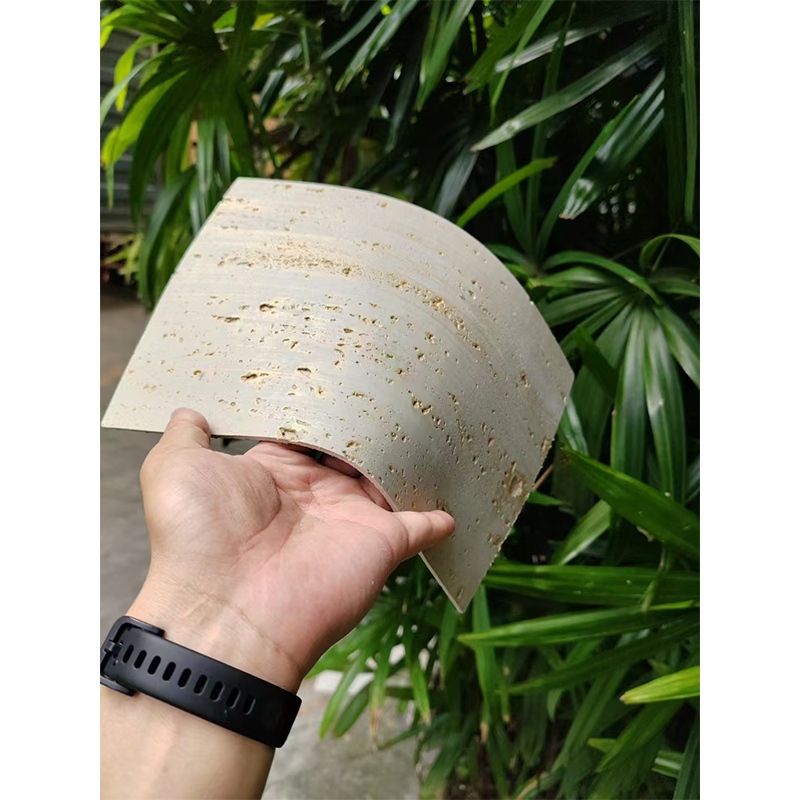
Thin slices of travertine are bonded to a flexible backing, letting the stone curve around columns, arches, and curved walls without cracking. The natural veins and soft color shifts remain uninterrupted, so the surface reads as a single continuous slab rather than a segmented finish.
Each sheet is cut from the same block and arranged in sequence before the backing is applied. This keeps the grain flowing across the entire panel, even when it's wrapped over a radius. Because the stone is real, no two pieces share the same pattern, but the visual continuity stays intact from edge to edge.
This approach suits interiors where rigid panels would force awkward seams. A curved reception desk, a rounded fireplace surround, or a fluted wall can all be clad with the same warm, layered look that travertine is known for, without breaking the line of the stone's natural markings.
The Factory Process That Makes Stone Flexible
At the heart of the facility, slabs of quarried slate or mica are fed through a precision splitting line that peels away layers no thicker than a credit card. These ultra-thin stone sheets move by conveyor into a coating station where a flexible polymer resin and fiberglass scrim are bonded to the back surface. The resin saturates the stone's micro-cracks and pores, turning a brittle material into something that can be rolled without snapping.
Unlike standard lamination, the process uses controlled heat and pressure rollers that press the backing into the stone rather than merely gluing it on top. Operators monitor a curing tunnel where the composite passes through staged temperature zones, allowing the resin to cross-link and form a permanent bond with the mineral surface. Any excess material is trimmed automatically, and the finished sheet is wound onto spools for shipping. This mechanized approach keeps the natural face intact while giving the product a uniform bend radius.
Quality checks pull samples from each batch and flex them around mandrels of decreasing diameter to confirm the stone won't crack at the specified curvature. The result is a material that retains the hardness and veining of quarried rock yet installs like wallpaper over curved columns, furniture fronts, or irregular walls.
Where Bendable Stone Sheets Belong in Modern Spaces
There's a particular moment when a room calls for a radius rather than a right angle, and that's where bendable stone sheets make the most sense. A curved partition that hides a wardrobe, a softly rounded reception desk, or a ceiling with a gentle barrel vault all keep their stone-like character without being chopped into tiles. The material follows the geometry rather than forcing the geometry to flatten.
Wet zones ask too much of traditional stone veneer, but flexible stone sheets hold up differently around sinks, shower surrounds, and bar fronts. Because the thin mineral layer sits on a resin or fiberglass backing, it tolerates splashes, humidity, and frequent wiping without the grout lines that usually turn yellow or crack on curved surfaces.
Smaller transitions are just as important. Wrapping a chimney breast, cladding cylindrical columns, or lining an elevator cab gives those tight curves and high-contact edges a finish that reads as stone but behaves more like a resilient skin. It lets you extend a mineral texture into places where thick slabs would be impractical.
Architects Are Swapping Heavy Slabs for This
On a recent mid-rise housing project in Rotterdam, the structural engineer pointed to a slab cross-section that looked more like a waffle than a solid block. Rows of hollow plastic spheres sat nestled between the top and bottom reinforcement layers, displacing concrete that wasn't needed for strength. The result: a floor system 35% lighter than a conventional flat plate, with no loss in load-bearing capacity.
The appeal goes beyond the obvious reduction in dead load. Lighter slabs mean smaller foundations, slimmer columns, and less seismic mass to worry about—all of which cascade into lower material bills and faster erection. On some jobs, the thinner floor depth also allows an extra storey within the same building height, a major win for developers working with strict zoning envelopes.
Yet the shift isn't just about engineering gymnastics. Architects are finding that voided systems and cross-laminated timber panels offer a cleaner ceiling plane and fewer downstands, giving them more freedom to run services and shape interior volumes. Compared to the brute-force approach of thickening a slab whenever spans grow, these alternatives feel less like a compromise and more like a smarter starting point.
No Cracking, No Compromise: Flexible Stone Explained
Real stone has always come with a catch: it's rigid, brittle, and one wrong move during installation can send a hairline fracture racing across the surface. Flexible stone throws that rulebook out. Made by binding a thin layer of natural stone veneer to a polymer backing, it bends, curves, and wraps around columns or curved walls without a single crack. The result is a material that finally behaves the way designers always wished stone would—adaptable, forgiving, and surprisingly tough.
This isn't a synthetic imitation trying to pass as stone. The surface is genuine mica, slate, or quartz, sliced thin enough to flex while keeping the raw texture and mineral depth intact. Because the backing absorbs stress, you can roll it for shipping, unfold it on site, and apply it to substrates that would normally reject traditional tile or slab. No special adhesives, no reinforcing mesh, no prayer before every cut. Installers get a faster workflow, and clients get a seamless finish without the usual brittleness tax.
Durability is where the compromise usually creeps in, but flexible stone holds its ground. It sheds moisture, resists UV fading, and shrugs off the temperature swings that cause cement-based panels to spall. Whether it's wrapping an exterior pillar or lining a shower niche, the material stays intact where rigid stone would eventually give up. For anyone who's watched a beautiful stone installation fail at the first stress point, this is the long-overdue fix—no cracking, and no compromise on the look or the lifespan.
Installation Tips Straight from the Factory Floor
Most installers never see the assembly jigs we use on the line, but a few habits from our floor can save you a lot of rework. Before you bolt anything down, dry-fit every major component and mark the high spots with a paint pen. Our lead technicians do this on every new skid, and it catches alignment issues that don't show up on a drawing. If a bracket feels tight going in, don't reach for the impact wrench—back it out, check the thread engagement, and run a tap through if needed. Cross-threading is the number one cause of field returns, and it's almost always avoidable with a slower first pass.
Another trick we use is to torque in stages and in a star pattern, even on rectangular frames. It keeps gaskets from pinching and prevents that last-corner lift that makes panels sit proud. Once the main structure is down, let it settle for an hour before you re-check the levels. Shipping and temperature swings can twist a frame just enough to throw off a door or a slide rail. If you're working with our modular conveyor sections, leave the splice plates finger-tight until the full run is aligned—then walk the length with a dial indicator and tighten from the center outward. That one sequence change has cut install time by nearly a third on our own test floor.
FAQ
It uses a thin layer of real travertine bonded to a flexible backing, so it can bend around curves, corners, and columns without cracking. That opens up design options that rigid panels simply cannot handle.
They work well for feature walls, curved reception desks, fireplace surrounds, bathroom vanities, and even ceiling details. Since the material is lightweight and pliable, it fits both residential and commercial spaces without heavy structural support.
The factory slices natural travertine into very thin sheets, then laminates them onto a polymer or fabric base. After that, the sheets are treated to maintain their stone texture while allowing repeated flexing during installation.
Yes, the surface keeps the genuine pits, veins, and warm tonal variations of travertine. From a short distance it reads as solid stone, but up close you notice the subtle flexibility and lighter weight.
Installers can cut it with a utility knife, apply it with standard adhesive, and wrap it around curved substrates without special tools. That reduces labor time, waste, and the risk of breakage on site.
Many flexible travertine sheets are rated for wet areas like showers and backsplashes. For outdoor use, you need to confirm the specific backing and sealant, but the factory often offers versions suited to covered exterior walls and feature panels.
Start by requesting physical samples to check the actual color range and flexibility. Then specify the required sheet size, backing type, and preferred finish, and coordinate with the factory on edge details and adhesive recommendations.
Conclusion
Stepping into a travertine flexible stone factory, the first thing you notice is that what looks like a solid slab can be rolled and curved without losing the fine veining that gives travertine its character. Instead of cutting stone into thick, brittle panels, the process slices a thin layer from the natural block and bonds it to a pliable backing, letting the stone bend around columns, wrap curved walls, and follow arched openings. The result keeps every vein and fossil trace intact, yet weighs a fraction of a standard slab. Architects and designers are paying attention because this removes the usual trade-off: you don't have to give up the warm, organic look of real travertine to get flexibility. On installation day, crews can handle the sheets with basic tools, cutting them with a utility knife and applying adhesive directly to the substrate, which cuts labor time and avoids the cracking that often happens with rigid stone during transport or fitting.
In modern interiors, bendable travertine sheets fit places where heavy slabs simply cannot go—elevator lobbies with tight curves, bar fronts, furniture edges, and feature walls that need a continuous stone surface without joints. Because the material remains real stone on the visible side, it ages and patinas like traditional travertine, but it forgives structural movement and minor settling, so hairline cracks stay rare. Factories often recommend applying a breathable sealer and avoiding excessive moisture during the first day, but otherwise the sheets behave like a premium wallcovering. The shift from heavy slabs to flexible sheets is less about novelty and more about practicality: less waste, easier transport, quicker installation, and the freedom to design curves that used to require complex templating or synthetic imitation. For renovators and new builds alike, this factory-made flexible stone closes the gap between natural material and contemporary form.
Contact Us
Contact Person: Vito
Email: [email protected]
Tel/WhatsApp: 86 13088879266
Website: https://www.magicstonemcm.com