

Transcatheter Aortic Valve Ranking List to Guide Your Heart Valve Decision
2026-10-27
Choosing a transcatheter aortic valve can feel like weighing a dozen moving parts—durability data, clinical trial endpoints, and rankings that don't always agree. This Transcatheter Aortic Valve Ranking List was built to give you a clearer framework, not just another checklist. Whether you're a patient comparing options or a clinician looking for a practical summary, the goal is the same: turn complex evidence into a decision you can trust. At INT Medical, we think transparency matters more than top-line scores. Read on as we break down what the rankings actually reveal and where they might fall short.
Valve Design Choices That Influence Long-Term Wear
Long-term valve wear is rarely the result of a single catastrophic decision; it accumulates from the quieter interplay between seat geometry, stem guidance, and material pairings. A seat with an abrupt transition from the sealing face to the throat creates localized turbulence, which erodes the leading edge even at modest pressure drops. Designers who specify a slight radius or a stellite inlay on that edge often see a disproportionate gain in service life, because the hardfacing interrupts the micro-cutting action of entrained particles before they can undercut the seal.
Stem finish and bushing clearance matter just as much as the obvious contact surfaces. A polished stem with a deliberately matched gland follower can reduce abrasive pickup from crystallizing process fluids, while an undercut stem shoulder prevents galling during thermal swings. Where service involves frequent partial stroking, orienting the plug guide ribs away from the highest velocity stream keeps uneven side loading from turning normal cycling into premature ovalization of the trim.
Why Some Valves Fit Better in Smaller Anatomies
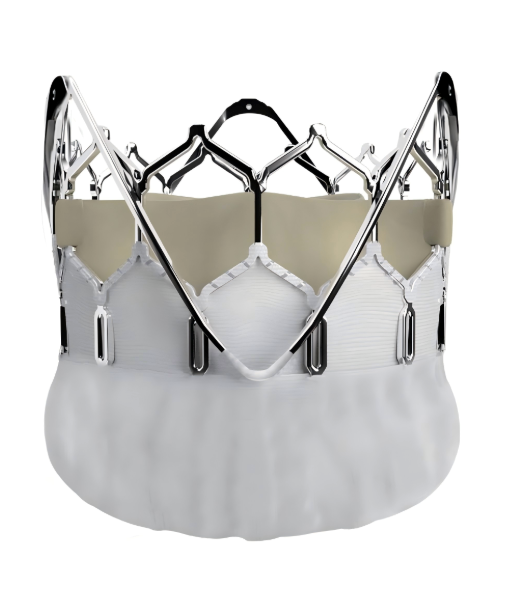
In smaller cardiac anatomies, the limiting factor is rarely just annular diameter but the relationship between the sewing ring or stent frame and adjacent structures like the left ventricular outflow tract and sinotubular junction. Valves that prioritize a low cuff profile and minimal radial force distribute contact stress more evenly, reducing the risk of conduction disturbances and annular rupture. A shorter overall height also matters: when the distance from the annulus to the coronary ostia is compressed, a valve that sits mostly supra-annular but keeps frame height modest can avoid encroaching on the sinus region.
Another subtle factor is leaflet suspension geometry. Some designs use leaflets that coapt higher within the frame, which preserves central flow but can require more vertical space. In smaller roots, a slightly lower coaptation point combined with a flared inflow can improve effective orifice area without adding external bulk. These choices are not about making the valve simply “smaller” but about matching the three-dimensional shape of a smaller annulus, which is often more elliptical and less forgiving when a circular device is forced into place.
Materials and delivery profiles further separate valves that fit well in constrained anatomies. A flexible polyester or pericardial skirt that conforms to irregular annular contours performs better than a stiff sealing ring that depends on oversizing. Similarly, a valve that achieves full expansion at a smaller balloon or sheath size allows the operator to avoid overly aggressive pre-dilation, which can be risky when the annulus is heavily calcified and narrow. Ultimately, fit is determined by cumulative interplay of height, profile, conformability, and the force vectors transmitted to fragile surrounding tissue.
The Data Behind Paravalvular Leak Rates
Clinical registries and randomized trials consistently report paravalvular leak rates following transcatheter aortic valve replacement, yet the numbers vary widely depending on how leakage is defined and measured. Early studies used echocardiographic grading systems that were subjective and poorly reproducible, leading to reported incidences ranging from 7% to over 40%. More recent datasets, anchored in core laboratory adjudication and standardized Valve Academic Research Consortium criteria, typically place moderate or severe paravalvular leak at 2% to 6%. Mild leaks remain far more common, appearing in roughly one-third of patients at discharge, but their clinical significance has been questioned as longer-term follow-up shows no consistent survival penalty.
The data also reveal that paravalvular leak is not a static outcome but a dynamic one. Serial imaging studies suggest that roughly half of mild leaks resolve or improve by one year, likely due to endothelization of the stent frame and continued annular remodeling. Conversely, a small fraction of patients with initially trace leaks progress to moderate severity, particularly when annular calcification is asymmetric or the implanted valve was significantly undersized. This variability complicates risk prediction models, which often rely on baseline computed tomography metrics such as calcium volume, annular eccentricity, and device landing zone morphology.
Outcome data from large national registries show a graded relationship between leak severity and mortality, but the absolute difference in survival between no leak and mild leak is modest once adjusted for baseline comorbidities. Moderate or greater paravalvular leak, however, consistently doubles or triples the hazard for one-year mortality and heart failure rehospitalization. More importantly, the incidence of moderate or severe leak has fallen over successive device generations—from nearly 12% with early self-expanding prostheses to under 3% with contemporary sealing skirts and repositionable delivery systems. This trend underscores that paravalvular leak is as much a design and procedural endpoint as a patient-anatomy problem.
How Delivery Systems Shape Procedure Success
The way a delivery system behaves inside the body often decides whether a procedure stays on track or turns into a long salvage effort. Catheter flexibility, tip shape, and how force travels from the handle to the distal end all affect navigation through tortuous or calcified anatomy. A device that tracks well but lacks pushability might reach the lesion and then refuse to cross it. A stiffer system may cross easily but scrape the vessel wall or kick the wire out of position. These trade-offs rarely show up in product brochures, yet they drive fluoroscopy time, contrast load, and the need for bail-out tools.
Once the target is reached, the delivery system still shapes the outcome. Deployment mechanisms that release too abruptly can cause stents or valves to jump forward, forcing repositioning or leaving a poorly seated implant. Precise control comes from small design choices: radiopaque marker bands placed close to the working end, short rigid distal segments that resist whipping, and low-profile introducers that preserve wire access. When these details align, physicians spend less time correcting device position and more time confirming a clean final result. The difference often shows up not in dramatic complications but in quieter measures—shorter procedure times and fewer repeat interventions.
Comparing Leaflet Materials Beyond the Brochure
Paper weight often gets the most attention, but the real differences show up in how a leaflet bends, tears, or reacts to a wet hand. A glossy 130gsm sheet might look sharp in a lobby, yet it can crack along fold lines after a few reads. Uncoated stocks, on the other hand, absorb ink differently, giving colors a softer, almost tactile feel that many designers overlook. The choice between silk, matte, or recycled fiber changes not just the appearance but also how long the piece survives in a bag or on a counter.
Beyond weight and coating, the leaflet's binding edge tells its own story. A simple tri-fold on thin stock can become limp after one open, while a cross-fold on heavier board keeps its shape but demands more precision at the printer. Stapled or stitched options exist too, though they’re often ignored for standard brochures. The way pages lie flat—or don't—affects readability, especially for step-by-step instructions or map inserts.
Then there’s the matter of finish under different lighting. A UV spot on a dark cover can grab attention in a showroom but glare badly under office fluorescents. Soft-touch lamination feels premium, yet it picks up fingerprints and scuffs faster than a plain aqueous coating. These small material responses add up, and the smartest choice isn't always the one that looks best in a sample book—it's the one that still looks decent after two weeks in a customer's car door.
What the Rankings Miss About Pacemaker Risk
Most published rankings of pacemaker devices focus on battery longevity, lead failure rates, or MRI compatibility. These are easy to measure and compare, but they say little about how a device behaves in a specific patient’s chest. A pacemaker that tops a technical spec sheet might still cause uncomfortable pocket erosion, unnecessary pacing, or a delayed response during sudden activity—issues that rarely make it into any league table.
What often gets lost is the interaction between the device’s algorithms and the patient’s own rhythm patterns. For example, a pacemaker programmed mainly for bradycardia in an elderly patient may overpace someone with frequent atrial arrhythmias, leading to fatigue or even heart failure symptoms. Rankings typically ignore programming flexibility, sensor responsiveness, or how smoothly rate-adaptive pacing kicks in when the patient climbs stairs. These are the details that determine whether a person feels better or simply survives with the device.
Real-world risk also hinges on follow-up and remote monitoring support, not just hardware specs. A “top-ranked” pacemaker with poor remote alert handling can delay detection of a lead fracture or battery depletion, turning a minor fix into an emergency. Conversely, a slightly older model with a well-designed home monitoring system and clear alert thresholds may result in fewer hospitalizations. Until rankings include these clinical integration factors, they remain a narrow starting point rather than a reliable safety guide.
FAQ
It's a comparative overview that evaluates different transcatheter heart valves based on clinical trial data, durability, delivery system design, and real-world outcomes. The idea is to give patients and clinicians a starting point for weighing options, not a rigid verdict.
Use it as one piece of the puzzle. The list can highlight which transcatheter valves have strong evidence for certain anatomies or risk profiles, but your heart team will factor in your age, frailty, valve anatomy, and personal preferences before recommending a route.
Valves like the Edwards SAPIEN platform and Medtronic Evolut series often rank highly because they have extensive randomized trial data, long-term follow-up, and iterations that improved sealing and delivery. But top doesn't mean universally best, context matters enormously.
Yes. Rankings can't capture your specific aortic root shape, calcium distribution, or access vessel size. A valve that ranks lower overall might be the safest choice for your anatomy, and a highly ranked valve might not fit well.
Reputable lists are revised when major trial results or registry data emerge, often every one to two years. New valve generations and longer-term durability reports can shift positions, so check the date of the list you're reading.
It can, but with caution. Most transcatheter valve trials initially focused on older or higher-risk patients, so rankings may not fully reflect outcomes in younger, low-risk individuals. Surgical valve replacement still has strong long-term data for that group.
Valve durability, need for a future valve-in-valve procedure, pacemaker risk, stroke risk, recovery time, and how the valve interacts with your lifestyle and medications. Also ask about the team's own experience with each device, operator volume matters.
Absolutely. Rankings are general summaries, not personalized recommendations. If your anatomy favors a specific valve, or if your heart team has excellent outcomes with a particular device, that lower-ranked option could be your best fit.
Conclusion
Choosing a transcatheter aortic valve involves more than glancing at a single ranking number. The list distills practical trade-offs: certain valve frame geometries and leaflet suspension methods affect how the device flexes over millions of cardiac cycles, which directly ties into long-term structural wear. Smaller anatomies often push clinicians toward lower-profile designs that still manage to seal well, because a bulky stent can distort the native annulus or crowd the coronary ostia. Meanwhile, paravalvular leak rates aren't just a headline statistic—they reflect how consistently the sealing skirt conforms to irregular calcified tissue, and the ranking tries to surface valves that hold their own on independent echo core lab data rather than manufacturer claims.
What the ranking often buries is how much the delivery system shapes the final result. A valve that looks great on bench testing can underperform if the catheter can't track through tortuous iliac arteries or reposition cleanly during deployment. Leaflet material comparisons likewise get oversimplified: bovine pericardium, porcine tissue, and treated polymers each have different hydration behavior and crimp recovery, which matters for valve durability beyond brochure bullet points. And the pacemaker risk is frequently relegated to a footnote—yet conduction disturbances from deeper implants or aggressive radial force can turn an otherwise smooth procedure into a lifelong device dependency. So treat the ranking as a starting map, not the terrain; your own anatomy, calcium distribution, and operator familiarity will ultimately write the real decision.
Contact Us
Contact Person: Jeffrey
Email: [email protected]
Tel/WhatsApp: 86-0633-2230056
Website: https://www.sd-intmedical.com