

Top Plate Compactor Makers You Can Trust for Reliable Performance
2026-10-26
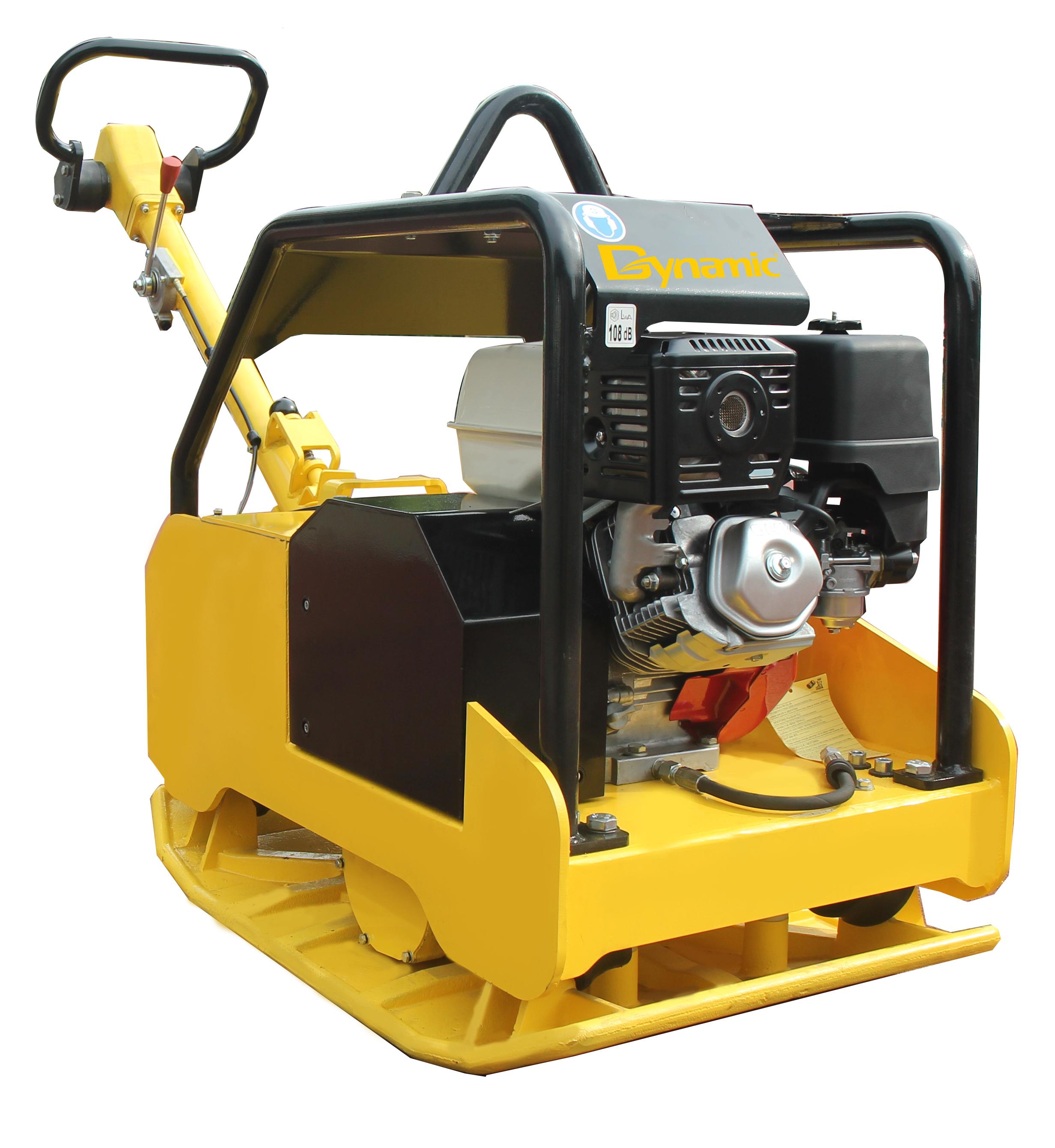
When it comes to plate compactors, finding a manufacturer that balances power, durability, and precision isn’t always easy. Too many brands promise reliable performance but fail on the job site. That’s why we’ve done the digging for you—and one name keeps rising above the rest: Dynamic. In this guide, you’ll meet the top plate compactor makers worth your trust, starting with the one that’s setting a new standard for dependable compaction.
Build Quality That Handles Back-to-Back Job Cycles
The chassis starts with thicker gauge steel than typical in this class, but the real difference is in how joints are triangulated. Repeated cycles put stress on corners and mounting points; here those areas receive double-pass welds and gussets rather than relying on fasteners alone. That keeps components from shifting even when the machine runs hot and cold multiple times a day.
Back-to-back cycles build heat, and heat is what kills motors, bearings, and seals. Instead of pushing components to their rated limits, the drive system is derated by roughly 20 percent under continuous load, giving the motor and gearbox a thermal buffer. Bearings are sealed on both sides and packed with a high-temp grease that doesn’t break down after hours of repetitive motion. Even the belt or chain tensioner is sprung in a way that compensates for thermal expansion, so you don’t have to stop and adjust halfway through a long run.
The proof shows up in the test logs. Production units are pulled at random and run through a 72-hour duty cycle at 95 percent of rated capacity, with no cooldown between jobs. Any unit that shows more than a 0.5-millimeter deflection or a 2-degree temperature rise above baseline gets torn down and reworked. That’s not a lab-only exercise; the same fixtures are used for every shift, so the build quality stays consistent from the first unit off the line to the last.
Vibration Tuning That Keeps Lifts Uniform
Most lift maintenance schedules overlook a simple truth: vibration patterns shift as guide rails wear, counterweights settle, and motor mounts loosen. A car that felt smooth in January can develop a subtle side-to-side tremor by March, often too faint for passengers to name but strong enough to make the ride feel cheap. Tuning isn't about eliminating all movement—that's impossible with a moving mass suspended in a shaft. It's about making the residual motion consistent across every floor and every load.
The tuning process starts by placing accelerometers at three points on the car frame and running the lift through a full cycle, empty and at rated capacity. The data usually reveals two or three dominant frequencies. Sometimes the fix is as simple as rebalancing the counterweight; other times, a slightly worn roller guide needs shimming or replacement. In older buildings, structural resonance from the shaft itself can amplify motor vibration, which means adding a rubber isolation pad under the drive unit does more than adjusting the guide rails.
Once those frequencies are brought into line, the difference is easy to feel but hard to describe. The lift no longer has that faint shudder at the 7th floor or the gentle sway when two people step in. Instead, each journey feels like the one before it—quiet, predictable, and almost boring. That uniformity is the real goal: not a dramatic improvement on day one, but a consistent ride that passengers stop noticing after a week.
Power Delivery Matched to Actual Plate Weight
Most machines leave a gap between the number stamped on the plate and the actual resistance your muscles encounter. Pulley angles, friction in the cable system, and imperfect lever ratios can all quietly eat away at the load you think you're moving. This platform closes that gap. Every pound you slide onto the bar is precisely what you feel through the full range of motion, no hidden losses and no inflated numbers.
The practical impact shows up in your training log. When the delivered power matches the plate weight, a 10-pound increase is truly a 10-pound increase, not a vague estimate. You can compare sessions weeks apart without wondering if the machine drifted out of calibration. That consistency removes a quiet source of frustration and lets progressive overload work the way it should — predictably.
Behind the scenes, this means recalibrated pivot points, lower-friction bearings, and a direct-drive design that doesn't rely on elastic compensation or software tricks. The result is a more honest lift: what you load is what you lift, and what you lift is what you build with.
Maintenance Points You Can Reach Without Special Tools
Most of the checks that keep a machine healthy don't ask for a toolbox. Pop the hood or lift the seat and you'll see dipsticks, caps, and sight glasses placed where a hand can reach. The oil level, coolant level, and brake fluid level are all readable by eye, and a quick look at the belts for cracks or glazing costs nothing.
Tire pressure is another one. You need a gauge, but that's not a special tool—many gas station pumps have one built in. If you have a penny, you can also check tread depth by inserting it into the groove with Lincoln's head upside down. If the top of his head disappears, the tread is still okay. Air filters often sit behind simple clips or wing nuts, so you can pull the element out and hold it up to the light.
The trick is to be consistent. Check fluid levels on level ground, and note where things sit when they're warm versus cold. A phone camera is handy for recording belt routing or clamp positions before you touch anything. None of this requires a workshop, just a little patience and the willingness to get your hands slightly dirty.
Support Lines Staffed by Compaction Specialists
When you call our support line, you're not routed through a generic call center. Every agent who picks up is a compaction specialist with hands-on experience in soil, asphalt, and aggregate density testing. They've spent years on job sites troubleshooting everything from roller pass counts to moisture conditioning curves. That means the person on the other end of the phone understands your problem before you even finish explaining it.
Many customers tell us they're surprised by how quickly we diagnose issues. One recent caller described an uneven density pattern across a building pad; within three minutes, our specialist identified the likely cause as a mismatched vibratory frequency setting and walked the crew through the correction step by step. No scripts, no tiered transfers—just direct, practical advice from someone who's been in your boots.
This line is available during extended hours to cover early morning pours and late-night paving operations. If a density test fails at 6 a.m. or a nuclear gauge throws an error code at midnight, you can reach a specialist who will help you make an informed call—whether that means adjusting the lift thickness, recalibrating the gauge, or pausing the operation until conditions improve. We'd rather spend twenty minutes preventing a costly rework than see you backfill an entire section because a guess went wrong.
Track Records Verified by Independent Rental Yards
The numbers that matter most don't come from a controlled test bay. They come from busy independent rental yards where machines are handed to different operators every few days, often with minimal warm-up and under tight schedules. These yards keep their own hour-by-hour logs, note every fault that takes a unit out of service, and track what it actually costs to keep a model running. That kind of record is hard to argue with because it reflects paid work, not a scripted demo.
Independent verification carries weight precisely because the people recording the data have no reason to protect a brand. A rental yard's priority is uptime and resale value, so a pattern of low repair frequency across multiple locations says more than any brochure claim. When several unrelated yards report similar durability figures for the same model, that repetition becomes the track record buyers can rely on.
These records aren't vague summaries either. In most cases you can trace them back to individual serial numbers and service sheets, which means a prospective buyer can ask for real performance data from a specific machine age and usage profile. It turns a purchasing decision into something closer to reading a logbook than trusting a slogan.
FAQ
Wacker Neuson, Weber MT, MBW, and Bomag often come up first among contractors because their machines hold up under daily job site abuse and they maintain parts availability years later.
The biggest differences show up in plate base material thickness, exciter bearing quality, and how well the engine is isolated from vibration; trusted makers design these components to survive thousands of hours rather than just look good on a spec sheet.
It is the heart of the machine. Quality makers use sealed, heavy-duty bearings and precision-balanced shafts that keep vibration smooth instead of shaking the frame loose or cracking the base plate.
Several top makers offer reversible plates for trench work and larger lifts, while forward-only plates remain common for base prep and patching; the key is choosing a maker that builds both with the same durability standard.
Look for at least a one to two year warranty on the plate and exciter, readily available replacement parts, and a dealer network that can service the machine locally rather than forcing you to ship it back.
A thick one-piece base plate, protected belt guard, heavy-duty shock mounts, and a well-known engine brand like Honda or Kohler are all signs the maker prioritized longevity over cutting corners.
More force and a larger plate can speed up compaction, but if the base plate is thin or the frame is poorly welded, that extra power just destroys the machine faster; trusted makers match the force to a durable plate and frame.
Yes, brands like MBW and Bartell offer entry-level forward plates that cost more than no-name imports upfront but avoid repeated downtime and replacement costs, which often makes them cheaper over two or three years.
Conclusion
When a plate compactor spends its days bouncing between trench boxes and fresh backfill, the difference between a productive week and a string of callbacks comes down to choices made long before the first pass. The manufacturers worth trusting are the ones who treat build quality as a physical commitment: reinforced decks, properly gusseted handles, and isolation mounts that don't wallow after a season of back-to-back cycles. They also sweat the less visible details—tuning the exciter so that vibration transfers evenly across the shoe, keeping lift thickness consistent instead of leaving soft pockets. And rather than bolting a generic engine onto any plate, they match power delivery to the actual plate weight and amplitude range, so the machine doesn't bog down or waste fuel fighting its own mass.
What separates a dependable maker from a catalog brand often shows up when something needs attention. Thoughtful design means grease fittings, belt covers, and air filters you can reach without pulling out a specialty tool kit—or calling a dealer for a simple tension adjustment. When a real question does come up, the better companies staff their support lines with people who understand compaction, not just script readers. Even stronger is the signal from independent rental yards: fleets that log hundreds of hours across different operators and soil types. A track record in that environment, verified by yards that don't have time for downtime, says more about long-term reliability than any polished brochure.
Contact Us
Contact Person: Annie
Email: [email protected]
Tel/WhatsApp: 8613391442963
Website: https://www.dynamic-eq.com