

Top Laser Cutting Machine Manufacturing: Key Factors for Choosing a Reliable Partner
2026-09-01
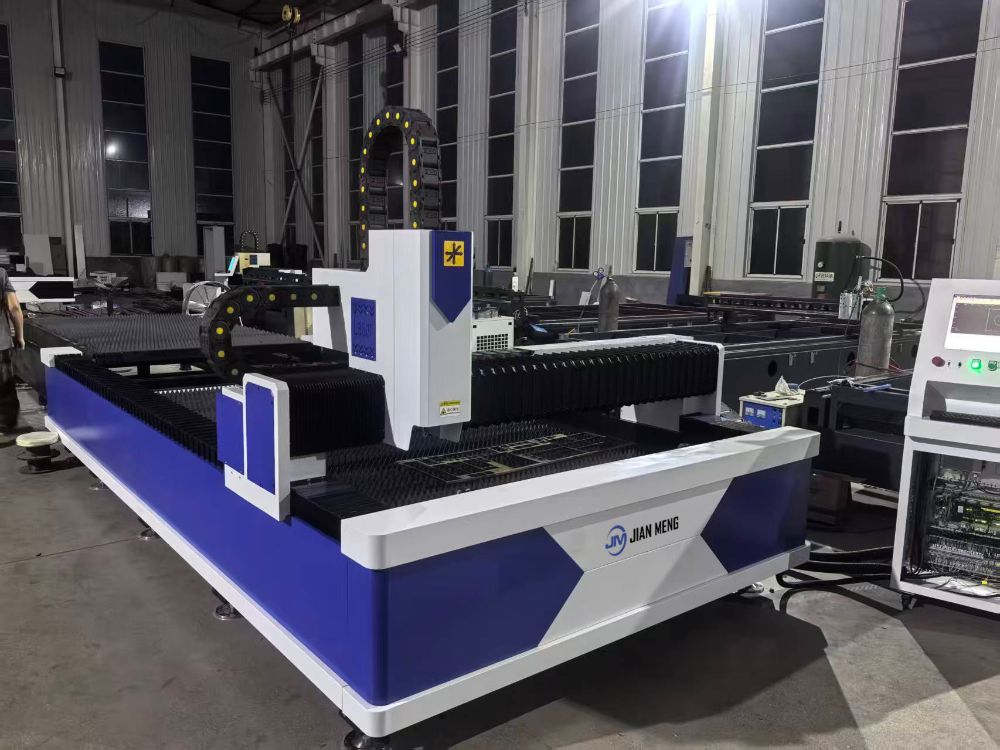
Ever bought a laser cutter that looked perfect on paper, only to struggle with support months later? You're not alone. The real differentiator isn't just wattage—it's the manufacturer behind the machine. That's why, when evaluating top laser cutting machine manufacturers, we focus on factors that ensure reliability, from build quality to service response. Companies like JIAN MENG have set benchmarks in this space, and understanding their approach can save you from costly mistakes.
What Separates Dependable Laser Cutting Builders from the Rest?
Dependable laser cutting builders earn that label through obsessive attention to the machine's core: the motion system, resonator, and beam delivery. Instead of bolting together generic components, they select linear drives and gantries that hold micron-level repeatability after thousands of hours. You'll notice this in how they publish thermal drift data, not just peak acceleration numbers. Their frames are stress-relieved and machined after welding, which prevents the slow warping that turns a fast laser into a sloppy one within a year.
Another separating factor is how they handle optics and gas flow. Cheap builders rely on a single nozzle geometry and generic assist gas pressure ranges. The dependable ones run computational fluid dynamics on each cutting head design, then verify with high-speed cameras. That's why their cuts stay clean on stainless, aluminum, and brass without constant parameter chasing. They also mount temperature sensors near the collimator and focus lens, so the software can compensate before focal shift ruins edge quality.
Finally, dependable builders treat support as part of the machine, not an afterthought. Their manuals include actual torque values and beam alignment procedures, not just marketing photos. Remote diagnostics are standard, and their field engineers can pull logs, re-tune servo loops, or swap a contaminated lens in one visit. Compare that to vendors who disappear after the purchase order clears, and you'll understand why repeat buyers rarely shop on price alone.
Reading Past the Spec Sheet: How to Spot Engineering Depth
A spec sheet gives you numbers, but it rarely tells you how those numbers were achieved. Two laptops can list the same processor and RAM, yet one throttles after ten minutes of sustained load while the other holds steady. Look beyond the headline figures and ask what the cooling solution actually does—where the heat pipes run, how the fans ramp under partial load, and whether the chassis materials help or hinder thermal transfer. These details never appear in the marketing table, but they define the real-world experience.
Another signal is how a product handles edge conditions that most reviewers won't test. Check whether the USB ports are individually fused, how the device behaves when the battery is completely drained and then plugged in, or what the firmware update history reveals about long-term support. Mature engineering tends to show up in quiet places: reinforced hinge mounts, cable routing that avoids pinch points, or a power supply that doesn't whine under load. If the manufacturer publishes detailed technical documentation instead of just lifestyle photos, that's usually a good sign.
Finally, watch for deliberate trade-offs rather than vague claims of being the best at everything. A device that prioritizes battery life will make different component choices than one built for raw performance, and a well-engineered product will make those priorities clear. Absence of compromise is often a red flag—it suggests the design team either didn't test deeply or didn't want to admit what they left out. Honest limitations, clearly communicated, are a much stronger indicator of engineering depth than any bullet point on a spec sheet.
The Support Question Most Buyers Forget to Ask
Most buyers grill vendors on features, pricing, and onboarding timelines, but almost nobody asks what happens when things go sideways on a Tuesday afternoon. The question worth posing is simple: if we hit a critical bug, who actually picks up the phone, how fast do they dig in, and will we be handed to a ticket queue or a person who knows our setup?
A better version of the support question is less about the promise and more about the proof. Ask to see a real incident timeline, not a slide deck. Ask whether support engineers have access to the same tools your team uses, or if they operate on a separate, sanitized copy. Those details tell you whether you're buying a vendor that fixes problems or one that just files them.
When Customization Matters More Than Catalog Options
Stock catalogs feel safe until the moment they don't. A dropdown of sizes, finishes, and colors covers the obvious choices, but it rarely captures how a product has to fit into a specific workflow, space, or brand language. When the gap between an off-the-shelf option and the actual need shows up in daily use, customization stops being a nice-to-have.
That shift usually happens quietly. Someone modifies a bracket with a hacksaw, orders a third-party adapter, or builds a workaround that nobody wanted to document. The catalog item did its job on paper; in practice, it created friction that a tailored version would have removed from the start.
Customization earns its place when the standard version demands compromise in areas that matter most—mounting points, material compatibility, load ratings, or how the part interacts with surrounding equipment. At that point, paying for a custom build is less about preference and more about avoiding the hidden cost of forcing a square peg into a round hole.
Total Cost Realities That Go Beyond the Invoice Price
The sticker price is just the opening number. Once the equipment lands on your floor, you start paying for integration, calibration, and the hours your team spends learning how to use it without breaking something. Those costs rarely show up on the quote, but they hit the budget within the first month.
Then there’s the downtime factor. A cheaper machine that needs frequent repairs or waits on parts from overseas can idle an entire production line. That lost output often costs more than the savings you chased by going with the lower bid.
Don’t forget the quiet costs: energy draw, software licenses that renew annually, disposal fees when the asset finally dies, and the hit to resale value if the brand has a weak secondary market. Invoice price is a snapshot; total cost is a movie.
Verifying Real-World Performance Without a Factory Tour
Seeing a machine run on a showroom floor only tells you so much. The real question is how it performs after three months of daily use in a dusty workshop or a humid production line. Without stepping foot inside a factory, you can still get a clear picture by asking for references from customers who run similar operations. Follow up with those users directly and ask about uptime, repeatability, and how quickly the supplier resolved issues when something went wrong.
Another route is to request a live video demonstration using your actual parts or materials. Set up a call where the machine processes a sample you've shipped over. Watch how the operator, not a sales engineer, handles the setup and tool changes. Pay attention to small details: how long a tool change takes, whether the control panel feels intuitive, and how the machine sounds under load. Those observations often reveal more than a polished spec sheet.
Finally, tap into independent user communities and forums specific to your industry. Look for long-term ownership threads, not just initial reviews. People rarely post about a machine that works flawlessly, but they will share recurring faults, service delays, or hidden costs like proprietary consumables or software subscription fees. Cross-reference what you hear with the supplier's own claims, and you'll have a grounded view of real-world performance without booking a flight.
FAQ
It usually comes down to how they handle the unglamorous details. A dependable maker will show you real-world cut samples in materials you actually use, not just polished marketing videos. They'll also be upfront about maintenance intervals, spare part availability, and the true cost of consumables over five years. The average ones tend to dodge those questions or give vague timelines.
Ask for the frame construction details and the type of linear guides and motors used. A rigid, stress-relieved steel frame with quality ground rails says a lot more than a shiny enclosure. Request videos of the machine cutting at its advertised maximum speed—watch for vibration or wobble. Also, check if they offer a live video tour of their assembly floor. If they refuse, that's your answer.
Ignore peak power for a moment. Look at beam quality, acceleration and deceleration rates, and the repeatability of the positioning system. A machine that holds ±0.03 mm all day is far more valuable than one that claims 0.01 mm once under ideal conditions. Also check the maximum cutting thickness for clean cuts, not just severance. And don't forget the exhaust and cooling system capacity—those determine whether you can run it eight hours straight.
Because a laser cutter is not a one-time purchase; it's a production dependency. If a tube or lens fails and you wait three weeks for a replacement, you lose orders and customer trust. A reliable partner keeps critical spares in your region, answers technical questions within hours, and offers remote diagnostics. That support can easily save you more than the price difference between a cheap machine and a well-supported one.
Don't just ask if it works with your CAD software—ask how. Can it import native files without conversion errors? Does it support automatic nesting, and is the control software updated regularly? Also inquire about network connectivity and whether they provide a post-processor for your CAM package. The best manufacturers will share a trial workflow so you can test the digital handoff before buying.
Request timed, unedited videos of them cutting a part you provide—same material, same thickness, same geometry. Ask them to measure the final dimensions on camera. Or better, send them a small test file and have them ship you the actual cut part. Pay attention to edge squareness, dross, and kerf consistency. If they hesitate to do a custom test, move on.
Yes, if they show engineering depth and financial transparency. Ask about their R&D pipeline, their component suppliers, and how many machines they have in the field. A small team with experienced founders can often give you more direct attention than a giant. But require proof of ongoing parts support—like a written commitment for at least seven years of spare availability. Size matters less than stability.
Watch for vague answers about power consumption, no references in your industry, or a refusal to share a sample service contract. Also be cautious if they push a machine with far more power than your typical job requires, or if they promise zero maintenance. Other warning signs: no local presence, no clear upgrade path, and salespeople who can't answer basic technical questions about beam alignment.
Conclusion
Choosing a laser cutting machine partner isn't just about comparing wattage and bed size. The builders worth trusting show their engineering depth in small details: how they handle thermal drift on long runs, what grade of linear guides they actually install, and whether their motion control setup stays accurate after thousands of hours. Dependable manufacturers don't hide behind glossy spec sheets; they can walk you through the machine's frame stress-relief process, cable routing decisions, and the logic behind their laser source selection. Customization is another clear signal. If a supplier pushes only catalog models without asking about your cut edge requirements, material mix, or shift patterns, that's a red flag. Strong partners treat your production floor as a unique environment, adjusting gantry height, assist gas control, or even software interlocks to match how you actually run parts, not how a brochure imagines it.
Support and total cost are where many buyers get surprised. Ask what happens on day 400, not just day one: response time for a failed servo drive, availability of spare optics in your region, and whether remote diagnostics are included or billed hourly. Real total cost includes idle labor during downtime, nitrogen consumption at higher pressure, and the price of replacing a cheap chiller versus maintaining a proper one. Finally, verify claims without flying to a factory. Request cutting samples in your material with full parameter logs, ask for references in similar industries, and have your own team review video of the exact machine configuration running a production job, not a demo part. Those who can't provide that transparency usually can't back up their pitch.
Contact Us
Contact Person: Jeanie
Email: [email protected]
Tel/WhatsApp: +86 19805122954
Website: https://www.jianmeng.com