

Top Diesel Forklift Choices for Warehouses and Construction Sites
2026-07-03
When it comes to powering through the toughest tasks in warehouses and on construction sites, diesel forklifts remain the backbone of heavy lifting. But with so many options flooding the market, how do you pinpoint the ones that truly deliver reliability, efficiency, and raw strength? Enter HANGCHA—a brand that has been quietly reshaping expectations with rugged machines built for real-world demands. In this guide, we cut through the noise to spotlight the top diesel forklift choices that strike the perfect balance between brute force and smart design, ensuring your operations never miss a beat.
Why Diesel Forklifts Still Rule the Warehouse – And the Construction Site
Walk onto any busy warehouse floor or a rugged construction site, and you’ll notice the same workhorse: a diesel forklift. Despite the rise of electric alternatives and sustainability trends, diesel still dominates. The reason is simple—when you need raw power, endurance, and the ability to shrug off harsh environments, nothing else matches up. Diesel engines deliver the kind of torque that lets you lift heavy loads without breaking a sweat, and they keep going long after an electric model would need a recharge. In places where downtime costs real money, that reliability is non-negotiable.
Construction sites rarely offer the luxury of smooth concrete floors or charging stations. They’re dusty, uneven, and exposed to the elements. Diesel forklifts thrive in these conditions. Their sealed components and robust build handle rain, mud, and debris without faltering. And refueling is a five-minute job—just top up the tank and you’re back to work. No waiting around for batteries to charge, no swapping out power packs. It’s this instant readiness that keeps project timelines on track, especially when you’re miles from the nearest grid connection. Operators trust diesel machines because they’ve proven themselves in the worst conditions, day after day.
The cost equation still favors diesel for high-intensity operations. While electric forklifts have lower fuel costs, the upfront infrastructure for charging stations—and the hidden cost of battery replacements—can eat into savings. Diesel engines are simpler to maintain, with parts that are widely available and mechanics who know them inside out. Over the long haul, a well-maintained diesel forklift holds its value and keeps churning out work with minimal fuss. Until battery tech makes a generational leap, the familiar rumble of a diesel engine will remain the heartbeat of logistics yards and job sites everywhere.
The Hidden Cost of Buying the Wrong Diesel Forklift
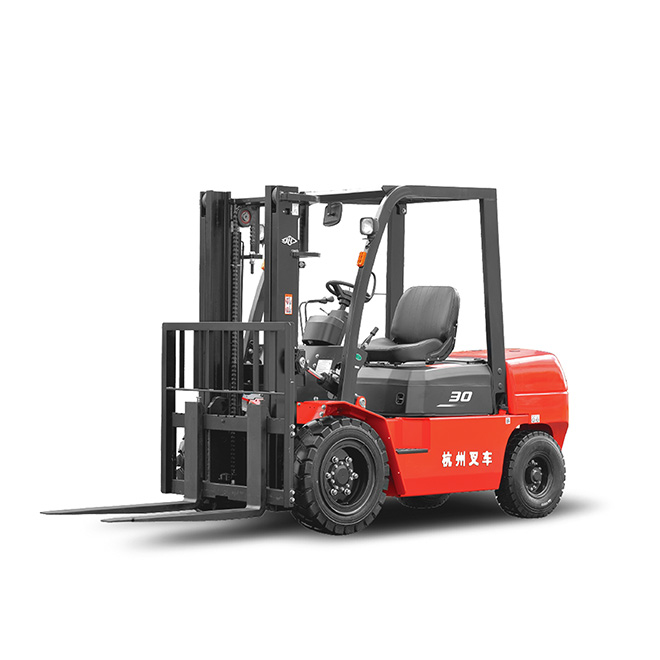
Many fleet managers focus squarely on the upfront price tag when comparing diesel forklifts, but the real financial drain often surfaces months later in operational inefficiencies. A model with the wrong load capacity or mast height may force operators to make extra trips, slow down workflows, or even require manual handling to compensate. These daily slowdowns compound into significant lost productivity that rarely appears on a purchase order yet steadily erodes your bottom line.
Beyond productivity drains, an ill‑fitted forklift accelerates wear and tear on both the equipment and your facility. Overloading a truck not rated for your typical pallet weights strains the engine, transmission, and hydraulic system, leading to more frequent breakdowns and pricier repairs. Meanwhile, a forklift with unsuitable tires or poor turning radius can scuff floors, damage racking, and increase the risk of accidents—all adding hidden expenses that far exceed any initial savings.
The most overlooked cost, however, lies in missed optimization opportunities. The right diesel forklift integrates into your existing processes without friction, while the wrong one forces you to adapt around its limitations. Every minute spent correcting alignment in narrow aisles or nursing an overheating engine during a busy shift represents value permanently lost. When you tally the repair bills, downtime penalties, and overtime wages over the equipment’s life cycle, the true price of a mismatched forklift dwarfs that seemingly attractive sticker price.
5 Diesel Forklift Features That Make or Break Your Operation
When a diesel forklift spends more time idling than lifting, the fuel gauge becomes a countdown to your next downtime. The real differentiator isn't horsepower alone—it’s how the engine, transmission, and hydraulics sync under load. A machine that lurches under a full pallet or hesitates on an incline isn't just inefficient; it's eating into your margins one jerky movement at a time. Operators feel it in their bones: a forklift that responds predictably, that modulates power without theatrics, turns a shift from a wrestling match into a flow state.
Visibility is another silent dealbreaker. A roof guard that blocks your view of the fork tips or a mast channel that splits your sightline forces operators into a dangerous guessing game. The best designs slim down the mast profile and carve out sightlines as if the machine were built around the operator's line of vision, not the other way around. When you can see the load settle onto the rack without craning your neck, precision becomes second nature, and damage claims drop off a cliff.
Then there’s serviceability, the feature nobody brags about until they’re on hour six of what should have been a thirty-minute job. A diesel forklift that hides its filters under a shroud of panels or requires contortionist moves to check fluid levels is going to collect neglect like barnacles. The ones that thrive in high-cycle operations are those where daily checks are designed to be actual daily rituals—not aspirational guidelines scribbled in a manual. A ground-level oil dipstick, color-coded grease points, and an engine bay that doesn’t require a teardown to reach the belts—these are the quiet luxuries that keep a fleet alive past its expected years.
Diesel vs. Electric: When Diesel Forklifts Win for Heavy Lifting
There's a reason you still see diesel workhorses lumbering through lumber yards and steel depots. When loads climb past the 10,000‑pound mark, the instant torque from a diesel engine becomes a game‑changer. Electric motors can certainly be engineered for heavy lifting, but the battery packs required to sustain that output quickly balloon in size and cost, often leading to more frequent pit stops for charging during multi‑shift operations. Diesel delivers a raw, relentless pull that handles steep ramps and uneven ground without breaking stride.
Outdoor work sites throw another wrench into the electric dream. Rain, mud, and dust are hard on sensitive electronics, and most electric forklifts are simply not built to shrug off the elements the way a diesel unit can. Plus, the lack of a delicate charging infrastructure means you can keep a diesel running as long as there's fuel in the tank—critical for remote or temporary job locations where power outlets are a luxury.
Then there's the longevity factor. A well‑maintained diesel forklift often outlives its electric counterparts in punishing environments, and when it does need repairs, the mechanical systems are straightforward for any experienced technician. While the industry edges toward electrification, the stubborn reality of heavy lifting—brute force, endurance, and simplicity—keeps diesel firmly in the driver's seat for the toughest jobs.
How to Match Your Forklift to Your Terrain – Warehouse or Construction?
The first step in choosing the right forklift is a clear-eyed assessment of where it will spend most of its working hours. Indoor warehouses typically offer smooth, level concrete floors that allow for precise maneuvering in tight aisles. Here, electric forklifts with cushion tires shine, providing a quiet, emission-free operation. On the other hand, construction sites throw a completely different challenge at you: uneven ground, mud, gravel, and steep gradients. A warehouse forklift pushed into that environment won’t just underperform—it can become a safety hazard. So, before you focus on lift capacity or mast height, start with the terrain. It defines everything that follows.
Tires are the most immediate interface between your forklift and the ground, and they make or break performance. For smooth indoor surfaces, cushion tires made of solid rubber offer stability and a tight turning radius. But take that same truck onto a construction site and you’ll quickly find it sinking or slipping. That’s where pneumatic tires come in—they’re air-filled, like a car tire, and provide the traction and shock absorption needed for rough terrain. A practical middle ground is the solid pneumatic tire, which resists punctures while still handling uneven surfaces better than cushion types. The trade-off? A slightly stiffer ride, but far less downtime from flats.
Don’t overlook ground clearance and drivetrain configuration when matching your forklift to the landscape. A construction-grade machine will have higher undercarriage clearance to clear rocks and debris that would stop a standard warehouse model. Many rough-terrain forklifts also use four-wheel drive for extra pulling power on slopes and loose soil. Even the mast design matters: a full free-lift mast can be crucial under low ceilings indoors, but outdoors you might prioritize a high-visibility mast that lets the operator see the load better over bumpy ground. The bottom line is that there’s no universal forklift—let the terrain guide your choice, and the machine will reward you with safer, more efficient operation.
Diesel Forklift Maintenance: The Secret to Longevity in Tough Environments
Diesel forklifts are the workhorses of demanding job sites, but their reliability hinges on consistent, thorough maintenance. In gritty conditions—think dusty lumber yards, muddy construction lots, or high-temperature warehouses—small oversights can snowball into costly downtime. Fuel quality is a major, often underestimated factor: always source clean diesel and store it properly to prevent water contamination, which wreaks havoc on injectors and pumps. Routine checks should never be skimmed over; take the time to inspect hoses for cracks, belts for tension, and seals for leaks before every shift. A five-minute walk-around can catch a loose clamp or a clogged air filter before it sidelines your operation for days.
Filtration is the frontline defense in harsh environments. Air intake systems suck in massive volumes of debris-laden air, so the primary and secondary filters need more frequent attention than the manual suggests if you’re operating off-pavement. Consider upgrading to heavy-duty, multi-stage filtration—it pays for itself by protecting the engine from abrasive particulates. The cooling system demands equal respect: radiators and hydraulic oil coolers easily get caked with dust and chaff, leading to overheating. Blowing them out with compressed air (from the inside out) at the end of each shift prevents that silent killer. Also, keep an eye on exhaust components; excessive soot buildup in the diesel particulate filter or muffler can choke performance and signal incomplete combustion.
Beyond the daily rituals, structural and fluid integrity matter enormously. Every 250 hours, drain and replace engine oil and filters—they degrade faster under heavy loads and dirty air. Don’t forget the transmission and hydraulic systems; contaminated fluid is responsible for sluggish masts and jerky drive responses. A proactive tip: use magnetic drain plugs to catch early signs of gear or bearing wear. Mast chains and rollers should be pressure-washed and re-lubricated weekly if exposed to sand or corrosive materials. Ultimately, treat maintenance as a continuous improvement loop: empower operators to log even subtle changes—an odd vibration, a slight lag in lifting—and have a mechanic investigate promptly. This culture of attentiveness turns a diesel forklift from a short-term expense into a decades-long asset.
FAQ
Rough terrain and long shifts demand more power and endurance, and diesel models deliver that without the downtime for recharging. They handle uneven ground and heavy loads effortlessly, while electric forklifts struggle with battery life and rugged conditions.
Start by weighing your heaviest load, then add a 20% margin to avoid pushing the forklift to its limit. Most warehouses operating diesel forklifts find 5,000 to 15,000 lbs realistic, but bulkier pallets or irregular shapes might need more — always check the load center specs.
Yes, with Tier 4 engines and advanced filtration, emissions have dropped significantly. Many models burn ultra-low sulfur fuel, producing very little soot or odor. Of course, proper ventilation is key, but they meet strict indoor air quality standards.
Plan for oil and filter changes every 250 to 500 hours, with coolant and fuel filter replacements done less frequently — around 1,000 hours. Daily checks on fluids, hoses, and tire pressure help avoid downtime, especially in dusty construction environments.
Absolutely. Pneumatic tires absorb shock, improve traction on mud or gravel, and keep loads stable. For sites that shift between paved warehouse floors and rough outdoor ground, they’re a non-negotiable feature that prevents jarring and slipping.
Hyster, Toyota, and Clark have strong reputations for durability. Hyster excels in high-capacity grit, Toyota in reliable engines and part availability, and Clark in straightforward design that stands up to dust and impact — these three see fewer breakdowns in demanding conditions.
Conclusion
Diesel forklifts remain the backbone of countless warehouses and construction sites, and for good reason. Their raw power, long runtime, and ability to handle rough terrain give them a clear edge where electric models can’t keep up. But the difference between a machine that drives productivity and one that drains your budget often comes down to how well you match the forklift to your actual needs. Too many operations learn the hard way that a lower upfront price can mask costly trade-offs: excessive fuel consumption, frequent breakdowns, or poor visibility that slows every lift. Smart buyers focus on five non-negotiables—lift capacity, maneuverability, build quality, ergonomics, and versatile attachment compatibility. A forklift that ticks these boxes on day one typically pays for itself through fewer interruptions and easier maintenance. Whether you’re stacking pallets indoors or navigating muddy construction lots, the right diesel workhorse becomes an invisible part of the crew rather than a constant headache.
Choosing between warehouse and construction applications really comes down to terrain and duty cycle. Smooth concrete floors let you optimize for tight turning and fuel efficiency, while uneven, loose surfaces demand pneumatic tires, high ground clearance, and robust suspension to protect both the operator and the load. For sustained heavy lifting—think steel beams, large lumber packs, or multi-ton machinery components—diesel still outclasses electric in sheer torque and refueling speed, letting you run multiple shifts without the downtime of battery swaps. Long-term reliability hinges on disciplined care: sticking to OEM filter and fluid intervals, keeping air intakes clean on dusty sites, and training operators to spot early signs of wear. When you combine the right build for your terrain with a maintenance routine that matches your operating environment, a diesel forklift can log tens of thousands of punishing hours and still perform like it’s barely broken in. That longevity is why it remains the top choice for operations that can’t afford to coast on anything less than full-throttle dependability.
Contact Us
Contact Person: Liuxue
Email: [email protected]
Tel/WhatsApp: +86-19084200370
Website: https://www.hf-ec.com/