

Top 10 Webbing Types You’ll Want for Your Next DIY or Outdoor Project
2026-11-16
Webbing isn’t just a strip of fabric—it’s the quiet workhorse behind hammocks, tie-downs, pet leashes, and a dozen weekend fixes you haven’t started yet. But grab the wrong type, and you’ll end up with sagging straps, frayed edges, or a buckle that slips at the worst moment. This list breaks down ten webbing styles worth knowing before your next DIY or outdoor build. Along the way, you’ll see why pros and serious hobbyists keep choosing YONGFENG for consistent weave, dependable strength, and colors that don’t fade after one season.
Nylon vs. Polyester: The Actual Trade-Offs You'll Notice After a Season Outdoors
After six months of sun, rain, and the occasional scramble over gritty rock, the differences stop being theoretical. Nylon soaks up water and takes forever to dry, but it shrugs off abrasion in a way polyester simply can't match. The first time you drag a pack across granite, you'll see why climbers and thru-hikers often reach for nylon shells: the fabric gets fuzzy but holds together. Polyester, on the other hand, stays remarkably crisp and light even after a downpour, but those same rough edges will start chewing through the weave long before the nylon gives up.
Then there's the feel. Nylon softens with use, almost like a cotton jacket breaking in, while polyester keeps that slightly plastic, slippery hand no matter how many times you wash it. That matters more than most gear reviews admit. A nylon windbreaker starts to feel like it belongs to you; a polyester one still feels like something you bought. After a season outdoors, you'll also notice nylon has faded unevenly where the sun hit hardest, while polyester tends to hold its color—but at the cost of developing a faintly shiny, heat-set look around the shoulders.
The real kicker is odor. Nylon, being more absorbent, traps body oils and starts smelling like a gym bag after a few sweaty climbs. Polyester resists that funk longer, which is why base layers lean that way. But if you spend your days around campfires, polyester melts into tiny hard dots from stray embers, while nylon just scars over. That single detail has ended more budget hammocks and cheap tents than any spec sheet will ever tell you.
Flat, Tubular, or In Between: Picking a Weave That Won't Fight Your Project
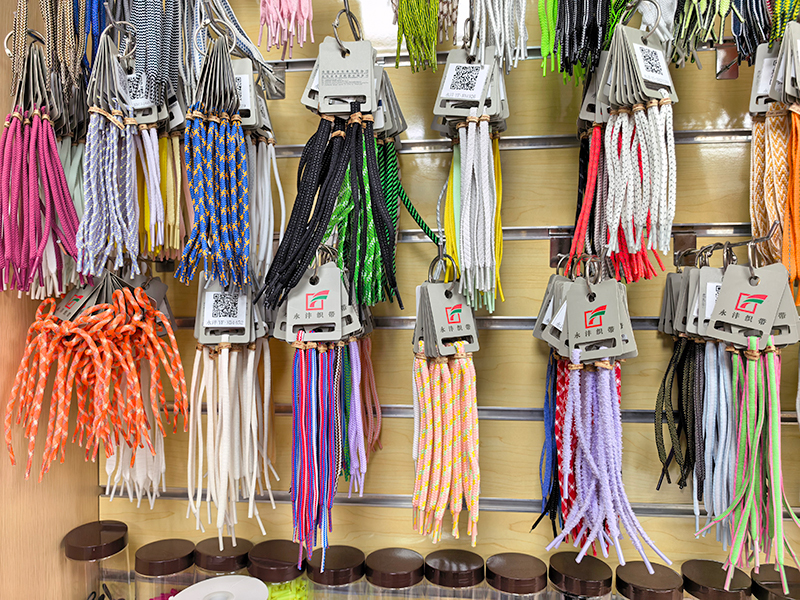
A flat weave tends to sit low and behave well under tension, but it can show every pull at the edges and has a way of curling when you least want it to. If your project needs to lie flush against a surface or pass through hardware, that slim profile is often worth the trade-off. Just keep a close eye on the selvedges, because that is where flat construction starts to fight back.
Tubular weaving gives you a softer, rounder structure that handles repeated bending without creasing the same way. It feels friendlier for straps, cords, or anything that will rub against skin, but it can add bulk and may flatten awkwardly under a presser foot. The in-between options, like a double weave with occasional interlocks or a lightly stuffed tube, let you keep the softness without losing all the stability.
Before committing, make a small sample and treat it the way the finished piece will be treated: fold it, pull it, wash it, or sew through it. A weave that behaves in your hands but misbehaves in the project usually means the structure is not the right match. Changing the weave early is far less painful than forcing a finished piece to cooperate later.
What Breaking Strength Numbers Really Mean Once You're Hanging Off the Ground
A stamped 22 kN on a carabiner doesn't mean it can hold 22 kN in every direction or after a few years of dust and drops. Those figures come from a slow, straight pull on new gear, which is about as far from a real hanging fall as a treadmill is from a mountain trail. Once your feet leave the rock, the system has to absorb sudden energy, and that energy arrives in a very short, sharp pulse.
Small details then start eating the margin. A knot can reduce a rope's strength by roughly a quarter or more, a sling draped over an edge sees force concentrate at the bend, and a carabiner loaded with its nose against the rock can fail well below its printed number. If you're hanging in space, you're not comparing your body weight to the rating; you're comparing a dynamic, off-axis, possibly damaged setup to a laboratory ideal.
None of this makes the numbers useless, but they're a starting point rather than a guarantee. Treat the rating as a clue about how much reserve might be left after reality gets through with it, and back up anything you wouldn't want to test with your own weight.
Coatings, Reflectivity, and Mil-Spec Labels: Sorting Useful Features from Hype
Coatings are often sold as a stack count: seven layers, twelve layers, whatever the marketing team settled on. The more practical question is whether the coating suppresses reflections at the viewing angles you actually use and whether it survives cleaning. Some of the best low-light optics use relatively simple coating formulas on high-quality substrates, while cheap glass with a dozen layers still fogs and scatters light. If glare control and scratch resistance are visible in ordinary handling, that tells you more than the layer count.
Reflectivity figures invite comparisons that rarely hold up outside a lab. A stated transmission of 99 percent may come from a single wavelength at normal incidence, not across the full visible spectrum or at the steep angles common in the field. Dust, moisture, and fingerprints change real performance long before the last percentage point matters. For night use, ghost images and off-axis flare are often more annoying than a small dip in peak transmission.
Mil-spec labels function best as a starting point, not a guarantee. Many products cite a portion of a standard such as MIL-STD-810 while setting their own pass criteria, so the label tells you testing happened under some conditions, not that the item will survive yours. Coating adhesion, edge sealing, and performance after repeated cleaning are better indicators of long-term durability. A plain description of how the coating was tested usually beats a vague certification badge.
Buckles, Sliders, and D-Rings: Getting the Fit Right Without a Drawer Full of Misfits
Most fit problems start before a single buckle gets sewn in. If the webbing is even a few millimeters wider than the hardware slot, the strap bunches at the edges, and that friction shows up later as fraying, sticking, or a slider that refuses to move. Measure the actual weave, not the listed width, because some nylon and polypropylene tapes run slightly heavy after coating.
Side-release buckles tend to get blamed for slipping when the real issue is the mismatch between the male and female ends. A slight curve or mold variation from a different batch can leave just enough play to let the prongs walk under load. Keeping paired halves from the same run saves time, and if a strap has to handle quick adjustments, a slider with a center bar holds tension more evenly than a standard tri-glide.
D-rings look simple, but they punish lazy spacing. Set them too close to a seam and the folded webbing cannot pivot cleanly; set them too far out and the whole assembly flops. A quick test is to thread the strap, pull it snug, and watch whether the ring stays flat or twists. If it twists, the anchor point or the ring profile is wrong, not your stitching.
Stitch, Knot, and Weatherproof: Small Choices That Keep Webbing from Failing Early
Most early webbing failures have less to do with the nylon or polyester itself and more to do with the last inch before it is put to work. A row of stitches punched straight across the load-bearing line can act like a tear-off perforation, so it is worth sewing across the width at a slight angle or using a box pattern that spreads stress instead of concentrating it. Leave a folded tail beyond the stitching, and match the thread to the webbing's stretch rather than grabbing whatever heavy-duty spool is nearby.
Knots are another quiet weak point. Any bend or loop reduces breaking strength, but the damage varies widely: a loose overhand can cut deeper than a well-dressed water knot, and cinching a thin cord around flat webbing creates a sharp crease that starts the failure early. Wet or muddy webbing makes this worse, so loosen knots after use, and avoid leaving a loaded knot in place for weeks if you want the fibers to recover.
Weatherproofing is where small habits really add up. Nylon loses a meaningful share of its strength when saturated, while polyester holds up better in wet conditions but still suffers under long sun exposure. If the color has faded unevenly or the surface feels stiff and glazed, that is not just cosmetic; the outer fibers are already giving up. Rinse salt and grit out after trips, dry gear out of direct sunlight, and store it loosely in a cool spot. These are not costly upgrades, just a refusal to let stitching, knots, and UV do the job early.
FAQ
Tubular webbing is woven as a seamless tube, so it resists abrasion and holds knots more securely while often packing more strength into a similar width. Flat webbing still works well for straps and tie-downs, but around rocks or metal, tubular tends to survive longer.
Not necessarily, but it has limits. It is light, floats, and resists water and mildew, yet it abrades faster and breaks down under UV more quickly than nylon or polyester. It is fine for temporary tie-downs, lake lines, or budget builds, but I would not trust it for hammock suspension or anything safety-critical.
Polyester stretches far less when wet, so the hammock stays at the same sag through the night instead of dropping. It also dries quickly and handles sun exposure better. Nylon is strong and has useful stretch for dynamic loads, but that give can feel annoying in a suspension system.
One inch is often the minimum for protecting bark, but many parks and established campsites now expect 1.5 to 2 inch straps. Wider material spreads the load over more of the tree and reduces damage. A basic backyard setup can get away with 1 inch, while public land or older trees call for wider.
You can, but it depends on the build. Mil-spec nylon webbing is consistent, tough, and usually rated higher than generic options, though it can be stiff and more expensive. It makes sense for heavy-duty leashes, recovery gear, or rescue-style equipment. For a key fob or light strap, it is more than you need.
A hot knife or lighter will melt the cut end on synthetic webbing like nylon, polyester, or polypropylene. Lightly melt it and press the edge flat with a tool, but avoid breathing the fumes. For a cleaner finish, fold the end over and sew a small box stitch or add a heat-shrink cap.
Breaking strength is the force it takes to fail the webbing in a straight pull under ideal conditions. Working load limit is a much lower, safer number that accounts for knots, wear, shock loads, and real-world use. Many people divide breaking strength by 5 or 10 for life-support or overhead loads.
Cotton looks and feels nice, takes dye well, and works for camera straps or decorative handles, but it rots, shrinks, and loses strength when wet. For anything that lives outside or carries weight, stick with nylon, polyester, or polypropylene.
Conclusion
When a roll of webbing sits in the sun, gets rained on, and rubs against bark or metal, the choice between nylon and polyester stops being theoretical. Nylon stretches and takes dye well, but it soaks up water and loses some strength when wet, while polyester keeps its shape, dries faster, and resists UV damage better over a full season outside. The weave matters just as much as the fiber. Flat webbing spreads load across a wide surface and feeds cleanly through buckles, tubular webbing handles knots and abrasion without fraying as quickly, and the hybrid or hollow options sit somewhere in between, often feeling better in the hand but demanding more attention to hardware fit. Breaking strength numbers printed on the spool rarely tell you what happens after a knot, a stitch line, or a few months of exposure, so treat them as a starting point rather than a guarantee once you're hanging off the ground.
Coatings, reflective threads, and mil-spec labels can be genuinely useful or just clutter, depending on whether the coating stiffens the weave, the reflectivity survives repeated bending, and the spec actually matches the use case. Hardware selection trips up more projects than the webbing itself. A buckle that slips on tubular stock, a slider that bites too hard into a coated surface, or a D-ring with the wrong inner radius will chew through fibers long before the rated load is reached. Stitching patterns, knot choice, and weatherproofing the cut ends are the small decisions that keep a strap from failing early. If the edge is left raw or the stitch density ignores the weave direction, even the toughest webbing turns into a liability. The best pick is rarely the highest strength rating; it is the one that matches the fiber, weave, hardware, and finish to how the strap will actually be used.
Contact Us
Contact Person: Mr Deng
Email: [email protected]
Tel/WhatsApp: +86-18926872657
Website: https://www.uniyongfeng.com/