

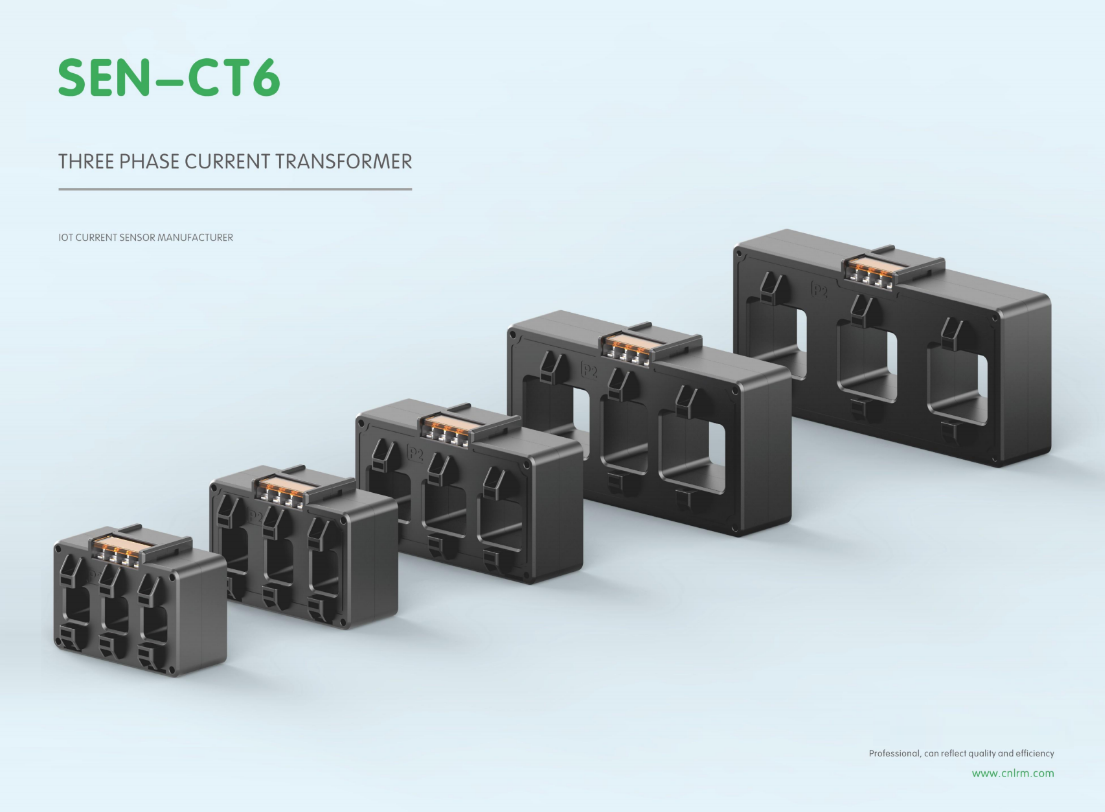
Three-Phase Current Transformer Original Manufacturer: Ensuring Precision and Reliability
2026-09-04
When precision and reliability are non-negotiable, the choice of a three-phase current transformer’s original manufacturer becomes critical. Many suppliers claim excellence, but few can match the engineering rigor behind Xiasen — a name synonymous with uncompromising performance. What sets a true original manufacturer apart? This blog dives into the core factors you should evaluate before trusting your power systems to any source.
Precision That Starts at the Winding Stage
Most winding errors begin before the first layer is even laid down. We set tension not from a single value but from a live feedback loop that reads wire diameter, spool inertia, and traverse speed at the same time. A 2-gram difference in pull can shift inductance by more than a percent, and at higher frequencies that becomes audible or measurable as a spike in distortion. So we calibrate per spool, not per batch, and we watch the readout during every revolution.
Layer alignment gets checked against a digital template after each pass, not just at the end. If the wire drifts by half a wire width, we correct the traverse before the next row goes down. This is where you stop the small overlaps that later turn into hot spots, insulation stress, or a coil that hums when it should be silent. It takes longer, but the alternative is testing and rejecting finished units—and that's more expensive than a few extra minutes at the winder.
The payoff shows up in the footprint of the winding. A tight, even lay means the coil stays cool under load and holds its electrical values over years of thermal cycling. We've wound prototypes that looked fine to the eye but failed a 40-cycle temperature shock test because the innermost turns had shifted during winding. By controlling the process at this stage, we don't just build to spec—we build it so it stays at spec after it leaves the bench.
Materials Selected for Decades of Service
Every material that makes it into our long-service lineup earns its place through a mix of field data and stubborn refusal to accept “good enough.” We don’t pick alloys or polymers from a catalog based on spec sheets alone. Instead, we track components that have already survived ten, fifteen, even twenty years in punishing environments—salt spray, thermal cycling, UV exposure—and reverse-engineer what kept them intact. That history, not marketing promises, drives the shortlist.
Corrosion resistance gets most of the attention, but it’s rarely the whole story. A stainless steel fitting might shrug off rust while galling under repeated torque, or a UV-stable seal could harden and crack once temperatures swing below freezing. Our selection process pairs accelerated lab testing with teardown reports from retired equipment, so we see how materials actually fail—not just how they pass a datasheet check. That’s why some seemingly ordinary carbon steels with the right coating outperform exotic alloys in our applications.
The result is a materials list that feels almost boring on paper, because every entry has already proven itself in the real world. No trendy composites that look great in a launch video but delaminate after three summers. No “aerospace-grade” aluminum that pits in coastal air. Just workhorse metals, polymers, and ceramics selected by people who know the cost of pulling a part out of service early.
Testing Beyond Standard Requirements
Standard test suites tend to confirm that a feature works when everything follows the happy path. Pushing past those boundaries means deliberately breaking assumptions: feeding an empty file into an importer, sending a request with headers missing, or hammering a checkout flow with the same item already out of stock. These scenarios rarely appear in a baseline spec, yet they are exactly where users stumble. By treating edge cases as first-class citizens rather than optional extras, teams uncover failures before a release instead of after a support ticket lands.
Beyond functional checks, pressure matters. Letting a session idle for hours can reveal token expiry flaws that quick test runs miss. Filling a form with emoji, right-to-left text, or unexpectedly long strings exposes validation and layout weaknesses. And when performance limits are pushed, a feature that looks stable under ten users may break under two hundred concurrent requests. These extra passes do not guarantee perfection, but they shrink the gap between lab confidence and real-world reliability.
Custom Designs Without the Long Lead Times
Custom doesn’t have to mean waiting weeks. By keeping a curated library of base materials, tested construction methods, and modular components ready to go, we turn your specific brief into a finished piece in days rather than months. You pick the dimensions, finishes, and functional details—everything else is already engineered to move fast.
The slower part of bespoke work usually isn’t the making; it’s the back-and-forth. We’ve stripped that down to a single design review. Send your rough sketch or reference photos, get a clear digital proof within one business day, and approve it with one click. Changes at that stage are quick because the underlying patterns are already validated.
What you receive is still unmistakably yours—proportions adjusted, hardware selected, edges and textures matched to your space. The difference is that the lead time reflects a process built for momentum, not for waiting rooms.
Real-World Reliability in Demanding Grids
Grids that push equipment to its limits rarely behave like lab simulations. Voltage sags, frequency drift, harmonic distortion, and sudden load steps are daily realities in industrial zones and remote microgrids. Components either hold up under that stress or they don't. The difference shows up in unplanned downtime, premature aging of capacitors, and nuisance trips that erode operator confidence.
Field data from mining operations, islanded systems, and heavy manufacturing tells a clearer story than datasheets. In those settings, inverters and converters face repeated thermal cycling, dust, salt spray, and imperfect grounding. Reliability comes from conservative component derating, robust control loops that recover fast from transients, and firmware that handles edge cases without flagging false faults. That kind of resilience is measured in years of continuous service, not just certification tests.
Manufacturing Steps That Eliminate Hidden Defects
Most hidden defects never announce themselves during assembly. They form in the quiet spaces between material preparation and final inspection, often as micro-cracks, residual stress, or surface contamination. A manufacturing sequence that targets these flaws starts by treating every handoff as a potential source of damage rather than a simple transfer point.
Instead of relying on end-of-line checks, operators use low-pressure rinses with filtered solvents, maintain controlled humidity during bonding, and apply ultrasonic or thermal imaging at stages where stress accumulates. Tooling is inspected for wear before it can transfer irregularities to the part, and batch records are reviewed for any deviation in temperature or dwell time that might seed a latent defect.
The sequence closes with a feedback loop that links each detected anomaly back to the exact step where it originated. That loop changes the process in real time, adjusting clamp pressure, curing profiles, or handling fixtures so the same hidden flaw cannot repeat. What remains is a production flow that catches defects while they are still reversible, not after they have become embedded in the finished component.
FAQ
An original manufacturer controls the entire process from core winding to final calibration. We don't just assemble parts from various sources; we specify the magnetic steel, design the winding geometry, and run every unit through our own test benches. That means you get direct engineering support and consistent performance without hidden batch variations.
We select high-permeability grain-oriented silicon steel for the cores and use computer-controlled winding machines to keep turn counts identical. Each transformer is then tested at 1%, 5%, 20%, 100%, and 120% of rated current to verify the ratio and phase angle stay within the promised class, typically 0.5 or 0.2S depending on the model.
Reliability in this context means the transformer won't drift, saturate prematurely, or fail when a real fault current passes through it. We use double-insulated secondary leads, vacuum-cast epoxy resin for moisture protection, and thermal cycling tests to catch weak points before they leave the factory. The goal is a 20-year service life without recalibration.
Encapsulation keeps out humidity, dust, and mild chemical exposure. We use a vacuum casting process that removes air bubbles from the epoxy, so the winding is fully sealed. This prevents partial discharge and corrosion, which are the two main reasons transformers lose accuracy in industrial environments.
Yes. Since we manufacture in-house, we can adjust busbar window dimensions, mounting hole patterns, and secondary ratios like 300/5A, 400/5A, or 600/5A without long delays. We often work from a simple dimensional drawing or even a photo of the existing installation, then produce a sample for fit-check before the full order.
Every unit receives a dedicated test report with serial number, ratio error, phase displacement, and insulation resistance at 500V DC. We also perform a 3kV AC hi-pot test for one minute on each secondary winding. The reports are archived for at least ten years, so you can trace performance history if a system audit ever asks for it.
We focus on three things: core shielding to reduce external magnetic interference, tin-plated brass terminals that resist oxidation, and a wide temperature rating from -25°C to +60°C. For really tough sites, we offer an optional stainless steel mounting bracket and silicone rubber gasket to keep vibration from loosening the connection.
Conclusion
Building a three-phase current transformer that will spend decades in service starts far earlier than most buyers imagine. Precision is not added after assembly—it begins at the winding stage, where every turn, tension, and layer must be controlled to keep phase-to-phase error curves tightly matched. The original manufacturer relies on high-permeability grain-oriented silicon steel cores and carefully selected insulation systems, such as epoxy resin and high-temperature paper, to withstand decades of thermal cycling without drift. Testing goes well beyond routine checks: each unit faces combined temperature rise, lightning impulse, partial discharge, and accuracy linearity tests under varying burdens, so that the declared accuracy class holds true even in harsh conditions.
Custom designs do not mean endless delays. By keeping modular winding fixtures and a flexible production schedule, the factory can deliver non-standard ratios, special terminal arrangements, or compact housings in practical lead times. Real-world grids are unforgiving—they bring load swings, harmonic distortion, and fault currents—so manufacturing must eliminate hidden defects before they surface. Vacuum casting prevents air pockets, X-ray inspection verifies internal geometry, and turn-to-turn insulation testing is performed on each phase. The result is a transformer that does not gradually lose linearity or fail prematurely, giving protection relays and meters a stable reference for years. This level of process control is what keeps field failures rare and accuracy stable over the transformer's service life.
Contact Us
Contact Person: Liu Mengyang
Email: [email protected]
Tel/WhatsApp: 8618727589233
Website: https://www.cnlrm.com/en/