

Steel Truss Welding Production Line Exporter: Key Factors to Evaluate Before You Buy
2026-09-03
Choosing the right steel truss welding production line exporter is not just about price—it’s about long-term performance, support, and adaptability to your specific fabrication needs. Before you sign any contract, you need to look beyond polished brochures and dig into engineering substance. Here at YI ZHOU TECHNOLOGY, we’ve seen too many buyers overlook critical evaluation criteria and later face costly downtime. This guide breaks down the essential factors—from weld quality consistency and automation level to after-sales response and spare parts availability—so you can make a confident, informed decision.
How Fast Does the Line Really Weld? Verify Before You Trust
The speed printed in a brochure or quoted by a supplier rarely survives contact with your actual setup. Those figures usually come from clean plates, perfect fit-up, and a fixed torch angle under controlled current. On a real line, you might be dealing with gaps up to 1.5 mm, mill scale, or a slight misalignment that forces you to slow the travel speed just to avoid lack of fusion. That is why the only reliable weld speed is the one you measure on your own parts, with your own wire, gas mix, and power source. Start by welding a 300 mm scrap joint at the speed you hope to run, then cut and etch it. If the root is not fully tied in, no marketing number will fix it.
A straightforward verification routine saves you from chasing ghosts. Run three identical joints at three different travel speeds, mark the actual arc-on time with a stopwatch, and record the wire feed rate and voltage for each. Look for burn-through, undercut, and excessive spatter at the fastest setting. Then measure deposition efficiency by weighing the wire consumed per minute against the weld metal deposited. If your line is supposed to hit 1.2 m/min but you keep dropping to 0.9 m/min due to torch angle or operator fatigue, that is the real number. Write down what works on a given joint and use that as your baseline. Only trust speed data you have verified with a cut-and-etch at the same parameters you will run in production.
Can the Exporter Weld Your Exact Truss Geometry? Demand a Demo
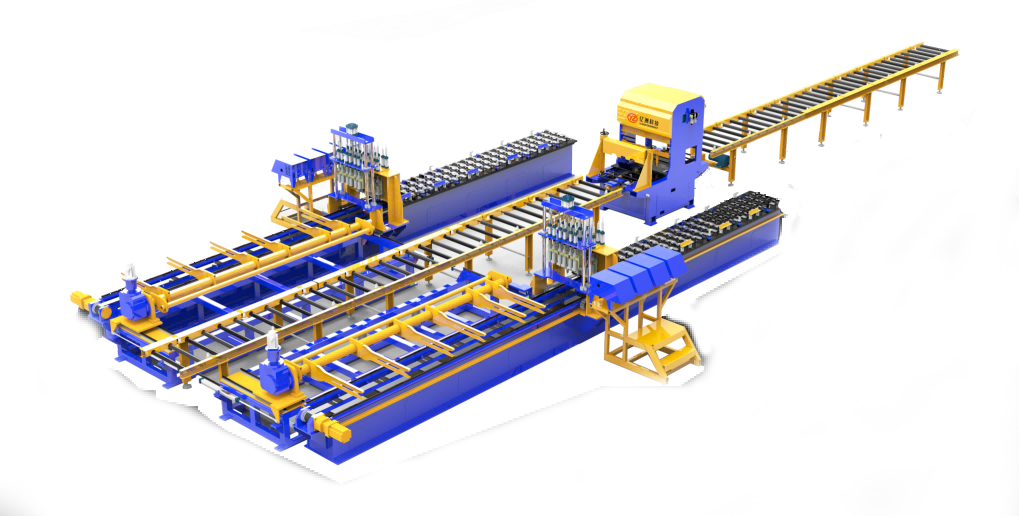
Most exporters will show you a catalog and tell you it's close enough. But if your truss has custom angles, unusual node connections, or a non-standard chord profile, you need to see the actual weld setup before committing. Ask for a live demonstration where they fixture your exact geometry—not a similar one—and weld it in front of you. If they hesitate or suggest modifying your design to fit their standard jigs, that's your answer.
A real exporter with in-house welding capability won't blink at this request. They'll load your CAD file, set the jig to your dimensions, and run a sample joint. Watch how they handle distortion, root gaps, and fit-up. These details determine whether your truss arrives square and true, or requires hours of field rework. Demanding a demo forces them to prove their process, not just their paperwork.
What Happens When Your Design Changes? Test Their Flexibility
Design is never static. A layout that looks perfect today can feel outdated tomorrow, or a client might ask for a last-minute shift in color, spacing, or hierarchy. The real question isn't whether you can make the change—it's whether your underlying choices can stretch without snapping. Flexibility means swapping one element and watching the rest hold steady instead of collapsing into inconsistency.
Think of flexibility as a stress test for your decisions. If a typeface only works at one size, or a grid falls apart when you add an extra column, the design is brittle. But when you can adjust padding, swap imagery, or reorder sections and the overall rhythm stays intact, you've built something resilient. That resilience comes from clear rules that allow variation, not from rigid templates.
Before you commit to a direction, try pushing it. Change the primary color. Increase the text width. Remove an image. See what breaks. The elements that survive these small disruptions are the ones worth keeping. Flexibility isn't about designing for every possible future—it's about knowing your design can handle a few unexpected turns without losing its voice.
Is Their After-Sales Support Real or Just a Sales Pitch?
Most companies promise the moon when you sign the contract, but the real test comes the first time something breaks. Do they actually pick up the phone, or do you find yourself trapped in a maze of automated menus and copy-pasted email replies? The gap between a slick sales presentation and genuine after-sales care is where trust either solidifies or quietly evaporates.
Look past the polished onboarding videos and count the actual touchpoints: do they schedule follow-up calls without being chased? Are replacement parts or service visits dispatched without a three-week email thread? A support team that treats your problem as an inconvenience rather than an opportunity is broadcasting a very different message than any brochure ever could.
The simplest way to tell the difference is to ask current customers about their last service ticket. Not the references supplied by the vendor, but the ones you find on forums or through word of mouth. If the stories consistently mention quick resolutions and proactive check-ins, the sales pitch might just be true. If the silence is louder than the promises, you already know the answer.
What’s the True Cost of Running the Line? Look Past the Invoice
Most managers stop at the price printed on the equipment or service invoice, but that number rarely captures what actually drains the budget each quarter. A production line eats money in subtle ways: unexpected downtime from worn tooling, energy spikes during peak cycles, or the labor hours lost to a machine that needs constant manual adjustments. When you only compare supplier quotes, you miss the real ledger—where the cheapest upfront option often becomes the most expensive once it's bolted to the floor.
Consider the hidden line items that never show up on a purchase order. Scrap rates climb when a low-cost component drifts out of tolerance, forcing rework or full rejects. Maintenance crews spend extra shifts chasing intermittent faults instead of improving throughput. Then there's the cost of carrying spare parts for a machine that breaks down more often than the datasheet admits. These operational leaks compound weekly, yet they rarely get attributed to the original purchasing decision.
Smart operators build a different kind of cost model—one that tracks total runtime expenses over the line's expected life. They talk to the technicians who nurse the equipment, not just the vendor's sales team. They measure kilowatt-hours per unit produced, minutes of unplanned stoppage per shift, and the true yield after all rejects are pulled. Once you look past the invoice, the question stops being "which line is cheaper to buy?" and becomes "which line costs less to run every single day?"
Do They Have the Compliance Paperwork to Back the Export?
Before any container gets sealed, the real question isn't whether the product looks right—it's whether the paperwork can survive a customs desk on the other side of the world. Export compliance isn't a single stamp; it's a chain of documents that starts with the commercial invoice and doesn't end until the certificate of origin, packing list, and any export licenses are cross-checked against the actual goods. Miss one field, mislabel a harmonized code, or ship a dual-use item without the right authorization, and that "minor" oversight turns into a held shipment, storage fees, and a very unhappy buyer.
The practical test is simple: ask for the full document set before the goods move. A legitimate exporter should be able to produce the bill of lading, the export declaration, and—if the destination country demands it—the inspection certificate or health and safety clearances, all matching the same quantities, weights, and descriptions. Where most go wrong is treating these papers as an afterthought. The moment a packing list says "120 units" but the invoice says "100," the entire shipment becomes suspect. Compliance paperwork isn't just about having files on hand; it's about whether every page agrees with every other page and with what's actually inside the crates.
Then there's the layer that rarely gets talked about: third-party verification and record retention. A buyer who has been burned before will ask who issued the certificate of free sale, or whether the exporter can provide an audit trail for the past three years. Can you show the export control classification number for each SKU? Do you have a written procedure for denied-party screening? If the answer is a shrug, the paperwork isn't backing the export—it's just sitting in a drawer. Real compliance means the documents not only exist but can be produced under pressure, matched against regulations that shift with every new tariff announcement, and traced back to the person who signed off on them.
FAQ
Focus on the duty cycle of the welding power sources, repeatability of the robots, maximum truss dimensions and weight the line can handle, whether the control system supports offline programming, and how well the cycle times match across stations.
Ask for case studies of similar lines delivered in the last two years, then contact two or three of those customers to check equipment utilization and downtime. If possible, arrange a video or on-site acceptance test, paying attention to their assembly shop and testing procedures, not just rendered images.
At a minimum, clarify response times, remote diagnostic access, a list of wear parts in stock, and local service partners. The contract should specify replacement options for critical components like servo motors, torches, and controllers within 48 hours; otherwise downtime costs will quickly wipe out early savings.
Not necessarily. If you have many truss variants in small batches, changeover time on a fully automatic line can eat away the efficiency advantage. A semi-automatic setup with skilled welders is often more flexible and has a shorter payback period. Calculate annual capacity and likely product mix before deciding on the automation level.
Check whether the equipment meets IEC or UL electrical standards, whether welding fume extraction complies with local environmental regulations, and whether robotic cells have proper light curtains or fencing interlocks. Ask for certificate numbers and verify them; don't accept vague phrases like 'meets international standards.'
Factor in energy consumption, welding wire and gas losses, wear part replacement frequency, expected downtime, and travel costs for service engineers. Ask the exporter for an estimated comprehensive cost per ton of finished product, then compare it with your current equipment or reference customer data.
Send the three most complex truss drawings you produce and ask for a simulation or cycle time analysis. Also confirm the range of joint spacing, web angle, and clamping methods the line can handle. If the exporter cannot provide a solution based on those drawings, you will likely face adaptation problems later.
Very important. A closed control system means future process changes, equipment integration, and troubleshooting depend on the original vendor, which is slow and expensive. Prefer systems built on standard PLCs and industrial robot platforms that allow your local engineers to modify parameters and back up programs.
Conclusion
Before committing to a steel truss welding production line exporter, you need to interrogate the numbers behind their claimed output. A brochure might promise rapid cycle times, but real throughput depends on your truss geometry, plate thickness, and joint configuration. Ask for a live run with your own CAD files, not a simplified demo piece. Watch how the line handles transitions between different chord sizes and web patterns—slow changeovers can erase any speed advantage. Equally important is whether the exporter has ever welded a truss profile that matches yours. If your work includes asymmetric spans, cambered chords, or non-standard pitch spacing, demand a sample run using those exact parameters. An exporter that hesitates or offers only “similar” examples is telling you something about their actual range.
Beyond the machine itself, you need to test the exporter’s behavior under pressure. Design revisions are normal in structural steel work; if a joint detail shifts after the order is placed, will their engineering team respond with revised welding paths within days, or will you be stuck waiting for a reseller to relay messages? The same scrutiny applies to after-sales support. Ask for a list of recent customers in your region, then contact them directly to ask about response times for spare parts, software troubleshooting, and on-site service visits. Also calculate the true running cost, not just the purchase price: consumables like contact tips and liners, energy draw per meter of weld, required compressed air volume, and labor for programming and maintenance all add up. Finally, insist on seeing current export compliance documentation—CE, UL, or regional equivalents—along with full material traceability for critical components. A legitimate exporter will have these files ready; a vague answer about “standard certificates” is a warning sign.
Contact Us
Contact Person: Sophia Jiang
Email: [email protected]
Tel/WhatsApp: +86 17367381818
Website: https://yzwelding.com/