

SMD Chip Resistor Recommended List: Best Options for Your PCB Projects
2026-09-11
Choosing SMD chip resistors for a PCB project can turn into a rabbit hole of tolerance, power rating, and package size trade-offs. This recommended list strips it back to the parts we'd actually reach for—whether you're prototyping a sensor board or finalizing a production run. If you're tired of second-guessing component choices, the notes from Milliohm might just save you a few hours of searching.
The 0402 Sweet Spot: When Going Smaller Complicates Your Assembly
For many PCB assemblers, 0402 components hit a practical balance between board density and manufacturability. They are small enough to support compact layouts yet large enough to be handled reliably by standard pick-and-place machines and reflow profiles. The pads, spacing, and solder paste volumes all remain forgiving, which keeps defect rates low without demanding specialized tooling.
However, the move to 0201 or 01005 parts quickly erodes that margin. Paste deposition becomes far less tolerant of stencil alignment or aperture variation, and placement accuracy requirements tighten to the point where even minor machine calibration drift shows up as tombstones or bridging. Component feeders and nozzles also need finer control, and inspection systems must resolve features that are easy to miss at higher throughput.
That is why 0402 often remains the default choice when a design does not absolutely require the extra space savings. It offers a wider process window and lower rework cost, while still allowing impressive board density. Once you cross below that threshold, every step of assembly demands closer attention, and the cost of complexity can outweigh the real estate gained.
Thin Film on a Thick Film Budget: 0.1% Tolerance Picks That Don't Cost a Fortune
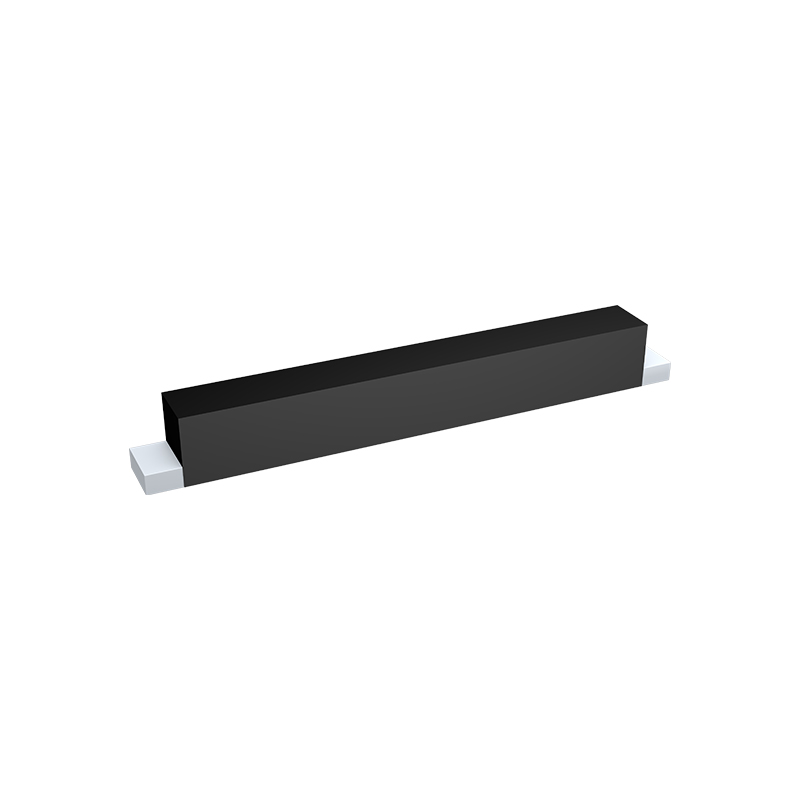
The assumption that 0.1% tolerance thin film resistors automatically break the bank is outdated. Dig into distributor stock and you'll find standard values like 10kΩ or 100kΩ in 0603 or 0805 packages priced only a few cents above their thick film cousins. The trick is accepting commercial temperature ranges and a typical ±25ppm/°C TCR instead of chasing military or space-grade certifications.
Stick to common E24 or E96 values, buy full reels rather than cut tape, and pay attention to which parts have high production volumes. Some Asian suppliers now deliver genuine 0.1% tolerance thin film parts at prices that force older Western brands to compete. Check the datasheet for long-term drift and moisture resistance, but don't assume a higher price tag always means better real-world performance.
Of course, saving money means accepting a few tradeoffs. These budget thin films may not have the absolute lowest noise or the tightest TCR, but for precision dividers, instrumentation amp gain setting, and sensor signal conditioning, 0.1% plus ±25ppm/°C is often more than enough. If you truly need better stability, you can step up a grade without returning to the days of thick film drift and excess noise.
Low-Ohm Current Sensing: Resistors That Keep Drift Out of Your Feedback Loop
When the feedback loop starts nudging the output in the wrong direction, the culprit is rarely the op-amp or the ADC—it tends to be the resistor quietly converting amps into volts at the bottom of the power stage. A low-ohm current-sense resistor lives in a thermally hostile spot, and even a few milliohms of drift translates directly into a misleading error signal. The result is a regulator that chases a setpoint that has shifted under load, or a battery gauge that slowly loses its sense of what “full” means.
The practical fix starts with the resistor’s material and construction. Metal-alloy elements like manganin, Zeranin, or Evanohm are chosen not just for their initial tolerance but for a temperature coefficient of resistance (TCR) measured in the single-digit ppm/°C range. Equally important is thermal EMF: junctions between the resistance alloy and copper leads can generate microvolt-level offsets that masquerade as current. Four-terminal Kelvin layouts bypass this by moving the voltage sense lines inside the current path, so solder-joint and trace resistance never share the measurement.
Layout discipline matters more than the datasheet’s headline TCR. A sense resistor mounted near a hot MOSFET or in the path of uneven airflow will develop a thermal gradient across its body, and that gradient produces a standing offset no calibration routine can fully remove because it changes with load. Wide, symmetric copper pours connected to the Kelvin pads, paired with a solid return path, keep the heat moving uniformly. In tight designs, derating the resistor to half its nominal power and placing it away from switching nodes turns a temperamental feedback loop into one that stays put.
Pulse-Proofing Your Board: Resistors Built for Inrush and ESD Hits
Most board failures don't happen during normal operation—they happen in the first milliseconds after power-up or when a cable gets plugged in. Standard thick film resistors can drift or crack under these fast transient spikes, especially when inrush current pulls several times the steady-state load through the input path. Choosing resistors with proven pulse-withstanding capability means looking beyond the continuous power rating and examining the peak pulse energy the element can absorb without permanent shift. Wirewound and metal film types often handle short bursts far better than their datasheet wattage suggests, but only if the pulse duration and repetition rate match the manufacturer's derating curves.
For ESD events, the energy is smaller but the rise time is brutal—often under a nanosecond. A resistor placed in series with an exposed connector pin can act as a cheap, effective current limiter if its parasitic inductance and voltage coefficient don't get in the way. Carbon composition resistors, while electrically noisy, have a nearly ideal pulse response because the resistive element is a homogeneous bulk material rather than a thin film spiral. That means no hot spots from current crowding, and the body acts as its own heat sink. For lower-cost designs, anti-surge thick film resistors with trimmed geometry and special overglaze can survive repeated hits that would send a generic 0603 into an open circuit.
Placement matters just as much as component selection. Keep pulse-rated resistors close to the connector or relay they protect, and avoid routing the input trace through shared ground pours where return current can inject noise into sensitive analog sections. A small series resistor before a TVS diode reduces the diode's clamping current and spreads the dissipation, often letting you drop a diode size while improving overall ruggedness. Compare actual pulse waveforms against the resistor's published overload curves—many failures come from assuming a 1W resistor can handle 1W for 100 microseconds, when the reality is a 10x power spike for a shorter window may cause permanent drift. Test with the real inrush capacitor bank and the exact ESD gun model your product will face in certification; datasheet pulse ratings are a starting point, not a guarantee for your layout and load profile.
Automotive-Grade SMDs for Non-Automotive Projects: AEC-Q200 Without the Premium
Plenty of non-automotive designs never leave the bench or the small-batch production line, yet they still demand the kind of passive component reliability that AEC-Q200 stress testing was built to prove. The good news is that you don't have to pay the full automotive supply-chain markup to get that assurance. Many capacitor, resistor, and inductor lines share the same ceramic formulations, termination materials, and internal construction as their AEC-Q200 siblings, differing only in paperwork and part-number suffixes. Identifying those cross-references—or buying from distributors that stock qualified parts without the full PPAP package—lets you use components that have already passed temperature cycling, humidity bias, and board flex tests without absorbing the cost of automotive documentation.
A practical approach starts with the datasheet rather than the catalog tier. Look for manufacturers that publish one combined document covering both commercial and AEC-Q200 versions of the same series. The electrical specs and derating curves often match exactly; only the qualification appendix changes. By selecting the standard suffix and specifying your own incoming inspection, you get the same physical part that would have gone into an ECU, but at a price closer to a general-purpose SMD. Excess inventory channels and franchise distributors clearing automotive overstock are another quiet source—those parts carry the full qualification history but sell at a discount simply because the demand forecast shifted.
The real payoff shows up in harsh but non-vehicular environments: outdoor LED drivers, industrial sensor nodes, or power supplies that live near hot machinery. Using AEC-Q200-grade SMDs there means fewer field returns from cracked MLCCs or drifted thin-film resistors, without triggering the auditor's question about why a $2 board has a $0.50 capacitor. Just keep the traceability in your own records and skip the costly lot-specific test reports unless a customer contract specifically asks for them. That balance—proven ruggedness, sensible pricing—is why more engineers are quietly treating automotive-qualified passives as their default for anything that has to survive more than a few thermal cycles.
Prototyping Workhorses: 0603 5% Picks That Survive Breadboard to PCB
There’s a reason certain 0603 5% parts end up scattered across every workbench. They bridge the awkward gap between “too small to handle” and “too big for a dense board,” and the tolerance is loose enough to be cheap but tight enough for most LED, pull-up, and decoupling jobs. If you test a circuit on a breadboard using cheap breakout adapters, then move it to a PCB, you can keep the exact same reel—no re-checking the math.
A shortlist of survivors usually includes 1k, 10k, 100k resistors and 0.1uF, 1uF, 10uF capacitors in 0603 5% ratings. These cover pull-ups, voltage dividers, filtering, and power rail smoothing without forcing you to stock dozens of extras. Since 5% parts cost almost nothing in bulk, you can afford to buy full reels and treat them as disposable during the messy breadboard phase.
The real test is rework. These 0603 parts tolerate being soldered onto a breakout board, removed, re-soldered onto a first PCB rev, and sometimes touched up with hot air without their pads lifting or values drifting. That durability, combined with a footprint that is still friendly to hand assembly, makes them the default choice when you want to move from prototype to final board without a value swap.
FAQ
I'd suggest looking at Panasonic ERJ-2GE or Yageo RC0201/RC0402 series. They're cheap, widely stocked, and handle most low-power digital/analog work without fuss.
0805 (2012 metric) is the sweet spot. Big enough to see and maneuver with tweezers, yet still compact. 0603 is doable but gets fiddly; 0402 and below become frustrating without magnification.
Thin film usually wins for precision. Expect tighter tolerance (0.1% vs 1%), lower noise, and better temperature stability. But thick film is fine for digital pull-ups and LEDs where a few percent drift doesn't matter.
For a standard indicator LED drawing 10–20mA, 1/10W (0.1W) is plenty. If you're running high-brightness LEDs at 50mA+, step up to 1/8W or 1/4W to keep things cool.
Yageo, Panasonic, Vishay, and KOA Speer all have solid reputations. I typically grab whatever is in stock from DigiKey or Mouser—just avoid obscure no-name parts if you care about consistency.
Most use a 3-digit or 4-digit EIA-96 style marking. For example, "103" means 10kΩ, "1002" means 10kΩ with an extra digit, and EIA-96 uses numbers like "01C" for 10kΩ. A multimeter is the fastest sanity check.
A 0805 or 0603 kit with E24 values from 10Ω to 1MΩ covers 90% of breadboarding and prototype needs. Look for kits labeled 1% tolerance and 1/8W or 1/10W rating.
Conclusion
Choosing SMD chip resistors for a PCB project often means balancing footprint, tolerance, and ruggedness before the first prototype spins. The 0402 package hits a practical sweet spot for density, but moving below it tends to invite placement headaches and rework trouble for little board real estate gain. For day-to-day prototyping, 0603 5% parts remain the workhorses—they tolerate hand soldering, survive breadboard-to-PCB transitions, and are cheap enough to keep in bulk. When a design includes current sensing, low-ohm resistors with stable temperature coefficients matter more than their price tag; they keep feedback loops predictable and prevent drift from quietly eroding measurement accuracy.
Precision needs don’t have to blow the budget. Thin film resistors in 0.1% tolerance now appear at prices that compete with thick film options, giving analog front-ends and voltage dividers a real accuracy boost. For boards that face inrush currents, hot-plug events, or ESD strikes, pulse-proof resistors with specified overload ratings save space by avoiding over-spec’d 2512 monsters. And if you want automotive-grade reliability without the premium, AEC-Q200 qualified SMDs in standard footprints can be dropped into non-automotive projects for a modest cost increase—useful for industrial or outdoor gear where field failures are expensive. The final list favors parts that solve real assembly and field-life problems rather than chasing extreme specs.
Contact Us
Contact Person: Yuying Gao
Email: [email protected]
Tel/WhatsApp: +86 18926013721
Website: https://en.milliohm.net/