

Professional UAV Simulation Software for Accurate Drone Testing and Training
2026-09-29
Every drone mission starts long before the rotors spin. For teams that can't afford guesswork, professional UAV simulation has become the quiet backbone of safe, repeatable testing and training. SRIZFLY turns hours of real-world trial into focused virtual reps—so when your aircraft finally lifts off, the only surprises left are the good kind.
Flight Physics Tuned to the Gram
Cutting a single gram from a rotor or shifting a battery pack by half a millimeter can nudge a craft from sluggish to razor-sharp. The math is unforgiving: a 1% drop in total mass doesn't just buy you 1% longer hover time—it reshapes how momentum builds and bleeds off in every turn, climb, and flare. Pilots who chase that last gram aren't obsessing over spec sheets; they're rebalancing an entire system where torque, drag, and lift all conspire against each other.
At this scale, symmetry beats brute strength. A frame redesigned with a hollowed spar here and a relocated sensor there can feel lighter than the scale suggests, because the grams you remove from the extremities kill rotational inertia far faster than grams shaved from the core. Tune it right and the bird doesn't just fly longer—it tracks like it's reading your mind before your thumbs even twitch.
Sensor Emulation That Doesn't Cut Corners
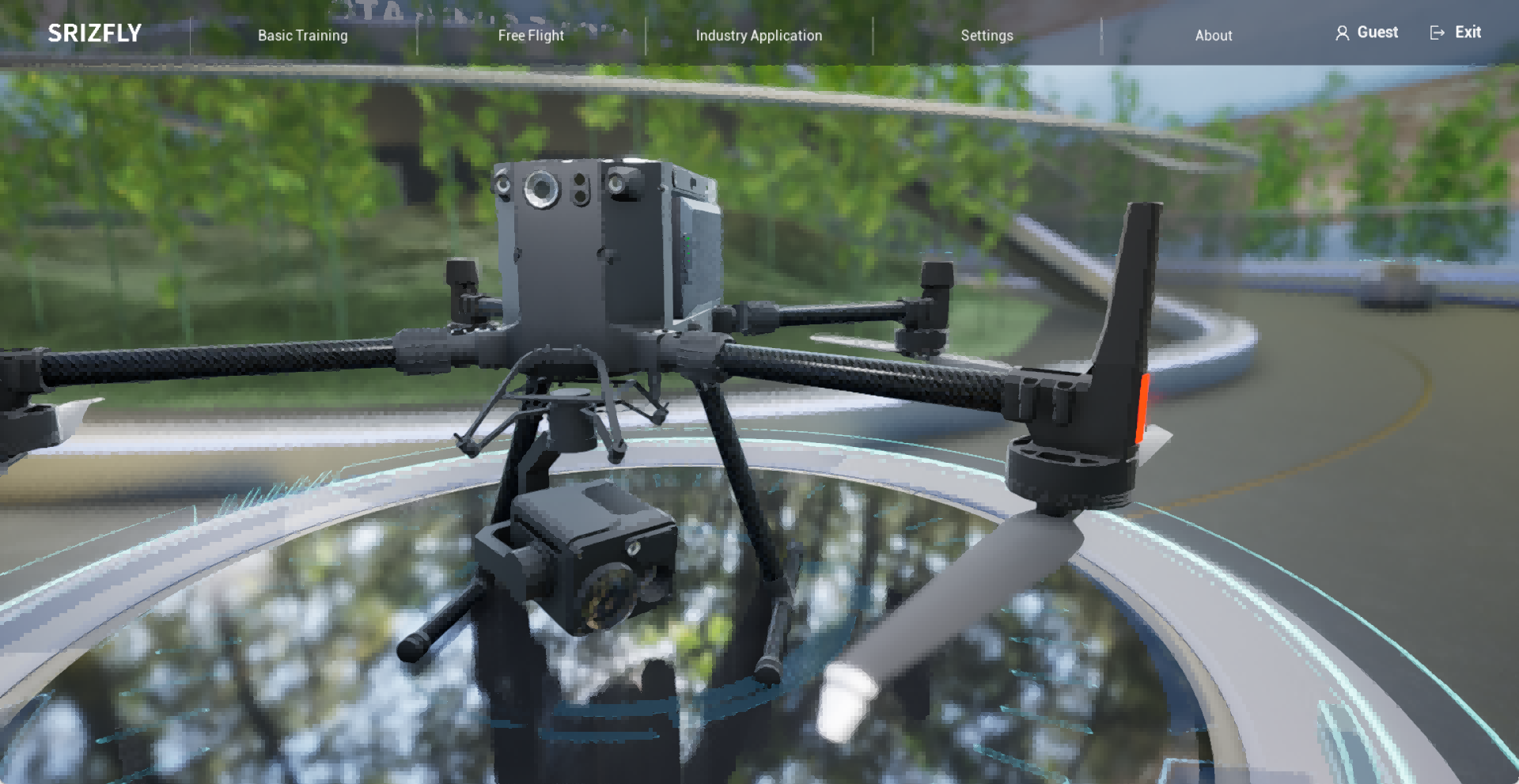
Real sensors are messy. A gyroscope doesn't just output a clean angular rate; it drifts with temperature, picks up vibration from the mounting bracket, and occasionally saturates when you spin too fast. Too many simulation setups pretend these imperfections don't exist, feeding tidy, idealized signals into the algorithm under test. That might work for a classroom demo, but it falls apart the moment your code meets actual hardware. Skipping the quirks means you're validating against a fantasy.
Common shortcuts include adding a touch of Gaussian noise and calling it done. But real noise has structure: bias instability, random walk, and flicker noise that simple white noise can't reproduce. You also need to simulate quantization steps, latency from the ADC or serial bus, and nonlinearities like soft saturation near the full-scale range. Without these, your sensor fusion filter might look brilliant in simulation and then lose lock on a moving vehicle because the real accelerometer's transient response was never modeled.
A thorough emulation layer treats the sensor as a physical system, not a data generator. It runs at the actual sample rate, introduces realistic delays, and lets you inject faults like stuck bits or intermittent disconnects. It also exposes the same register-level quirks developers will encounter, from signed integer wraparound to temperature-dependent scaling. When you build on that kind of fidelity, a passing test actually means something. The goal isn't to make simulation harder—it's to make it honest enough that the transition from virtual to physical doesn't come with surprises.
Training Scenarios That Feel Like the Field
Most training bays look nothing like the places where the work actually happens. The lighting is even, the floor is dry, and every tool is exactly where the instructor left it. But real operations rarely offer that kind of comfort. To close the gap, start by introducing friction that mirrors the field: add unpredictable noise, limit access to equipment, or force teams to work with incomplete information. A medical scenario stops being a classroom exercise when the mannequin is wedged under a collapsed awning and the only available airway kit is missing a blade. That small dose of chaos makes the scenario feel less like a script and more like a shift.
Good scenario design also leaves room for decisions the facilitator didn’t plan for. Instead of briefing every step, give participants a short set of facts and a clear objective, then let them discover the rest by interacting with the environment. Use real locations when possible—a vacant building, a gravel lot, a decommissioned vehicle—because texture and spatial constraints carry information that slides and photos can’t. Rotate roles so a person who normally runs the radio has to make physical entries. When one variable changes mid-scenario, such as a simulated power loss or an unplanned bystander walking through the scene, the team is forced to re-evaluate instead of following muscle memory.
Assessments should measure how people read the situation, not just whether they finished the checklist. Ask participants to explain what they noticed first, what they ignored, and what would have made them change course. Debrief using short video clips or observer notes that capture moments of hesitation and improvisation. Over time, this builds a mental library of field patterns—half-heard radio calls, a door that swings the wrong way, a patient who goes quiet—so that when the same cues appear on a real call, the response feels familiar rather than foreign.
From First Test to Final Report Without the Friction
Testing often feels like a necessary slog: set up the harness, run the first case, then wrestle with logs, flaky failures, and endless manual steps before you can even think about a readable report. We built a different path. From the moment your first test executes, every observation, trace, and assertion is captured automatically. No copying snippets into a doc, no jumping between five tools to piece together what happened. The flow stays lean because the system handles the busywork—you just watch the results take shape.
What makes it feel frictionless isn't a single magic button but a quiet alignment of details. Environment setup, test data seeding, retry logic, and report generation all share one context, so they don't trip over each other. When something fails, the report points to the exact line, the exact state, and the exact diff—not a vague stack trace buried in a chat thread. And when it passes, the final report is already formatted, signed, and ready to share with stakeholders who never need to ask "what does this mean?"
The result is a rhythm you stop noticing. You write a test, run it, glance at the dashboard, and move on. Later, the report is there—clean, complete, and honest about what passed and what didn't. Teams stop dreading the "reporting phase" because it simply happens alongside the testing. That's the whole point: no ceremony, no handoffs, no last-minute scrambling. Just a straight line from the first assertion to the final page.
Weather and Terrain That Push Your UAV Harder
Strong gusts don't just slow a drone down; they force the flight controller to work overtime. Sudden crosswinds over ridgelines or between buildings can flip a lightweight quad if the pilot isn't constantly feeding in corrections. Cold snaps are just as sneaky. Battery voltage sags faster at low temperatures, so a flight that felt safe in mild weather might trigger an emergency landing when the thermometer drops.
Mountain valleys and dense urban canyons create their own microclimates. Rotor wash bounces off sheer rock faces or glass facades, turning calm air into a churning mess of vortices. Signal reception also suffers when a UAV dips behind a ridge or a steel-framed tower, forcing you to fly with a much shorter effective range than the spec sheet suggests.
Flying through rain, sleet, or blowing sand is a test of every seal and bearing. Water sneaks past propeller hubs and into motor windings, while fine dust grinds away at gimbal joints until smooth pans become jerky. High humidity is quieter but no less damaging; it can fog a lens or corrode contacts over weeks, even if the drone never crashes.
Hardware-in-the-Loop Without the Headaches
Most hardware-in-the-loop setups fall apart long before the first test runs. The plant model never quite matches the real actuator, the I/O mapping shifts between software revisions, and someone ends up hand-soldering a breakout board at midnight. The goal isn't to eliminate all friction—it's to move it somewhere you can see it. Start by treating the interface layer as a first-class citizen: name signals by physical meaning, not by pin number, and store the mapping in a versioned file that both the model and the test harness read.
Timing is where the quiet headaches live. A controller designed for a 1 kHz loop will behave differently on a 200 Hz HIL target, not because the logic is wrong but because the assumptions baked into the simulation step are no longer true. Instead of chasing random failures, instrument the boundary between simulated time and wall-clock time. If your model has to pause, resync on a clean edge, not mid-calculation. That single change removes a whole class of intermittent bugs that look like hardware faults.
Don't let the test suite become a museum of golden configurations. HIL rigs drift: connectors wear, firmware gets patched, someone replaces a resistor with a slightly different value. Keep a short 'known-good' run that exercises every channel at least once a week, and store the resulting time series with enough metadata to compare against the next run. When a test fails, you'll spend minutes isolating the change instead of days re-deriving the setup.
FAQ
It uses high-fidelity physics models that replicate aerodynamics, wind gusts, sensor noise, and battery behavior. That means when you test a flight path or autonomous logic here, the results reflect what you'd see on an actual airframe, not a simplified approximation.
Yes. The training modules start with basic stick control and hover stability, then move into obstacle courses, emergency procedures, and night operations. Each session records telemetry and control inputs, so instructors can pinpoint exactly where a trainee struggles.
You can build custom airframes by adjusting motor count, mass distribution, propeller size, and even add payloads like cameras or LiDAR. The simulation recalculates performance in real time, so a heavy mapping drone flies and responds very differently from a lightweight racing quad.
Absolutely. The software provides a full software-in-the-loop environment with programmable APIs, ROS integration, and detailed sensor emulation. You can run your path planner or object avoidance stack through thousands of randomized scenarios overnight and catch edge cases that would be dangerous or expensive to find outdoors.
You have control over wind speed and direction, gusts, turbulence, rain, snow, fog, and even thermal updrafts. Light attenuation is modeled for camera sensors, and lidar returns degrade in heavy precipitation, which helps you validate sensor fusion under realistic degraded conditions.
Yes. The system generates scorecards based on flight precision, adherence to planned trajectories, reaction time to failures, and compliance with safety margins. You can set custom pass/fail thresholds, so a commercial operator and a hobbyist trainer can use different standards without changing the underlying simulation.
Free tools are great for casual stick time, but they often skip sensor fidelity, communication latency, and realistic battery dynamics. This platform is built for professional decision-making: if a delivery route or inspection maneuver works here, you can be confident it will work on the real drone without surprise retuning.
Yes. The software supports networked multi-user sessions, so a pilot can fly while an engineer watches live telemetry, or two aircraft can operate in the same airspace to practice coordination and deconfliction. Each user gets an independent viewpoint and role-based controls.
Conclusion
A genuinely useful UAV simulation platform has to earn trust in the details. Flight physics here are tuned to the gram, so a shift in payload distribution or a slightly worn propeller shows up in the hover and drift instead of being smoothed over by a generic flight model. The sensor emulation refuses to cut corners: cameras, lidar, GPS, and IMUs produce realistic noise, latency, and dropout patterns, which means you catch integration bugs before they reach the field. Training scenarios feel like the field because they are built from actual mission profiles, from rooftop inspections in gusting wind to beyond-visual-line-of-sight surveys over uneven terrain, and each one pushes the operator to make the same judgment calls they would face with real hardware.
The workflow from first test to final report removes friction rather than hiding it. You can run dozens of simulated flights, log every parameter, and generate a readable report without exporting data to three different tools. Weather and terrain are not just visual backdrops; they actively stress the UAV with turbulence, wind shear, thermal lift, and obstacle-rich environments, so you learn what the airframe can actually handle. Hardware-in-the-loop support is equally practical: plug in your own autopilot or ground control station and the simulation adapts without requiring a dedicated engineering team to babysit the connection. The result is a test and training environment that feels less like a software demo and more like a portable proving ground.
Contact Us
Contact Person: Niles Liu
Email: [email protected]
Tel/WhatsApp: 8619945009803
Website: https://srizfly.com/