

Polyester Geogrid Company Solutions for Durable Infrastructure Projects
2026-09-24
Every durable road, embankment, or retaining wall starts with a decision most people never see: the geogrid beneath the surface. Polyester geogrid solutions are redefining how infrastructure stands up to time, load, and weather—but not all suppliers are equal. At WEN FENG STONE, we approach each project as a long-term pact with the ground itself. Here’s what actually makes polyester geogrids the quiet backbone of modern construction—and why choosing the right partner changes everything.
How Polyester Geogrids Prevent Rutting in Unpaved Access Roads
The repeated passage of heavy vehicles over unpaved access roads gradually pushes the base material sideways and downward, creating the familiar grooves known as rutting. Polyester geogrids interrupt this process by acting as a tensioned membrane that locks aggregate particles into a stable, interlocking layer. Rather than allowing the stone to migrate under load, the grid's open apertures confine the fill and distribute vertical stress across a wider footprint. This lateral restraint keeps the road surface flatter for longer, even when the subgrade below is soft or wet.
A key advantage of polyester geogrids lies in their low elongation under sustained loading. Unlike some geosynthetics that stretch noticeably before engaging their strength, polyester fibers resist deformation almost immediately. This stiffness means the grid begins resisting rut-inducing shear forces right away, not after the aggregate has already started to shift. The result is less surface heave on the edges of wheel paths and a marked reduction in the need for frequent regrading. Maintenance crews spend less time filling ruts, and haul trucks can maintain higher average speeds without the jarring bounce that deep ruts cause.
Moisture management also plays a central role in how these grids prevent rutting. By separating the coarse base layer from the subgrade, polyester geogrids reduce the upward pumping of fines that typically weakens the road structure under repeated tire loads. Additionally, the grid's ability to hold the aggregate layer intact means drainage paths stay open, preventing water from pooling and softening the base. Even on access roads with minimal crown or poor natural drainage, the grid helps preserve the structural integrity of the fill, keeping ruts from forming during wet-weather haul cycles that would otherwise tear up an unreinforced road.
The Role of Junction Integrity in Long-Life Pavement Design
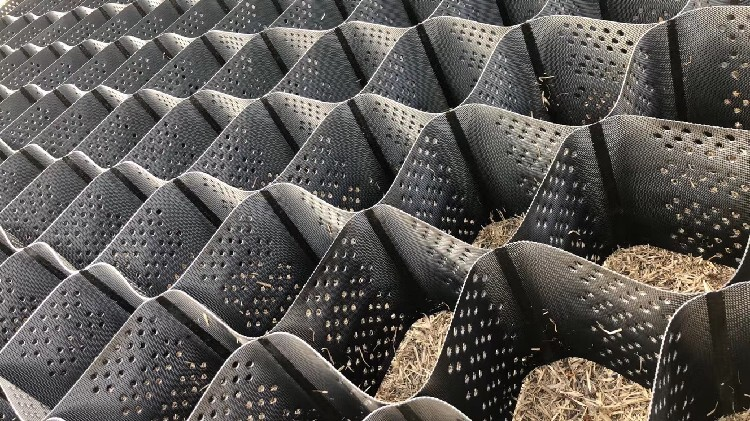
In the pursuit of pavements that endure for decades with minimal intervention, junction integrity emerges as a quietly decisive factor. It refers to the condition and performance of the interfaces where pavement layers meet, where longitudinal joints connect adjacent paving passes, and where the pavement ties into curbs, gutters, or existing structures. These zones are inherently vulnerable: they often contain uneven compaction, reduced density, or microscopic gaps that allow water and air to penetrate. Once moisture infiltrates a weak junction, it can accelerate stripping of the asphalt binder, initiate cracking at the layer boundary, or undermine the load transfer capacity of the entire structure. Long-life design, therefore, treats joints not as afterthoughts but as critical structural elements that demand deliberate detailing and quality control.
Field performance data consistently link early distress to compromised junctions. A pavement may be specified with premium materials and a robust thickness, yet premature fatigue cracking or localized rutting still appears near joints because stress concentrations form where adjacent materials have different stiffness or where a cold joint interrupts the homogeneity of the bound layer. The remedy lies in both mix design and construction practice. For instance, using polymer-modified binders at longitudinal joints, ensuring hot, well-tacked vertical faces before the adjacent lane is placed, and employing echelon paving or joint heaters can dramatically reduce permeability and improve interlock. In mechanistic-empirical design frameworks for long-life pavements, junction integrity is increasingly modeled as a boundary condition: if the interface bond strength falls below a threshold, the predicted strain at the bottom of the asphalt layer doubles or triples, turning a 50-year design into a 15-year reality.
Beyond asphalt, joint integrity in concrete pavements governs load transfer efficiency at transverse and longitudinal joints through dowels, tie bars, and aggregate interlock. For long-life concrete pavements, maintaining tight, non-working cracks at the joints, preventing faulting, and ensuring adequate base support beneath the joint area are essential. Similarly, in composite or semi-rigid structures, the bond between a cement-treated base and an asphalt surface becomes a longevity hinge. Practical strategies include specifying a minimum tack coat residual rate, verifying interface shear strength through field pull-off tests, and designing drainage details that keep water away from the pavement edge. Ultimately, a long-life pavement is not defined solely by the strength of its thickest layer, but by the persistent soundness of its connections. When junctions remain intact under repeated thermal cycles, heavy axle loads, and environmental exposure, the pavement system behaves as intended: distributing stresses uniformly, resisting moisture intrusion, and deferring major rehabilitation for decades.
Stabilizing Soft Clay Without Trucking in Select Fill
Soft clay often forces contractors to over-excavate and backfill with imported select material, but there are practical ways to strengthen the existing ground directly. In-situ mixing with dry binders like lime or cement turns the weak clay into a workable, load-bearing layer. This approach cuts hauling, reduces disposal, and keeps the project schedule tight without relying on borrowed fill.
Deep soil mixing goes a step further: augers inject binder slurry at depth, creating soil-cement columns that transfer loads past the soft zone. Paired with geogrid reinforcement or prefabricated vertical drains, it speeds consolidation and builds a stable platform without a single truckload of imported fill. The result is a treated subgrade that performs as well as a conventional select fill section.
The real payoff shows up in cost and logistics. No borrow pit, no traffic from haul trucks, no weather delays waiting for fill delivery. On sites with thick clay layers, these in-place methods often beat traditional remove-and-replace both on price and long-term performance, especially when access is limited or disposal options are scarce.
Why Project Engineers Specify Polyester for High-Moisture Environments
Polyester has become the go-to material for project engineers facing high-moisture conditions, and for good reason. Unlike natural fibers that swell, rot, or lose structural integrity when wet, polyester retains its dimensional stability and mechanical strength even after prolonged exposure to water. This means components like geotextiles, reinforcement grids, or protective liners made from polyester won't warp or degrade prematurely, ensuring the design life of the structure is met without costly maintenance interventions.
Beyond basic water resistance, polyester's low absorbency plays a critical role in freeze-thaw cycles and humid environments. Where other materials might trap moisture and then crack as temperatures fluctuate, polyester allows water to pass through or evaporate quickly, preventing internal pressure buildup. Engineers also value its resistance to mildew, alkalis, and many common soil chemicals — factors often overlooked but crucial in underground or constantly damp applications. This combination of durability and predictability gives engineers confidence that their specifications will hold up on site, not just in the lab.
Practical experience further cements polyester's reputation. Contractors report that polyester-based products are easier to handle when wet, don't become slippery like some synthetics, and can be installed in rainy conditions without waiting for dry weather. For project engineers, that translates to shorter schedules, fewer weather-related delays, and a material that behaves consistently from the first day of installation to decades later. It's not just about choosing a material that survives moisture — it's about choosing one that thrives in it without demanding special treatment.
Reducing Crack Reflection Through Interlayer Reinforcement
The persistent issue of reflective cracking in asphalt overlays often begins with existing joints and fractures in the underlying pavement. Rather than relying solely on thicker overlays, interlayer reinforcement targets the source by creating a stress-absorbing or reinforcing plane between the old surface and the new lift. Materials such as geotextiles, fiberglass grids, or polymer-modified membranes are placed at this interface to dissipate horizontal and shear stresses before they propagate upward into the overlay.
Field observations and accelerated pavement testing indicate that the placement technique and material compatibility play a decisive role. A poorly bonded interlayer can become a slip plane, while a well-selected system bridges the crack and redistributes load across a wider area. The result is slower crack propagation, extended overlay life, and less frequent maintenance, especially on heavily trafficked corridors where reflective cracking typically appears within the first few years.
Cost-Effective Approaches for Port and Freight Yard Pavements
Port and freight yard pavements endure relentless pressure from stacked containers, heavy lift equipment, and constant trailer traffic. Rather than defaulting to thick, high-strength concrete slabs, many operators now turn to interlocking concrete pavers. These modular units distribute loads across the joints, preventing the deep rutting and edge cracking common in monolithic surfaces. When a section fails, crews can lift and replace individual pavers without shutting down the entire lane, cutting both material waste and downtime.
Another budget-conscious tactic is staged construction using roller-compacted concrete over a geogrid-reinforced base. This method cuts cement content by up to 30% compared to conventional paving while maintaining stiffness under heavy axle loads. The geogrid interlocks with the aggregate, reducing base thickness requirements and excavation depths. For yards with poor subgrade, lime or cement stabilization of in-situ soils often proves cheaper than hauling in select fill, especially where local quarries charge premium rates.
Life-cycle costing reveals that spending slightly more upfront on a permeable asphalt layer with a drainage layer beneath can slash long-term maintenance. Standing water accelerates pavement deterioration, and freight yards frequently suffer from poor cross-slope drainage. By specifying a dense-graded friction course over an open-graded drainage layer, operators avoid the repeated pothole patching and slab jacking that plague many coastal ports. Pairing this with a routine crack-sealing program every two years extends the surface life by a decade or more, far outweighing the initial cost difference.
FAQ
They reinforce the aggregate base and subgrade interface, preventing rutting and reflective cracking by spreading traffic loads over a wider area. This keeps the pavement structure intact and reduces the need for frequent resurfacing.
Polyester offers excellent creep resistance and low elongation under sustained load, which is essential for structures that must hold their shape for decades. It also handles installation stress well without sacrificing strength.
In segmental retaining walls, geogrid layers tie the reinforced soil mass together, creating a stable block that resists lateral earth pressures. This allows taller walls with steeper faces than unreinforced designs.
Projects with soft subgrades or heavy traffic loads, such as interchanges, industrial access roads, rail beds, and bridge approaches, see the greatest improvements in bearing capacity and settlement control.
Yes, they often reduce the need for imported fill and minimize land disturbance by allowing construction on existing weak soils. Their inert composition also prevents leaching of harmful substances into surrounding soil or groundwater.
We review geotechnical reports, traffic projections, and construction sequencing to determine the required long-term design strength and aperture characteristics. This site-specific matching avoids overspending on unnecessary capacity or under-designing critical sections.
Once covered, the geogrid itself needs no ongoing maintenance. Periodic inspection of surface drainage and facing elements is recommended to keep the overall structure functioning as intended, but the reinforcement remains inert and stable.
Conclusion
Polyester geogrids have become a practical choice for infrastructure projects where long-term durability and reduced maintenance are critical. In unpaved access roads, these geogrids distribute wheel loads over a wider area, limiting rutting even under repeated heavy traffic. Their strength is particularly valuable in high-moisture environments, where traditional materials often lose stiffness; polyester retains its properties when wet and resists chemical degradation, making it reliable for sites with poor drainage or high groundwater. Instead of excavating soft clay and trucking in select fill, contractors can place a polyester geogrid directly over the weak subgrade, creating a stable working platform that saves time and hauling costs. The reduction in hauling and fill material also lowers project costs and environmental impact, particularly on remote or constrained sites.
Beyond subgrade stabilization, the junction integrity of polyester geogrids plays a key role in long-life pavement design. Strong, stiff junctions transfer stress between ribs without slippage, which helps control crack reflection in asphalt overlays by acting as an interlayer reinforcement. This approach is especially cost-effective for ports, freight yards, and other heavy-duty pavements that must handle container handling equipment and constant truck movements. By combining these functions—rut prevention, moisture tolerance, soft soil bridging, and reflective crack mitigation—polyester geogrid solutions enable engineers to design pavements that last longer with fewer interventions. Field experience shows that polyester geogrids maintain their tensile properties over decades, even under aggressive loading, allowing owners to extend service life and reduce life-cycle costs without overbuilding.
Contact Us
Contact Person: Jennifer LEE
Email: [email protected]
Tel/WhatsApp: 8618553418999
Website: https://vip.e-baixing.com/wenfengshitong