

Pharmaceutical Air Compressors That Lower Operational Costs
2026-08-22
In pharmaceutical manufacturing, every dollar spent on utilities quietly erodes margins—until you rethink compressed air. Conventional systems bleed energy and demand constant upkeep, but a smarter generation of pharmaceutical air compressors is changing the math. Seize Air engineers tackle this head-on, delivering oil-free reliability and pressure stability that cut operational costs without compromising cleanroom compliance. What if your air supply could shift from a cost center to a competitive edge? The following breakdown shows how.
Cutting Peak Demand Charges With Air Storage That Works Overnight
Most facilities pay for electricity based not just on total consumption, but on the highest fifteen-minute spike in demand each billing cycle. Those peak demand charges can quietly account for 30 to 70 percent of a commercial power bill. Air storage offers a surprisingly practical countermeasure: run compressors at night when rates are low and grid strain is minimal, then release that stored energy during the afternoon peak to knock down the demand curve. Because the system operates on a simple thermal-mechanical cycle, it avoids the chemical degradation and limited cycle life that plague battery-only approaches. The result is a quieter, lower-maintenance way to shave expensive peaks without disrupting daily operations.
What sets overnight air storage apart is how well it aligns with real-world usage patterns. Think of a refrigerated warehouse, a water treatment plant, or a mid-size manufacturer—these sites often have a flat base load overnight and sharp spikes when shifts start or ambient temperatures climb. By scheduling compression to run on off-peak power, the facility essentially banks cheap kilowatt-hours as compressed air. Later, when demand would otherwise surge, an expander or air-driven generator discharges that stored energy. No fuel is burned during discharge, and the round-trip efficiency, while not as high as lithium-ion, becomes far less important when the primary goal is avoiding a $40-per-kW demand charge rather than arbitraging energy prices.
The practical advantages go beyond the bill itself. Air storage systems tolerate deeper daily cycling without meaningful capacity fade, and they can sit idle for weeks without self-discharge penalties. Maintenance is largely limited to standard compressor service—oil changes, filter swaps, valve checks—rather than specialized battery management. For facility managers tired of seeing a single hot afternoon drive their entire month's electricity cost, the overnight air approach turns peak shaving from a reactive scramble into a planned, routine part of building operations. The technology is not new, but the harsh economics of demand charges are making it newly relevant.
The Hidden Cost of Compressor Oil Carryover in Cleanrooms
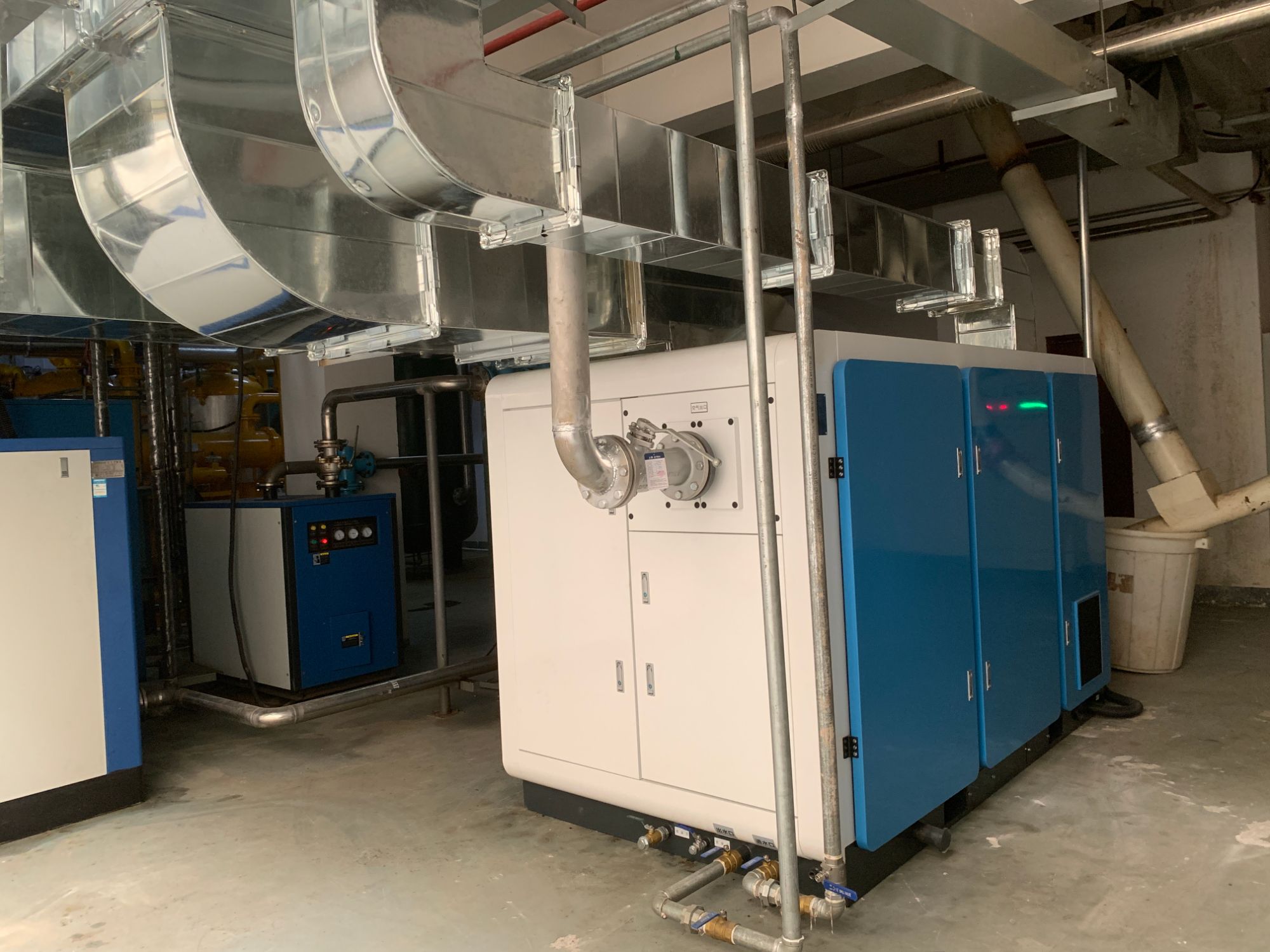
Oil carryover from air compressors rarely shows up on a cleanroom budget line, but it quietly erodes yields in ways that become expensive only after the damage is done. Aerosolized compressor oil can settle on wafers, optics, or medical device surfaces, creating adhesion failures, hazing, or sterility concerns that are often misattributed to process drift. When those defects appear, the initial response is usually to adjust process parameters or replace filters, not to trace the contamination back to the compressed air supply.
The downstream costs stack up fast. HEPA and ULPA filters in cleanroom air handlers load prematurely with oil residue, driving up energy consumption and shortening filter replacement cycles. In semiconductor fabs, even trace levels of hydrocarbons can alter etch rates or photoresist adhesion, leading to scrap that gets counted as random yield loss. Food and pharmaceutical cleanrooms face a different burden: oil mist can compromise product sterility or cause visible residue on packaging, triggering batch investigations and costly holds.
Fixing the problem after contamination spreads is far more expensive than preventing it at the compressor discharge. Retrofitting a high-efficiency coalescing filter and a point-of-use oil vapor adsorber is a modest capital expense compared to the combined cost of scrapped product, unplanned maintenance, and lost cleanroom certification time. Many facilities also overlook the labor cost of repeatedly chasing intermittent defects that turn out to be oil-related. A routine oil carryover audit—measuring total hydrocarbons at critical use points—turns a hidden operational drain into a controllable variable.
Why Dew Point Control Matters More Than Initial Price
A low upfront cost on a compressed air dryer can quietly turn into a budget disaster once moisture ruins your tools, contaminates your product, or shuts down a line mid-shift. The real price of poor dew point control shows up in rusted piping, clogged valves, and rejected batches that never appear on the purchase order. Skimping on drying performance to save a few hundred dollars often means paying ten times that amount in maintenance and downtime before the first year is out.
Dew point is not a marketing number—it is the temperature at which water vapor turns into liquid trouble. A dryer that cannot hold its rated dew point under varying load, ambient temperature, or pressure swings will let moisture sneak downstream exactly when you need dry air the most. Paint spraying, food packaging, electronics assembly, and instrument air all demand a stable, verifiable dew point. If that number drifts, your process drifts with it, and nobody gets a refund for the scrap.
Smart buyers compare lifetime cost, not just the sticker. A correctly sized dryer with a conservative dew point rating costs more on day one but runs quietly in the background for years, protecting every downstream component. The cheap alternative often gets replaced, upgraded, or patched with extra filters and drains that never quite solve the root problem. When you talk to experienced plant managers, the lesson is always the same: buy the dew point you need, not the price you want.
Smart Sequencing That Avoids Running Two Units When One Will Do
Most multi-unit setups default to running every available system, even when the demand barely justifies a single one. That habit wastes fuel, accelerates wear, and creates unnecessary noise. The smarter approach is to let the control logic look at the actual load first, then decide whether one unit can handle it alone. When the numbers say yes, the second unit simply stays off. No toggling back and forth, no short cycling—just a quiet, efficient run from the unit that is already sized for the job.
The trick is in how the sequence is ordered. Instead of alternating starts on a fixed timer, the system tracks runtime hours and load contribution. The unit with fewer accumulated hours gets the first call, but only if it can cover the current demand by itself. If the load creeps past a set threshold, the second unit joins in. When it drops back down, the lag unit shuts off cleanly. That keeps both machines from sharing a light load, which is where most inefficiency hides.
You also avoid the classic problem of two half-loaded units fighting each other. Running one at 80% capacity almost always beats running two at 40% each. The savings show up in lower energy bills, fewer service calls, and a system that does not sound like it is constantly ramping up and down. It is not about making the equipment work harder—it is about making the sequence work smarter.
Heat Recovery Systems That Offset Boiler Load in Winter
During winter, many buildings rely heavily on boilers to keep indoor air warm and water hot. Heat recovery systems change this dynamic by capturing thermal energy that would otherwise escape with exhaust gases or be lost from process equipment. That recovered heat can preheat incoming feedwater, warm ventilation air, or even feed directly into the heating circuit. As a result, the boiler does not have to run at full output as often, which trims fuel use and lowers operating costs without sacrificing comfort.
A typical setup uses a flue gas heat exchanger to pull latent heat from condensation before the exhaust leaves the stack. Other designs integrate heat pumps that draw warmth from building exhaust air or wastewater. In each case, the recovered heat offsets a portion of the boiler's workload, especially during cold snaps when demand peaks. This not only reduces energy bills but also extends the life of the boiler by reducing cycle frequency and thermal stress on components. Buildings with steady waste heat streams—like hospitals, laundries, or food processing plants—tend to see the fastest payback.
Maintenance Schedules That Prevent Costly Batch Rejections
A maintenance schedule built around actual equipment wear patterns beats a generic calendar reminder every time. For batch production, small drifts in mixer speed, seal integrity, or sterilizer temperature can push a run outside spec before anyone notices. Scheduling weekly torque checks on filling nozzles and monthly calibration of temperature probes might sound basic, but it's the difference between a batch that ships and one that gets quarantined. Document every adjustment, no matter how minor, because that history tells you when a part is about to fail, not just when it already has.
Look at what actually causes rejections in your facility. Often it's not a major breakdown but a slow degradation: a gasket that starts weeping, a filter that loads up faster than expected, a sensor that drifts by half a degree. Instead of waiting for the next scheduled shutdown, use condition-based triggers. If a homogenizer's vibration signature changes or a CIP cycle's pressure curve shifts, flag it for inspection before the next batch. This approach catches problems while they're still cheap to fix, not after they've contaminated a full lot.
Finally, make the maintenance log part of the batch release process, not an afterthought. When operators can see that a critical pump was rebuilt last week and its flow rate verified this morning, they're less likely to override alarms or second-guess borderline readings. A clean maintenance record also shortens investigations when something does go wrong. You can rule out equipment issues quickly and focus on raw materials or process steps. That saves days of downtime and keeps your rejection rate where it belongs: near zero.
FAQ
It comes down to how the machine holds up under real demand. Beyond oil-free output, look for stable pressure dew point under varying loads, stainless steel or coated internals where moisture can collect, and documentation that matches your validation requirements. A compressor might pass a one-time air quality test but still create surges in dew point or pressure that force downstream filters and dryers to work harder, cutting into the savings you expected.
Fixed-speed units keep running at full power even when demand drops, often wasting 20 to 35 percent of their energy as unloaded draw. A variable speed drive trims motor speed to match the actual air demand, so the compressor spends far less time in unloaded mode. In plants with shifting production schedules or batch processes, that alone can cut compressor energy use by a quarter or more.
Because the real cost shows up later. If dew point spikes, moisture reaches the distribution piping, accelerates corrosion, shortens filter life, and risks batch contamination. A cheaper compressor with poor moisture control forces you to replace dryers, filters, and valves more often and can halt production for quality investigations. A slightly higher upfront cost for stable dew point often pays for itself within the first few years of avoided maintenance and downtime.
Yes, and it is often overlooked. Around 70 to 80 percent of the electrical energy supplied to a compressor leaves as heat. Instead of venting that heat outside, plants can route it to preheat boiler feed water, support cleanroom HVAC in colder months, or assist with WFI generation. In many facilities this recovered heat reduces natural gas or electric heating demand enough to shift the total cost of ownership noticeably without any change to production output.
Focus on the small losses that compound daily. A regular leak survey of fittings, couplings, and hoses can reduce compressed air waste by 10 to 20 percent in older systems. Checking inlet filters before they become clogged, draining condensate traps on schedule, and monitoring differential pressure across filters keeps the compressor from working against unnecessary resistance. These practices cost little but prevent the slow rise in energy per cubic meter that quietly inflates operating expenses.
Ask for specific performance data, not just a brochure. Compare specific power in kW per 100 cfm at the loads you actually run, real unloaded power draw, and the recommended service intervals for air ends and motors. Also verify that the supplier can provide the validation documentation, IQ/OQ support, and response times your facility requires. A proposal with lower upfront cost but vague efficiency numbers usually ends up costing more over a 10-year lifespan.
For direct product contact and most critical cleanroom applications, yes, oil-free is the standard because the risk of oil carryover is too high. But not every air use in a pharma plant touches the product. Some packaging lines, exterior equipment, or general instrumentation can use oil-lubricated compressors with proper filtration and dew point control. The key is to map each air use and apply a risk-based decision rather than paying a premium for oil-free air where it is not required.
Monitoring turns energy waste into visible data instead of a vague suspicion. Real-time measurements of pressure, dew point, flow, and power draw reveal when a compressor is running inefficiently, when a filter is loading up, or when a leak develops during off-shift hours. That lets maintenance teams fix problems before they become production failures or runaway energy bills, and it gives you a baseline to prove savings after any efficiency improvements.
Conclusion
Operational expenses in pharmaceutical compressed air systems rarely come from the compressor itself. They accumulate through peak demand charges, unnoticed oil carryover into cleanroom environments, and dew point swings that quietly compromise product stability. Running a storage receiver overnight lets plants shift air production away from expensive daytime peaks, directly lowering utility bills without any loss in line pressure. The more elusive cost is contamination: even trace oil migrating past filters can trigger batch investigations or cleanroom deviations, so choosing oil-free or properly engineered separation becomes a financial decision, not just a quality one. Dew point control deserves the same scrutiny. A low purchase price means little if moisture levels drift and force quarantine decisions or discarding sensitive batches.
Beyond air quality, the operating logic of multiple compressors often wastes energy. Smart sequencing that keeps a single unit running at full load instead of two at partial load reduces kWh consumption and wear. Recovered heat from compressor exhaust can supplement building heating in winter, offsetting boiler load with what would otherwise be wasted thermal energy. Finally, maintenance schedules tied to actual operating hours rather than calendar dates prevent the kind of unscheduled downtime that leads to costly batch rejections. Each of these measures targets a different hidden expense, but together they transform a compressed air system from a fixed overhead into a controllable operating cost.
Contact Us
Contact Person: Mia
Email: [email protected]
Tel/WhatsApp: +86 19821985894
Website: https://www.seize-air.com