

OEM Ozone Generators – What Buyers Need to Know
2026-08-25
Ordering an OEM ozone generator feels straightforward until you're left with a unit that underperforms or a supplier that goes silent. The real difference isn't in the brochure—it's in the materials, testing, and support behind the product. LUFUTATECH has learned what buyers actually need to check, and this guide breaks down those key factors before you commit.
Start With the Ozone Output Your Process Actually Needs
Many teams jump straight into ozone equipment comparisons without first pinning down the exact output their process demands. That usually leads to oversized generators burning excess power, or undersized units that force you to run at maximum capacity just to hit baseline. Instead, start by measuring your required ozone dosage in grams per hour or pounds per day, then account for variables like water flow rate, target residual, and contact time. A drinking water plant treating 500 GPM for disinfection might only need 50 g/h, while a pharmaceutical clean-in-place system could require triple that even at lower flow. Match the generator’s turndown ratio to your lowest and highest demand points, not just the average.
Once you know your true output range, look at the feed gas options rather than just the ozone rating. Oxygen-fed systems produce significantly more ozone per kilowatt than air-fed ones, but they add the cost of an oxygen concentrator or liquid oxygen supply. For food processing or wastewater with fluctuating loads, a modular ozone skid that can stage multiple cells on and off keeps you from paying for idle capacity. Ask the manufacturer for a performance curve at your specific operating pressure and cooling water temperature—real-world output often drops 20–30% from the brochure numbers. Test with your actual process water, because contaminants like iron or manganese will consume ozone before it ever reaches your target pathogen.
Finally, design the injection and contacting system around the ozone output you selected, not the other way around. A high-output generator feeding a poorly designed venturi or short contact tank wastes most of the ozone as off-gas. Use a side-stream injection loop sized for 10–20% of total flow, with a mass transfer efficiency above 90% via stainless steel static mixers or a packed column. Monitor the off-gas destruct unit to confirm you are not venting unused ozone, which signals either overgeneration or poor dissolution. When the output matches the process demand and the contact system delivers it fully, you avoid the costly cycle of retrofitting larger generators or adding chemical oxidants to compensate.
Feed Gas Choices Influence Performance Far More Than Buyers Assume
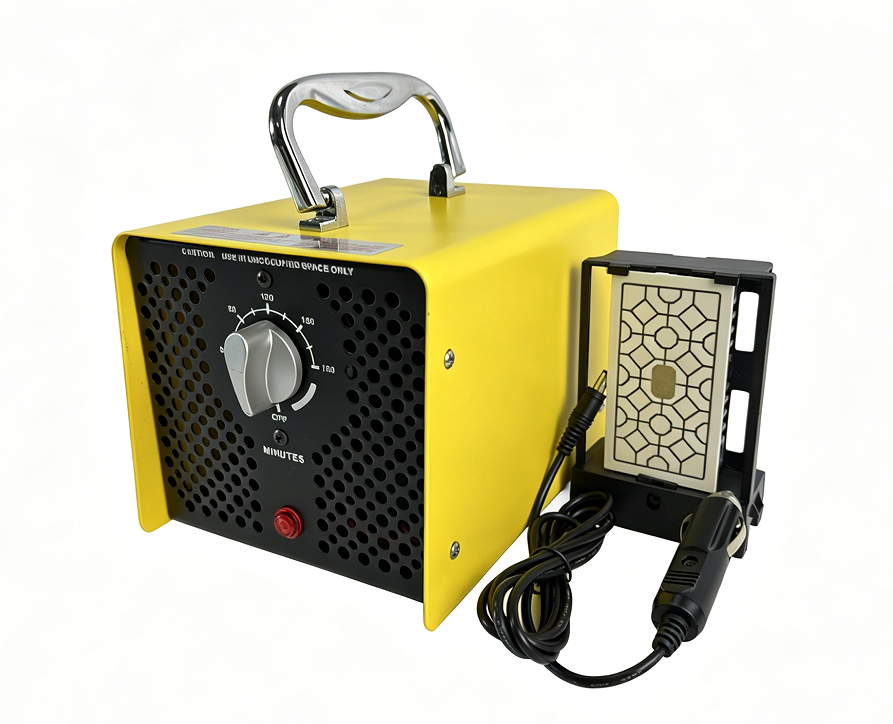
It is easy to assume that once a gas processing unit is sized and delivered, its performance will hold steady regardless of what flows into it. Many buyers anchor their expectations to a single design composition, treating the actual feed gas as a minor variable. In practice, however, the composition arriving at the inlet can shift enough week to week that the entire thermal and chemical balance of the system is thrown off. Even a modest rise in heavier hydrocarbons or a trace of mercury can alter reaction pathways, foul heat exchangers, or poison catalysts long before anyone notices a drop in output.
The disconnect often surfaces during the first year of operation. A plant designed for a lean, dry gas may perform admirably on paper, yet the real stream carries a higher moisture load or a fluctuating acid gas ratio. Those deviations force operators to run at reduced throughput or to inject more chemical scavengers than budgeted. In some amine systems, a one percent change in carbon dioxide content can require a double-digit adjustment in solvent circulation rate to maintain the same treated gas quality. Such nonlinear responses are rarely captured in the vendor's standard performance curves.
What makes this especially costly is that these effects are seldom discovered until after commissioning, when redesign options are limited and expensive. A far better approach is to treat feed gas characterization as a core engineering task rather than a data sheet formality. By running a detailed compositional analysis across multiple samples, including seasonally driven variations, owners can identify the true operating envelope before purchase. That upstream effort, though modest in cost, routinely prevents the kind of performance drift that turns an optimistic capacity estimate into a persistent operational headache.
Materials That Withstand Daily Ozone Exposure Without Degrading
Ozone is a silent aggressor. It attacks double bonds in rubber, causes surface crazing in many plastics, and slowly erodes the flexibility of seals and gaskets. If you've ever seen a cracked tire sidewall or a brittle rubber hose after just a couple of years, you've witnessed ozone degradation. The materials that survive daily ozone exposure aren't magical—they just either lack the reactive sites ozone loves or have built-in protection that sacrifices itself first.
EPDM rubber stands out as the workhorse. Unlike natural rubber or SBR, which contain unsaturated carbon chains ripe for ozone cracking, EPDM has a saturated backbone. That means no double bonds for ozone to break, so it stays supple for decades on rooftops, in automotive weatherstripping, and around electrical enclosures. Silicone rubber is another champion—not because it resists chemical attack the same way, but because its siloxane bonds are simply too stable for ozone to disrupt at ambient concentrations. PTFE and FEP fluoropolymers go further: they shrug off ozone entirely, along with UV and most solvents, which is why they line gaskets in water treatment plants where ozone is used as a disinfectant.
But pure material choice isn't enough. Additives like antiozonants—microcrystalline waxes that bloom to the surface and form a physical shield, or p-phenylenediamines that chemically scavenge ozone before it reaches the polymer—can extend the life of otherwise vulnerable rubbers like natural rubber or nitrile. The trick is pairing the right base polymer with the right protection system. For critical seals in ozone generators or near electric motors that produce ozone as a byproduct, engineers often default to EPDM or silicone with a small amount of wax bloom. It's a quiet, unglamorous battle fought at the molecular level, and the materials that win are the ones that don't try to fight ozone head-on—they simply give it nothing to grab onto.
How Much Customization Does an OEM Partner Really Offer
Customization from an OEM partner usually falls into three buckets: cosmetic, functional, and architectural. Cosmetic changes—logo placement, color, packaging—are table stakes. Functional tweaks, like adjusting firmware settings or swapping connectors, take more coordination but are still common. Architectural customization, where the core PCB layout or software stack gets reworked, is rare and typically reserved for long-term, high-volume commitments.
What often surprises buyers is how much room there is in the middle tier. You can request a different display type, alter the button mapping, change I/O ports, or tune the power profile without starting from scratch. A good OEM partner will push back when a change adds weeks to the schedule or threatens reliability, but they won't hide behind "we only do standard models." Ask for a concrete change list from past projects to see where their flexibility really ends.
The honest answer to "how much customization" is: more than a distributor, less than an in-house R&D team. If your product needs a unique enclosure and a different sensor array, that's doable. If you want to redesign the entire power management stage for a niche use case, expect tooling costs, recertification, and a longer runway. The key is to map every requested change to a cost and timeline early, so "custom" doesn't become a vague promise.
Checking Supplier Claims Beyond the Standard Data Sheet
A datasheet gives you typical numbers, but it rarely shows how those numbers drift across process corners, temperature swings, or lot-to-lot variation. When a supplier tells you their part meets a certain spec, ask for the distribution data behind that single figure. A batch of 500 units might average 2.1 µA quiescent current, yet a handful could hit 9 µA and still be labelled “typical.” Raw test logs, binning reports, and corner-lot characterization often reveal more than any front-page table.
Watch for quiet process changes that never make it into the public document. A vendor can move a die to a different fab, swap a passivation layer, or change molding compound without updating the headline specs. Request product change notices and ask whether the qualification data covers the exact build you are buying, not an earlier revision. Running your own HTRB or temperature cycling sample on incoming lots catches drift before it reaches field returns.
Independent cross-checks also help. Take two “drop-in compatible” parts from different suppliers and run them through your worst-case power sequencing or transient load conditions. The pinout may match, but soft-start behavior, phase margin, and fault recovery can differ enough to matter. A few hours on the bench with a thermal camera and a current probe sometimes exposes hype that a polished datasheet hides.
Ownership Costs That Surface After the Initial Invoice
Many buyers budget for the purchase price, sales tax, and registration fees, but the first year often brings costs that were never on the estimate. Tires wear faster than expected on performance models, and some vehicles require premium fuel that quietly raises every fill-up. Insurance premiums can jump once the VIN is registered, especially for cars with high repair costs or theft rates. Then there are the less obvious items: a second key fob, floor mats, paint protection film, or a charging cable that isn't included.
After the honeymoon phase, maintenance schedules start to bite. Certain brands bundle routine service into prepaid plans that look optional until you read the fine print of the warranty. Brake fluid changes, cabin air filters, and even software updates may carry a fee after the first year. For owners in regions with harsh winters, a separate set of wheels and winter tires becomes a near necessity, adding thousands to the total. And if the vehicle has run-flat tires, replacing a single puncture can cost double what a standard tire would.
Then come the costs tied to how you actually use the car. Towing packages, roof racks, bike carriers—each accessory seems small until you realize they need to be installed or wired by a dealer to avoid warranty issues. Parking in urban areas might require a monthly permit, while rural ownership often means higher mileage and faster depreciation. None of these appear on the initial invoice, but they all shape the true cost of ownership long after the keys are handed over.
FAQ
Ask for a test report from a calibrated UV-absorption ozone analyzer, not a cheap electrochemical sensor. Insist on the report matching the exact power supply, feed gas (air vs oxygen), and flow rate you'll use. If they won't share it or the numbers look too clean, request a sample unit and check output at your own bench with an ozone test kit or hire a third-party lab for a day.
Look for thin-walled quartz or glass dielectric tubes instead of ceramic, undersized high-voltage transformers that run hot, and cheap silicone tubing that off-gases and degrades ozone. A quick teardown often reveals sharp bends in the gas path or poor soldering on the corona cell. If the unit is suspiciously light for its claimed output, that's a red flag.
For North America, target UL 867 or CSA C22.2 No. 187 for electrical safety, and make sure the ozone cell itself has no exposed corona. For Europe, CE under the Low Voltage Directive plus RoHS and REACH compliance is standard, but some industrial buyers also want a Declaration of Conformity for the EMC Directive. Don't assume a generic CE mark covers everything—ask for the actual test reports.
Most mid-size OEMs will customize firmware for a tooling fee or a minimum order quantity. You can specify things like pulsed ozone generation, delayed start, humidity compensation, or a specific PID loop. But get the exact interface documentation and a signed IP agreement before you hand over your control algorithm, otherwise you might see your logic in their next catalog.
Tell them the feed gas must be dry and filtered; moisture kills corona cells fast. Recommend replacing inlet air filters every 500–1000 hours and inspecting the ozone cell for carbon deposits or pitting at least twice a year. If they use an oxygen concentrator, that sieve bed has its own lifespan and will silently reduce ozone output long before the generator fails.
High humidity cuts ozone production and accelerates nitric acid formation, which corrodes internal parts. A datasheet that lists a single output number without stating dew point, temperature, and oxygen purity is basically marketing fiction. Ask the OEM to provide a derating curve or at least a table showing output at 40% and 80% relative humidity.
For a first-time order with a new housing or firmware, 8–12 weeks is normal. If they promise 3 weeks, that usually means they're using off-the-shelf parts and just slapping your logo on, or they'll cut corners on burn-in testing. Watch for vague answers about component sourcing, because long lead times for high-voltage capacitors or ceramic tubes can stall production without warning.
Yes. In many regions, you need a warning label about ozone exposure limits (e.g., 0.1 ppm over 8 hours), and if the unit is sold as a consumer air purifier, the EPA or local equivalent may restrict output. Packaging must prevent the quartz or ceramic cell from shifting in transit—foam inserts that are too soft lead to cracked dielectric tubes. Also check if your target market requires the ozone output to be listed in grams per hour on the outer carton.
Conclusion
Buyers often fixate on the largest ozone output figure they can find, but that rarely matches what a process truly demands. A properly sized generator runs efficiently instead of wasting energy and creating excess ozone that must be destroyed downstream. Feed gas quality plays an equally decisive role—oxygen concentrators typically deliver substantially higher ozone concentration than ambient air, and moisture in the feed stream silently degrades both output and electrode life. Before committing to any OEM unit, look closely at internal materials. Cheaper polymers and soft seals will crack or embrittle after months of daily ozone exposure, while stainless steel, PTFE, and ozone-resistant elastomers keep the system serviceable for years without hidden leaks.
Customization claims deserve a hard look. Some OEM partners only tweak packaging and labels, while others genuinely modify electrode geometry, cooling circuits, and control logic to fit a specific machine. Ask for a detailed scope of change, not a vague “we can do it” promise. Beyond the standard data sheet, request third-party test reports, real production tolerances, and examples of similar integrations already running in the field. Finally, ownership costs rarely end at the invoice. Power consumption at your actual duty cycle, replacement parts availability, maintenance labor, and even the cost of drying or cleaning feed air can dwarf the purchase price over five years. A cheap generator that needs quarterly rebuilds is often far more expensive than a mid-priced unit built for continuous duty.
Contact Us
Contact Person: Paul Luo
Email: [email protected]
Tel/WhatsApp: 0086-19966314501
Website: https://www.lufutatech.com