

OEM Metal Roofing Machine Supplier Checklist for Smart Buyers
2026-09-14
Most OEM metal roofing machine buyers walk into supplier negotiations with a price sheet but no checklist. That’s a costly gap. From roller material hardness to after-sales response time, the difference between a machine that lasts ten years and one that quietly fails in two often comes down to details you won’t find in a brochure. Beenew has put together a practical checklist for smart buyers — not the obvious specs, but the overlooked ones. Read through it before your next inquiry, and see how many you’ve been missing.
How to Separate True OEM Factories From Trading Companies
A genuine OEM factory usually has its own mold shop or at least a verifiable long-term relationship with tooling partners. Ask to see tooling maintenance records and real-time video of the production floor, not just polished product photos. If they hesitate to show you the actual injection molding machines, SMT lines, or assembly stations during a live call, treat that as a red flag. Trading companies often rent a small showroom and borrow samples from factories, but they rarely have engineering staff who can discuss cycle times, tolerance stacks, or material shrinkage rates on the spot.
Check the entity's business license and export records against the factory address. A true OEM will have manufacturing listed in its registered scope, and the same legal name should appear on utility bills, VAT invoices, and bank accounts. Ask for a recent bill of lading where the shipper matches the factory name, then cross-check the packing list with the actual loading address. If the seller wants to meet at an office downtown while production happens at a partner's facility, you are probably dealing with a middleman.
During a factory audit, walk the floor without a scripted tour. Look at the work-in-progress units: do they carry multiple brands or only the products the seller showed you? Real OEMs often run jobs for several customers at once, and you can see raw material inventory, incoming QC stations, and rework areas that trading companies cannot easily fake. Ask operators, not just managers, how long they have worked there and what products they made last week. Inconsistent answers often expose a borrowed or staged production line.
What a Supplier's Roll Forming Line Reveals About Their Real Capability
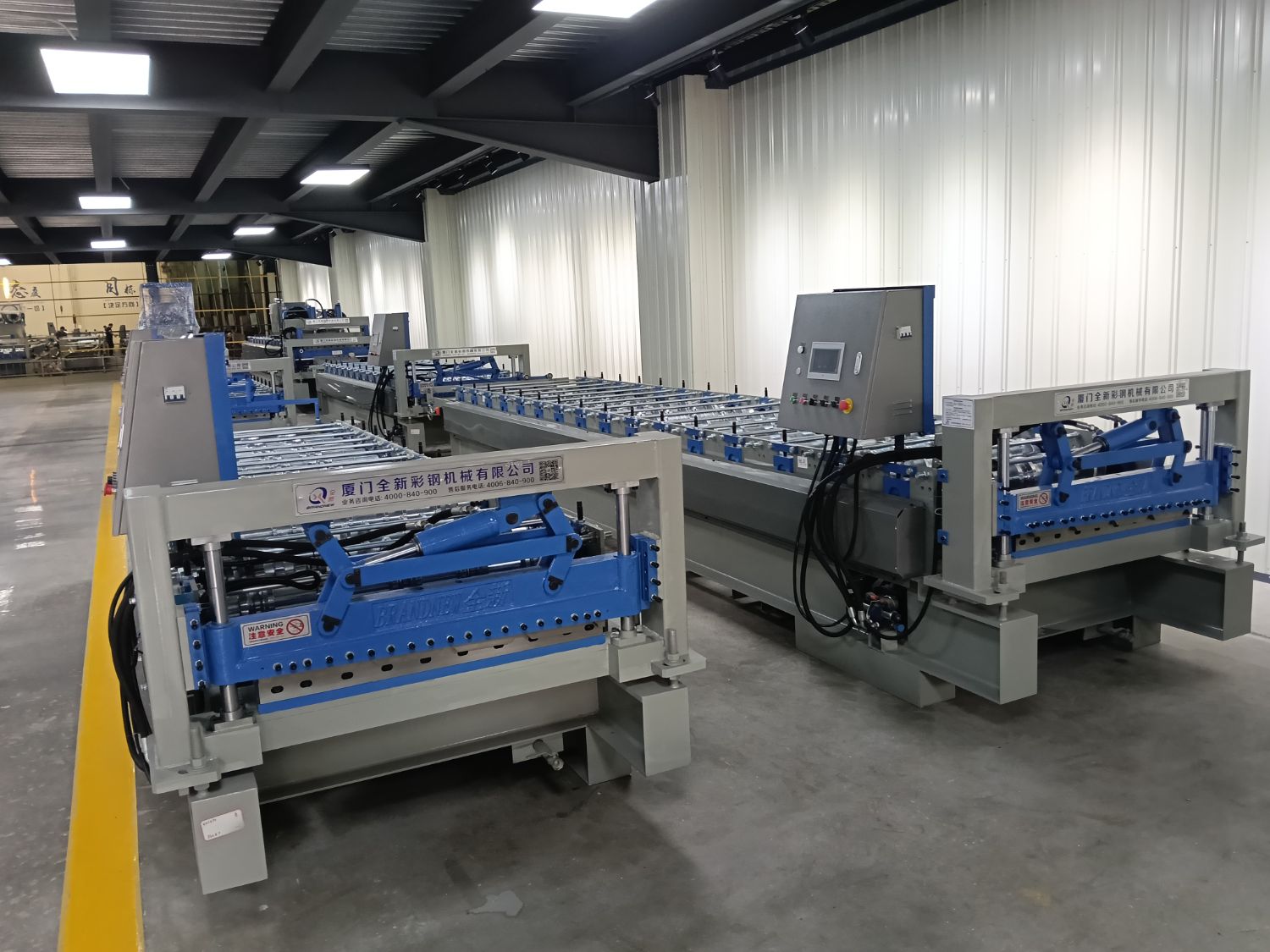
Walk past the impressive specs sheet and look at the floor itself. A roll forming line that hums with predictability isn't just about horsepower or the number of stands; it's about the small rituals of maintenance you can spot in five minutes. Check whether the roll gaps are marked with witness paint, if the lubrication points are clean rather than caked in old grease, and if the coil staging area is organized by job sequence instead of stacked haphazardly. These details tell you whether the supplier treats the line as a precision instrument or just a machine that bends metal. A neglected line will still produce parts, but it will fight you on tolerances, wear out tooling early, and quietly generate variation that becomes your problem downstream.
Watch how material moves from coil to cutoff. A capable supplier runs the line with minimal touch points, meaning the coil is loaded once and then processed continuously without operators re-handling the strip for every minor hiccup. If you see frequent stops to adjust guides, shim stands, or hand-straighten a bowed profile, that's not diligence—it's a sign the tooling wasn't properly engineered or the setup procedure lacks discipline. Ask about changeover times between profiles. A tight, repeatable changeover under thirty minutes indicates they've invested in quick-change features and training; a line that takes half a shift to reconfigure suggests the supplier tolerates waste and passes that cost to you. Real capability is measured in uptime per shift, not just feet per minute.
Finally, look for how they catch their own mistakes before you do. On a strong line, you'll see inline inspection integrated at critical forming stations—laser micrometers on the leg lengths, camera systems checking hole patterns, or at minimum a clearly marked first-article and last-piece procedure per coil. If their quality check is just a guy with calipers checking every twentieth part, that's a red flag. The best suppliers can show you trend charts from the roll forming line, proving that key dimensions stay stable across the entire coil, not just at the start. Ask to see the data from their last three runs, not a canned sample. If they hesitate or the data doesn't exist, the line may be running on intuition rather than process control—and that's exactly what you're paying to avoid.
Why Material Thickness and Profile Accuracy Should Top Your Checklist
In most load-bearing or exterior applications, the difference between a 1.4mm and a 2.0mm wall isn't just a spec line—it changes how the assembly handles wind load, thermal expansion, and daily wear. Checking actual material thickness early keeps you from paying for 'heavy duty' profiles that are really mid-range in disguise.
Profile accuracy is equally easy to overlook until a corner joint fights you or a gasket lip won't sit flush. Tiny deviations in groove depth, angle tolerances, or straightness compound across a run. If the extrusion wasn't straightened and aged properly, you'll see it in bowed frames, uneven reveals, and hardware that binds.
Together, thickness and dimensional accuracy determine whether a project passes inspection on the first attempt or eats hours in rework. Put them at the top of your checklist, and you filter out most low-tier suppliers before you even get to finish or price negotiations.
Questions to Ask About After-Sales Support Before You Pay a Deposit
Before you hand over a deposit, pin down exactly what "after-sales support" covers. Many sales teams will say the words, but few volunteer the details. Ask whether warranty work is handled in-house or outsourced, how long repairs typically take, and who pays for return shipping if a part fails. If the answer is vague, that vagueness will likely follow you after the invoice is paid.
Get specific about response times and escalation paths. A promise of "24/7 support" means little without a named contact or a ticketing system that actually gets answered. Ask what happens on weekends, how long you should expect to wait for a first reply, and what the process is if your issue isn't resolved on the first try. Request a sample service-level agreement or at least an email summary of these commitments before any money moves.
Finally, check the exit and transfer terms tied to that deposit. Some vendors treat a deposit as fully non-refundable once engineering begins, while others allow a cooling-off period or apply it toward a different package if your needs change. Clarify whether the deposit is refundable, partially refundable, or credited only under certain conditions, and get that in writing. A reputable seller won't hesitate to put these details in plain language.
How to Verify a Supplier's Export Track Record Without Relying on Sales Claims
Start by asking for shipping documents that carry independent weight—bills of lading, customs declarations, or even a packing list stamped by the carrier. Sales teams can inflate figures, but a bill of lading shows actual cargo movement with dates, ports, container numbers, and consignee details. Cross-check these against the supplier's claimed destinations and volumes. If they hesitate to share even redacted copies, treat that as a signal.
Another route is to request bank records tied to export transactions. Incoming wire transfers from overseas buyers, or letters of credit issued in the supplier's favor, are hard to fabricate. A reputable supplier can produce bank statements or trade finance documents with sensitive amounts blacked out but the transaction patterns visible. You can also ask for a reference from a freight forwarder or customs broker they have used—these third parties often keep shipment histories and can confirm whether the supplier actually moves goods across borders on a regular basis.
Finally, reach out to previous buyers directly. Ask the supplier for two or three non-competitive contacts—companies in different regions or product lines—and call them. Inquire about order sizes, repeat purchases, and how issues were handled. If the supplier refuses or only offers vague testimonials, dig into public trade data or industry directories where export awards and certifications appear. These independent traces, rather than polished marketing claims, reveal whether the track record is real.
The Hidden Cost Drivers in Metal Roofing Machine Quotes
When comparing quotes, the headline figure rarely reflects what you will actually spend to get a machine into production. A rollformer priced at $120,000 might not include the coil reel, runout tables, or safety guarding that another vendor bundles as standard, and those add-ons can add $18,000 to $35,000 before the line is even operational.
Another overlooked variable is tooling and changeover design. Machines with cassette-style quick-change stands cost more upfront but reduce labor during profile switches, while fixed-stand systems need longer manual adjustment and more downtime. If a quote does not specify changeover time, tooling tolerances, or whether the controller includes self-diagnostics, the cheaper option often becomes the more expensive one within the first year.
Electrical and material requirements also shift total cost in ways that rarely appear in a line item. A machine engineered for 480V three-phase may need a transformer in a facility wired for 208V, and quoted speeds typically assume specific gauges. Running thicker coil or high-tensile steel cuts output and accelerates wear on forming rollers, quietly raising per-panel cost well beyond the purchase price.
FAQ
Ask for unedited video of a recently shipped machine running at a customer's site, not just a catalog clip. The footage should show the roll former producing different panel profiles without jumps. Also confirm they have an in-house engineering team that can modify roll tooling rather than outsourcing that work.
Request drawings or 3D models from three past custom projects. More telling is whether they own wire cutting and heat treatment equipment. A capable supplier adjusts roll station count and shaft diameter based on your sheet thickness, yield strength, and desired profile, instead of merely changing paint color and logo plates.
If they claim every machine is tested but cannot produce test data or video, that's a warning sign. Solid suppliers measure straightness, angle, and dimensional deviation of the formed sheet and issue an inspection report with the machine's serial number. You can also ask to see a random machine on the assembly floor via video and watch how they adjust roll gaps.
It matters more than many buyers realize. If the frame lacks rigidity, high-speed operation causes vibration, leading to wavy edges or dimensional drift. Ask about side plate thickness, whether the structure is stress-relieved after welding, and if the base is welded or bolted. A heavy welded base with full stress relief usually stays more stable.
Get contact details for clients they have serviced in the last three months and ask for a specific response time. Clarify what happens if the formed panel twists or length runs off: does the supplier guide you remotely or send a technician, and who covers travel costs. Put delivery lead times for key wear parts like rollers, blades, and encoders into the contract.
Working directly with a factory is usually more controllable, but only if you confirm the factory actually machines key components in-house. Ask for a live video tour of their machining shop, roll lathe, and assembly area. Also check that the business license lists machinery manufacturing. Trading companies can consolidate resources, but technical communication and after-sales response often slow down.
Never compare total price alone. Break the machine into sections: frame weight and plate thickness, roll material and heat treatment hardness, motor and gearbox brands, PLC model, and safety guarding level. Have each supplier fill in the same technical data sheet. If any field is missing, require them to complete it. Otherwise a lower price may simply mean thinner plates or cheaper drives.
Custom equipment typically takes 25 to 45 days, depending on roll tooling complexity. Before installation, the supplier should provide foundation drawings and electrical schematics. On arrival, at least one mechanical engineer and one electrical engineer should be present to guide commissioning. If a vendor promises shipment in a week, it is either a standard machine or corners have been cut somewhere.
Conclusion
Smart buyers quickly learn that distinguishing a genuine OEM metal roofing machine factory from a trading company requires more than a polished website or a confident sales pitch. Walk the production floor, watch the roll forming line in action, and note whether the supplier owns the core machining and assembly steps or simply coordinates them. A factory that controls cutting, punching, and roll tooling in-house can usually respond faster when profiles change or tolerances tighten. Pay attention to material thickness and profile accuracy during a live run—if the machine struggles with real steel at the gauge you plan to use, that weakness will follow you into daily production. Ask specific questions about after-sales support before any deposit changes hands: who handles breakdowns, what response time is realistic, and whether remote guidance or spare parts come with a clear timeline.
Equally telling is how a supplier proves its export record. Instead of accepting a list of “happy clients,” request verifiable shipping data, customs documentation, or photos of recent installations that match the machine models being quoted. Probe the hidden cost drivers in any metal roofing machine quotation—things like the quality of the PLC and drive components, the thickness of the frame, whether safety guards and coil handling equipment are included, and how much spare roll tooling actually costs. A slightly higher upfront price often reflects savings downstream in downtime and rework. By combining a direct look at the production line, concrete after-sales commitments, and a hard-nosed review of what drives the quote, you can build a checklist that protects both your budget and your production schedule.
Contact Us
Contact Person: Sophie
Email: [email protected]
Tel/WhatsApp: 8615959271231
Website: https://www.beenew-rollformer.com/