

ODM Calcium Sulfate Six-Sided Van-Steel Plate Benefits and Uses
2026-11-16
You won't notice a raised floor panel until it fails. That's why ODM calcium sulfate six-sided van-steel plates from Huahong deserve a closer look. The six-sided steel wrap removes the usual weak points, and the calcium sulfate core keeps weight and fire risk low. Here is what makes it different and where it works best.
Why the Six-Sided Steel Wrap Changes Panel Performance
When a panel is fully encased in steel on all six sides, the continuous shell behaves more like a structural exoskeleton than a simple cladding. The closed box eliminates the weak seams typically found at edges and corners, redistributing load paths across the entire surface. As a result, the panel resists twisting and localized deformation far better than versions with only face wraps or edge banding. This uniform confinement also prevents the core from shifting under repeated stress, which directly extends service life.
Moisture and temperature stability improve for a less obvious reason: with every face sealed, the core is no longer exposed to asymmetric environmental swings. Traditional panels often cup or bow because one side absorbs humidity faster than the other. A six-sided wrap removes that imbalance, keeping dimensional change nearly uniform. Even small gaps in edge sealing can trigger slow delamination, but a continuous steel envelope blocks that failure path.
The acoustic and thermal signature changes as well. Added mass from the full wrap lowers the panel's resonant frequency, dampening vibration and reducing sound transmission. At the same time, the trapped air space between steel and core acts as a mild thermal break, altering heat flow compared to open-edge designs. These combined effects mean the panel not only feels sturdier but performs differently in real-world installations.
Calcium Sulfate Cores and What They Do Under Load
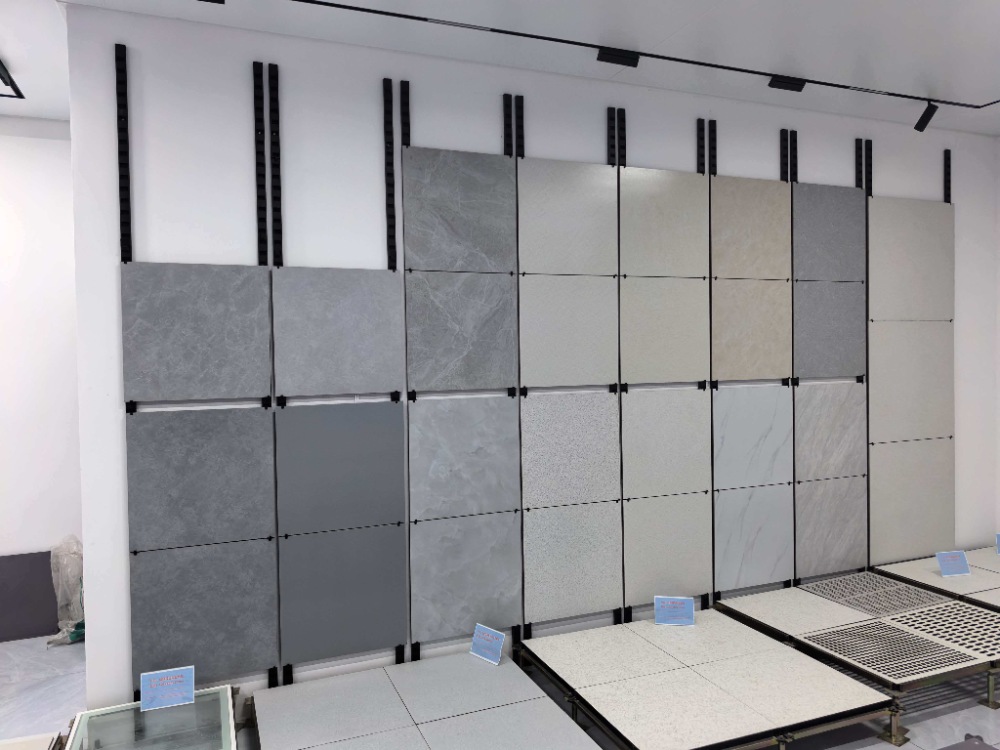
Calcium sulfate cores don't announce themselves under pressure the way steel or graphite might. They settle into the load gradually, redistributing stress through a network of microcrystalline bonds that shift rather than snap. This quiet compliance is often mistaken for weakness, but in fire-rated doors and high-temperature seals, that very give is what keeps the assembly intact long after more rigid fillers have cracked away.
When a load hits, the gypsum-based matrix first compresses slightly, closing the tiny air voids left by the manufacturing process. Then the needle-like crystals begin to slide against each other, absorbing energy through friction. It's a mechanism closer to damp sand than to solid stone. Engineers who work with these cores know to expect a brief plateau in the stress-strain curve—not a yield point, but a kind of deliberate hesitation where the material is deciding how much of the load it will carry before surrendering any structural role.
What surprises most people is the recovery. Remove the load and a calcium sulfate core doesn't spring back instantly. It holds the faint memory of compression for hours, slowly relaxing as moisture from the air helps re-form broken crystal bridges. That delayed rebound is rarely documented in datasheets, yet it's the reason some old fire doors still fit their frames after decades of hard use while newer synthetic cores have warped or crumbled.
Where These Plates Fit Naturally in Modern Buildings
In open-plan living areas, these plates slip into the visual rhythm almost unnoticed. A brushed stainless or matte black plate pairs well with minimalist shelving and concrete walls, while a warm brass version adds a subtle accent near kitchen counters or built-in cabinetry. The trick is treating them as part of the hardware palette rather than an afterthought.
Transition spaces like hallways and entryways benefit from a consistent plate style. Because these zones often have multiple switches and outlets clustered together, using the same finish across all plates creates a clean, deliberate line. In modern builds with flat, shadow-free walls, low-profile plates help maintain that crisp architectural edge.
Bathrooms and utility areas present a slightly different need. Here, plates often meet tile, glass, and higher moisture levels, so materials that resist tarnishing or warping feel more at home. A slim, screwless design works especially well against large-format tiles, keeping the wall surface from feeling interrupted.
Handling and Installation Without the Usual Friction
Most mounting tasks start with a hunt for the right screwdriver and end with a sore wrist. That's not the case here. The parts come pre-aligned from the box, with chamfered edges that guide the bracket into place before you even tighten a fastener. A subtle tactile notch on the backplate tells your fingers where to press, so you spend less time staring at the wall and more time enjoying what you've just set up.
The housing is balanced so it doesn't tip forward while you're securing it. A soft-touch grip on the sides gives you a steady hold without needing to squeeze, and the weight distribution is centered enough that one hand can hold the unit while the other handles the screws. When you bring the two main pieces together, they self-correct—you feel a muted snap instead of a hard click, and the connection is firm without requiring extra force.
By the time you reach for the manual, you realize you don't need it. Every attachment point is keyed, labeled with embossed symbols, and color-coded on the underside. Removal for maintenance takes seconds, not minutes, because the same tabs release with a simple pinch. This is handling and installation that respects your time and patience, leaving no room for the usual frustration.
Moisture Resistance and Other Hidden Strengths
Beyond the obvious durability claims, what truly sets certain materials apart is how they behave when no one is watching—especially in damp, humid, or spill-prone environments. Moisture resistance isn't just about a surface staying dry; it's about preventing the slow, invisible creep of warping, mold, and adhesive breakdown that often goes unnoticed until the damage is done. In real-world kitchens, bathrooms, and basements, this quiet resilience means fewer callbacks, less maintenance, and a finish that looks as steady after five years as it did on day one.
But the hidden strengths run deeper. Think about resistance to thermal shock, resistance to staining from everyday acids like coffee or tomato sauce, and the ability to shrug off minor impacts without chipping. These aren't flashy selling points—nobody runs a finger over a countertop and exclaims about its low water absorption rate—but they are the reasons a material earns trust. A well-engineered surface doesn't just repel water; it also holds its color under strong cleaning agents, keeps its edge profiles crisp despite moisture fluctuations, and shows negligible expansion when exposed to steam. These understated properties separate materials that merely look good in a showroom from those that still perform in a busy household.
Perhaps the most overlooked advantage is the way moisture-resistant cores preserve the integrity of joints and seams over time. In laminated or joined applications, even a slight swell can telegraph through the finish, creating raised lines or dull patches. Materials with genuinely low moisture uptake avoid that telltale shift, keeping long runs of cabinetry or wall cladding visually seamless. It's a subtle win—no dramatic before-and-after, just the quiet absence of problems that plague lesser options. And that, ultimately, is the mark of hidden strength: not drawing attention to itself, but simply never giving you a reason to worry.
Matching Panel Finishes to Real Project Needs
Glossy panels catch the eye in a showroom, but they also catch fingerprints. A high-traffic kitchen or a classroom wall demands something that can shrug off daily contact—think satin or matte finishes with a subtle texture. These surfaces hide minor scuffs and wipe down without leaving streaks, so the upkeep stays reasonable long after installation.
On the other hand, spaces that rely on reflected light—like a narrow hallway or a windowless bathroom—benefit from a semi-gloss or lightly polished finish. It bounces available light around without turning into a mirror. For feature walls or retail displays, a deeper gloss or metallic accent can anchor the room, but only if the surrounding panels are quiet enough to let it breathe. Matching the finish to how the space is actually used, not just how it looks on a sample board, keeps the project from fighting itself.
FAQ
Most panels only treat the top surface, leaving raw edges that chip or swell over time. This one wraps all six faces with a vanadium steel skin, so corners and undersides get the same protection against impacts, moisture, and everyday wear.
Yes. The calcium sulfate core already resists moisture, but the six-sided steel shell adds a second barrier at the most vulnerable points—edges and corners—where water usually creeps in. That makes it a practical choice for washdown areas, labs, and clean production spaces.
Since it's made under an ODM model, the manufacturer can adapt panel dimensions, cutouts, corner radii, and even the surface texture to match a specific project. You're not stuck with fixed catalog sizes or standard hole patterns.
The combination of a dense calcium sulfate core and a full metal wrap gives better load distribution and less deflection over time. It also reduces edge crumbling during installation and maintains flatness better in high-traffic zones than panels with exposed gypsum edges.
The vanadium steel face is smooth and non-porous, so liquids, dust, and cleaning agents don't soak in. A quick wipe with standard neutral cleaners keeps it hygienic, which matters in hospitals, electronics assembly, and food-related facilities.
High-spec interiors like data centers, surgical suites, pharmaceutical labs, and archival storage rooms use it because they need stable floors with low particle shedding and strong edge protection. It's also showing up in modern offices that want a flush, industrial look without sacrificing durability.
Absolutely. The wrapped edges prevent the typical corner breakage you see when panels are dropped or dragged during fit-out. That means fewer replacement pieces, less on-site patching, and a cleaner finish around the perimeter of each tile.
The mass of the calcium sulfate core naturally deadens footfall and rolling cart noise better than lightweight wood-core panels. Thermally, the steel layer reflects some radiant heat, and the core offers moderate insulation, so rooms stay more comfortable and quiet without extra underlayment.
Conclusion
The real advantage of ODM calcium sulfate six-sided steel-wrapped plates lies in how the continuous steel edge changes the way panels behave on site. Instead of leaving the core exposed at the perimeter, the wrap creates a unified shell that resists chipping during transport and edge impacts after installation. Under load, the calcium sulfate core provides solid compressive strength without the brittleness often seen in gypsum alternatives, so these plates hold screws and fixtures more predictably. In modern buildings, they slot naturally into high-traffic areas like hospital corridors, school hallways, and commercial lobbies where wall protection is just as important as fire rating. The six-sided wrap also simplifies handling—no need for special edge tapes or touch-up paint—and installers report fewer callbacks because edges stay straight.
Beyond mechanical performance, the hidden strengths matter more than the datasheet suggests. The steel wrap limits moisture ingress at the most vulnerable part of any panel, the edge, while the calcium sulfate core remains dimensionally stable in fluctuating humidity. This combination reduces warping and staining that typically plague raw-edged boards. When it comes to finishes, the smooth steel perimeter accepts paint, laminate, or decorative foils without a visible seam, letting designers match panel faces to wood, stone, or solid-color schemes without compromising the protective edge. Using these plates means fewer layers of trim, less finishing labor, and a cleaner visual line—practical benefits that show up in both new construction and renovation projects.
Contact Us
Contact Person: Hai-Bo Xiao
Email: [email protected]
Tel/WhatsApp: 8618898711810
Website: https://www.huahongfloor.com