

Marine Generator Set Manufacturing Concerns: Key Factors for Reliable Onboard Power
2026-09-01
At sea, your generator set isn't just equipment—it's your margin of safety. When the shore disappears over the horizon, every onboard system depends on that steady hum below deck. But here's the uncomfortable truth: most marine generator failures trace back not to rough weather or poor maintenance, but to decisions made during manufacturing. From insulation materials to cooling design, the factory floor holds the key to reliable power—or a breakdown waiting to happen. That's why savvy operators look beyond brand names to the engineering philosophy behind them. Hichai Power is one manufacturer that puts those concerns front and center. In this post, we'll explore the critical factors that separate a trustworthy marine genset from a liability.
The Saltwater Problem: What Actually Happens to Generator Housings
Saltwater doesn't just sit on a generator housing—it sets up a galvanic cell. The housing, usually aluminum or steel, acts as the anode when in contact with saltwater and the copper windings or stainless fasteners nearby. Electrons flow, metal dissolves, and pitting starts long before visible rust appears. In marine or coastal installations, the damage often concentrates at seams, bolt holes, and any place where the housing was scratched during assembly.
Once the protective oxide layer or paint is breached, chlorides from the salt attack the bare metal aggressively. Aluminum housings develop white, powdery corrosion products that expand and wedge joints apart. Steel housings fare worse: the rust layer is porous, holding salty moisture against the metal and accelerating the loss of wall thickness. Over time, small pits can penetrate the housing, letting moisture reach the bearings and insulation inside.
Regular rinsing with fresh water helps, but it rarely reaches the hidden crevices where salt crystals accumulate. Many failures show up months after a storm surge or salt spray event, when the housing has already lost structural integrity around mounting points. Replacing steel fasteners with insulated or coated ones and keeping drain holes clear can slow the process, but no housing material is truly immune once chlorides get a foothold.
Vibration Isn't Just Noise: How It Shortens Marine Generator Life
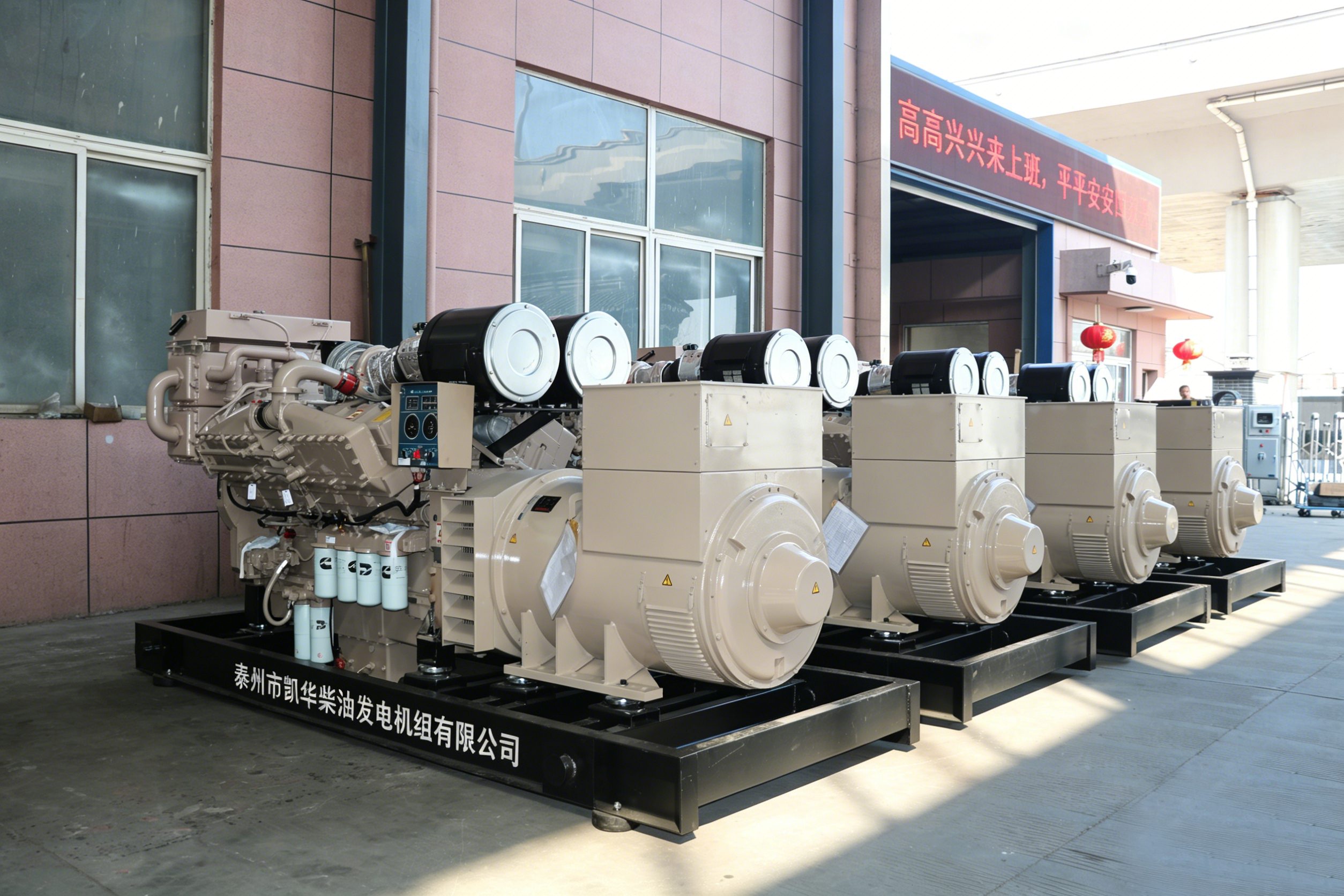
Onboard a rolling vessel, every bolt and bracket endures a constant micro-shaking that often goes unnoticed until something fails. This persistent vibration isn't merely an annoyance for the crew; it acts like a slow chisel on the generator's internal structure. Over time, it loosens critical fastenings, fatigues copper windings, and wears down insulation layers that were never designed for such relentless movement. The result is a generator that gradually loses its ability to maintain stable output, even if it still sounds like it's running fine.
The real damage happens in places you can't easily see. Vibration-induced fretting eats away at electrical connections, creating hot spots that eventually lead to arcing or complete connection failure. Rubber mounts and dampening pads lose their elasticity, transferring even more shock into the frame and bearings. As misalignment creeps in, the rotor and stator begin to rub microscopically, accelerating wear on surfaces that should never touch. What starts as a subtle hum can turn into a cracked housing, a snapped shaft, or a sudden shutdown in rough seas.
Prevention isn't about buying a heavier-duty generator; it's about respecting the physics of motion. Regular torque checks on mounting bolts, replacing worn isolators before they harden, and inspecting cable routing for chafing points can buy years of extra service. Many operators underestimate how much a few millimeters of movement can shorten a generator's lifespan. Treating vibration as a maintenance trigger rather than background noise is the difference between a unit that lasts a decade and one that dies an early, expensive death at sea.
Cooling in a Steel Box: Managing Heat When Space Is Tight
Steel enclosures don't breathe. They trap heat fast once components start working, and the metal itself becomes a radiator for all the wrong reasons. The first move is to stop fighting the box and use its thermal mass: bolt hot elements directly to the steel wall with a thin gap pad, letting the entire panel act as a spreader before adding a small fan near the top vent. Even a few square centimeters of bare metal, scraped clean and coated with thermal paste, can quietly pull ten watts out of a cramped corner.
When vertical space is gone, think in layers. A slim blower can push air through a channel cut into a side panel, while a folded fin stack sits in the airstream without eating internal volume. If the box must stay sealed, a loop of copper tubing pressed against the inner wall and connected to a tiny pump outside carries heat away without drilling big holes. The trick is placement: put the hottest part closest to where air actually moves, not where it looks convenient.
Don't overlook the wiring and connectors. In tight steel boxes, cables become unintended thermal bridges, carrying heat from one section to another or blocking what little convection exists. Route them along the coolest wall, keep them short, and use high-temperature insulation only where needed. Sometimes the best cooling upgrade is simply removing a mounting bracket that was acting like a fin for the wrong component.
Load Swings on the Water: Matching Generator Output to Real Demand
On a moving vessel, electrical demand rarely sits still. A fishing trawler hauling nets may pull 80 kW one minute, then drop to 15 kW while the crew sorts the catch. Diesel generators don't handle these sudden drops gracefully—fuel racks stick, governors hunt, and voltage spikes become more than a nuisance. The real challenge isn't peak load, but the constant, irregular fluctuation between light and heavy draws that wears out machinery and burns unnecessary fuel.
Matching output to that shifting demand usually comes down to two things: a fast-acting governor and the willingness to run a generator well below its rated output. Some skippers add a small auxiliary set for hotel loads, leaving the main engine free to handle heavy deck gear. Others rely on electronic load sharing, where two or three generators split the load automatically, dropping one offline when demand dips low. Either way, the goal is the same—keep frequency steady, avoid wet stacking, and stop the lights from flickering every time the winch kicks in.
Modern systems go further with inverter-based setups that buffer power through a battery bank, letting generators run at a constant, efficient speed while the inverter absorbs the swings. It's not cheap to retrofit, but for vessels spending long hours at partial load, the fuel savings and reduced maintenance pay back sooner than most owners expect. The sea doesn't care about your load curve, so you either build a system that bends with it—or pay the price in smoke and soot.
When the Main Fails: Designing Backup Power That Actually Starts
The moment utility power drops, every second matters. But a backup system that looks good on paper can still fail to start because of stale fuel, a dead starter battery, or a transfer switch that hesitates. Designing for actual start-up means treating the first ten seconds as the real test, not a formality.
Start with the engine's cranking circuit. Undersized battery cables, corroded terminals, or a trickle charger that silently gave up are common culprits. Use a dedicated starting battery with its own charger, monitor its voltage under load, and schedule monthly crank tests that don't just spin the engine but confirm it reaches rated frequency before the transfer switch moves.
Don't ignore the control logic. A generator that starts but never closes the breaker because of a phase rotation mismatch or a software lockout is still a failure. Build in manual override and clear fault indication so an operator can diagnose in the dark without scrolling through menus. Backup power that actually starts is less about brand horsepower and more about eliminating single points of failure in the starting chain.
Service at Sea: Why Maintenance Access Can't Be an Afterthought
A ship’s maintenance schedule looks tidy in a dry dock, but at sea, reality is different. Hatches stick, bolts seize, and filters clog in weather that rarely cooperates. If the people on board cannot physically reach a pump or valve without stripping away deck plates or waiting for a port call, small problems become expensive failures.
Good access design shows up in the small things—an extra inspection port near the steering gear, a walkway that doesn’t disappear under cargo, clearances that let a gloved hand actually turn a wrench. These choices are not about convenience. They decide whether a crew can keep systems running during a long crossing or spend days hoping nothing else breaks.
FAQ
Marine units have to cope with constant motion, salt-laden air, and much tighter space constraints. Manufacturers typically use corrosion-resistant alloys for the frame and fasteners, isolate the engine mounts to absorb hull vibrations, and design the cooling loop around raw water rather than ambient air. These choices affect every stage, from casting the block to final assembly.
Salt spray reaches almost every surface in an engine room, so standard carbon steel parts will rust quickly. Builders often switch to cupronickel heat exchangers, stainless steel exhaust elbows, and coated copper busbars. Sealed connectors and conformal-coated circuit boards also help keep control electronics alive in high-humidity conditions.
The propeller shaft and generator are often coupled to the same engine, or the generator runs while the vessel pitches and rolls. Torque reversals and irregular firing pulses can excite torsional resonances in the drivetrain. Without a properly tuned flexible coupling or damper, these oscillations crack crankshafts and shear coupling bolts.
A keel-cooled or heat-exchanger system using seawater as the secondary medium is common because it avoids bringing corrosive seawater directly into the engine block. The raw-water pump, strainer, and zinc anodes need frequent inspection. Closed-loop fresh water with an expansion tank gives the most stable engine temperatures and reduces internal scaling.
Endurance runs often include load steps from idle to 110% rated output while the set is mounted on a vibration table that simulates sea states. Thermal cycling in a salt-fog chamber checks enclosure sealing and electronics. Sound and vibration signatures are measured at multiple RPM points, and the final unit usually undergoes a factory acceptance test with a resistive and reactive load bank.
It depends on the actual load profile, not just the sum of installed equipment. Intermittent loads like bow thrusters, air compressors, and galley equipment can cause large voltage dips if the set is undersized. Builders look at motor starting kVA, harmonic content from variable frequency drives, and the lowest allowable frequency drop before specifying the alternator and engine.
The combination of salt fog, high humidity, and temperature swings causes condensation inside standard alternators. Marine-grade units use epoxy or polyester varnish with tropicalized insulation, plus anti-condensation heaters that keep windings dry when the set is idle. This prevents insulation breakdown and flashovers that can happen after a cold start.
The mounting system directly affects how much vibration reaches the alternator bearings, engine mounts, and attached piping. Resilient mounts with adjustable stiffness align the engine and alternator under dynamic loads, while a rigid sub-base with drip tray prevents oil and coolant from reaching the bilge. Poor mount selection leads to premature bearing wear and fatigue cracks in the base frame.
Conclusion
Salt spray, humidity, and constant motion turn the generator housing into a corrosion test bed. Manufacturers that rely on thin powder coating or ignore galvanic isolation between dissimilar metals see housings pit and flake within a few seasons. Vibration compounds the damage: resonance from hull and engine harmonics loosens fasteners, cracks welds, and fatigues internal wiring. Rubber mounts alone are not enough; the structural design must treat vibration as a continuous load. Cooling presents another hurdle because the unit often sits in a cramped, poorly ventilated engine room. Airflow must be ducted deliberately, and water-cooled heat exchangers must tolerate biofouling and scale without losing efficiency. A generator that overheats at rated output is a design failure, not a maintenance issue.
Load behavior at sea is never steady. Pumps, winches, thrusters, and hotel loads cycle unpredictably, so the governor, AVR, and fuel system must respond without overshoot or wet stacking during light loads. Oversizing often creates more problems than it solves. When the main generator fails, the backup unit has to start after weeks or months of standby. Battery health, block heaters, and automatic transfer logic all need testing under real conditions, not just in the factory. Finally, access for routine service—oil changes, impeller swaps, anode inspection—cannot be an afterthought. Hinged panels, removable trays, and clearly labeled drain points make the difference between a generator that gets maintained and one that gets ignored until it fails.
Contact Us
Contact Person: Ms. Lu
Email: [email protected]
Tel/WhatsApp: 8618917899306
Website: https://www.hichaipower.com