

Load Break Switch Supplier Guide: Choosing a Reliable Partner for Your Power Distribution Needs
2026-08-12
Selecting the right load break switch supplier isn’t just about comparing specs—it’s about securing long-term reliability in your power distribution network. A single misstep can lead to costly downtime and safety risks. That’s where Deepwill comes into focus. This guide breaks down what truly matters when evaluating partners, from technical expertise to after-sales support, helping you make a confident, informed choice.
Beyond the Spec Sheet: What Really Matters in a Load Break Switch
A load break switch may check all the boxes on paper—rated voltage, interrupting capacity, mechanical endurance—but real-world performance hinges on how it handles the unexpected. The spec sheet rarely reveals how the switch behaves under frequent operation, in dusty or humid environments, or after years of minimal maintenance. What truly matters is its ability to maintain reliable arc extinction over time, not just during a factory test. The contacts might meet the standard for 1,000 operations, but if the arc chute degrades after 300 cycles in a hot and dirty switchgear room, your safety margin vanishes. This is where material choices and design philosophy separate a commodity switch from one that keeps your facility running without drama.
Beyond ratings, pay attention to how the switch integrates into your overall electrical system. Does its operating mechanism provide clear, tactile feedback, or does it leave operators guessing whether the circuit is fully open? The mechanical simplicity of a switch often determines its long-term reliability—fewer moving parts mean less to go wrong. Yet simplicity should not come at the cost of safety: look for features like visible break indication and secure padlocking points that are easy to use in practice, not just in a catalog image. The ergonomics of manual operation can directly impact the speed and accuracy of emergency response when every second counts.
Finally, consider the switch’s footprint in your long-term planning. A spec sheet might list dimensions, but it doesn’t tell you whether the design leaves room for cable termination or future upgrades. Some switches are notoriously difficult to terminate large conductors within a confined enclosure, leading to hot spots and premature insulation failure. Others use non-standard insulation materials that might become brittle under thermal cycling. The best load break switch is not necessarily the one with the highest ratings, but the one that fits seamlessly into your application, requiring no creative field modifications and offering peace of mind that it will perform consistently when the load must be interrupted—no asterisks, no exceptions.
Engineering Depth: Can They Solve Your Toughest Application Challenges?
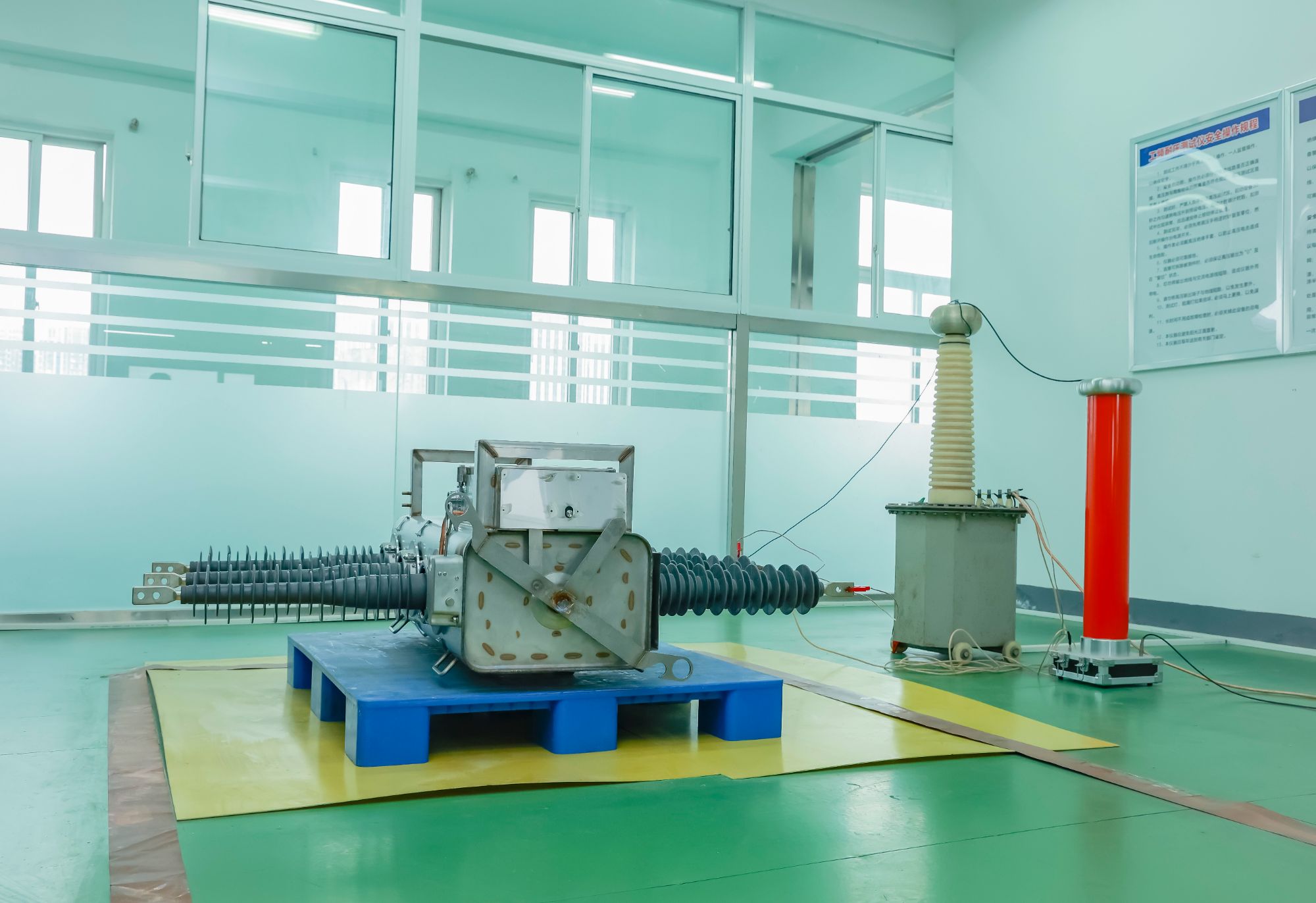
When evaluating a partner’s engineering depth, the real test isn’t in how they handle the ordinary—it’s in their ability to confront the unknown. Too many teams paper over gaps with jargon, but genuine depth reveals itself in how they peel back the layers of your most complex problems. Do they simply match specifications, or do they dig into the physics behind the failure, the material behaviors at the edge cases, the hidden interactions that only surface under stress? The answer separates those who follow a script from those who can write the playbook when none exists.
This depth often surfaces in their approach to design validation. Watch how they stress-test not just components but entire systems against real-world extremes—thermal cycling that outpaces standard profiles, vibration spectra pulled from actual operating data, chemical exposures that mimic years of field use in weeks. The deep teams don’t just run standard tests; they invent new ones that better replicate your reality. They bring failure analysis capabilities that go beyond microscope snapshots, using techniques like cross-sectioning and spectroscopy to trace a crack back to its root cause, even when that root is a process variable from a supplier three tiers removed.
Ultimately, engineering depth proves itself in the solutions that never make it to a spec sheet. It’s in the custom firmware that corrects for sensor drift in ways the OEM never anticipated. It’s in the redesigned cooling channel that eliminates a hotspot no simulation ever predicted. When you find a team whose first instinct is to understand the physics rather than sell a product, you’ve found one that can tackle your hardest challenges not because they’ve seen them before, but because they know how to learn faster than the problems can evolve.
Quality Consistency: From Prototype to Production, Does It Hold Up?
Moving from a handcrafted prototype to mass production often exposes gaps that early tests never reveal. The initial samples might perform flawlessly in controlled settings, but things change when you scale up—materials sourced in bulk can vary subtly, tooling wears down, and assembly line conditions introduce variables no lab can replicate. True quality consistency isn't just about hitting spec once; it's about proving that every unit off the line meets the same standard, even on a humid Tuesday afternoon when the factory is behind schedule.
What trips up many companies is the assumption that a prototype’s performance automatically translates to full production. In reality, the transition demands rigorous process validation, statistical controls, and a deep understanding of how materials behave under high-volume conditions. Without this, you end up with a product that earns rave reviews initially but disappoints customers later—a gap that can erode trust rapidly. Consistency requires designing for manufacturability from day one, not as an afterthought once production issues surface.
So, how do you ensure the quality stays intact? It starts with a transparent partnership between design, engineering, and manufacturing teams. Frequent audits, real-time monitoring of critical parameters, and a no-blame culture for flagging deviations all help. Ultimately, the real test isn’t in the first batch—it’s in the thousandth. And if you’ve built a system that catches drift before it becomes a defect, then yes, it holds up.
Response Time: Who Answers When Your Systems Go Down?
When your systems fail, the speed of response isn't just a metric—it's the difference between a minor hiccup and a full-blown crisis. Every second that passes with your services offline chips away at customer trust and revenue. That's why it's critical to have a team that doesn't just monitor alerts but actively jumps into action the moment something breaks. We’ve structured our on-call rotations so that the people answering are the same engineers who built the system, meaning they don't waste time getting up to speed—they already know the architecture inside out.
But raw speed isn't enough if it's not paired with clear communication. When an incident strikes, we immediately open a dedicated war room—not for bureaucracy, but for focused collaboration. Stakeholders get a concise, jargon-free update within minutes, so nobody is left refreshing a status page and wondering what's happening. This approach hasn't just reduced our mean time to resolution; it's fundamentally changed how our clients perceive downtime. They know they're not alone in the trenches.
Ultimately, who answers the call reflects your organization's true commitment to resilience. We don't outsource this critical function to a generic help desk that follows a script. Instead, we invest in continuous training and realistic failure simulations so that when—not if—something goes wrong, muscle memory takes over. The result? Problems get solved before they spiral, and your business keeps moving forward.
Tailored Solutions: When Off-the-Shelf Isn't Enough for Your Network
Every network tells a different story. Some are built for speed, others for security, and many must balance both while juggling legacy systems and future ambitions. When a generic, off-the-shelf solution lands in that environment, the result is often like forcing a square peg into a round hole. You end up with unnecessary complexity, hidden bottlenecks, or tools that simply ignore critical aspects of your infrastructure.
Tailored solutions flip that narrative. Instead of adapting your operations to fit a product, the product is shaped around your unique operational DNA. This approach respects the choices you’ve already made—whether it’s a particular hardware vendor, a cloud strategy, or compliance requirements that leave no room for compromise. The result is a network that feels cohesive, where every component works in concert rather than constant friction.
But true customization goes beyond feature checkboxes. It’s about engineering a system that anticipates your growth, integrates seamlessly with your team’s workflows, and offers a level of control that cookie-cutter options can’t match. When the stakes are high and your network’s demands are anything but ordinary, settling for “good enough” is rarely the right call.
The Hidden Costs of Choosing the Wrong Supplier
It often starts small—a delayed shipment here, a slight dip in quality there. But over time, these seemingly minor missteps accumulate into major financial drains. The wrong supplier rarely announces themselves with a catastrophic failure; instead, they bleed your business slowly through inconsistent lead times, higher defect rates, and constant firefighting that steals your team's focus from growth-oriented tasks.
Beyond the invoice, there's a trail of invisible expenses: the extra warehousing needed when inventory doesn't arrive on schedule, the overtime paid to handle rework, and the brand damage when end customers receive subpar products. Each of these individually might be absorbed, but collectively they create a margin pressure that no amount of sales volume can outrun. The most dangerous part? They often go unmeasured because they're buried in operational noise, making the supplier seem cheaper than they truly are.
Then there's the cultural debt—the trust eroded within your own organization and with your customers. When supply chain hiccups become routine, your team starts building buffers and workarounds that institutionalize inefficiency. Customers who experience inconsistency rarely complain loudly; they simply leave silently. The true cost isn't just the immediate financial hit, but the opportunities lost: the contracts you can't bid on because you can't guarantee fulfillment, the innovation that stalls because procurement is always in crisis mode. Choosing a supplier based on lowest quote can mean paying with your company's future.
FAQ
Look for IEC 62271 or IEEE C37 standards compliance, along with type-test reports from recognized labs like KEMA or CESI. ISO 9001 and ISO 14001 show consistent quality processes, while region-specific marks (e.g., CE, UL) confirm local grid code alignment. Suppliers that voluntarily undergo third-party audits add extra confidence.
Request a factory visit to inspect assembly lines, testing bays, and raw material storage. Check if they use automated winding machines, vacuum casting, and partial discharge testing. Ask about defect rates and corrective action records. A supplier who welcomes on-site audits is usually transparent about their capabilities.
Ask for past projects in similar environments, like mining, marine, or high-altitude. Request reference designs and lead times for custom voltage ratings, enclosures, or control interfaces. Inquire about their engineering team’s experience with solid dielectric insulation or arc-quenching technology relevant to your load profile.
Check guaranteed response times for technical queries (ideally under 24 hours), availability of spare parts for at least 10 years, and whether they offer on-site commissioning or remote diagnostics. Ask for an escalation matrix and contact details of a local service partner if the supplier is overseas.
Beyond shipping costs, verify packaging standards for shock and humidity during transit. Clarify Incoterms and who bears risk for customs delays. Some suppliers pre-install desiccants and ship in sealed crates with tilt indicators. Also confirm if the supplier handles documentation for hazardous materials if SF6 gas is used.
Factor in lifecycle costs: installation difficulty (e.g., plug-in vs. hard-wired), energy losses from contact resistance over time, maintenance intervals for operating mechanisms, and disposal fees for gas-filled units. A slightly higher upfront price may be offset by no-maintenance vacuum interrupters and tool-less fuse replacement.
Conclusion
Selecting the right load break switch supplier goes far beyond comparing datasheets and price points. True reliability surfaces when you dig into engineering depth—can the team tackle unusual fault scenarios or harsh environments that fall outside standard ratings? The best partnerships are built with manufacturers who treat quality as an unbroken thread from first prototype to thousandth unit, maintaining consistent interruption performance and mechanical endurance without drift. And when a field failure occurs, the clock starts ticking: you need a supplier whose support line picks up on the first ring, not one that hides behind ticket systems. Off-the-shelf products rarely check every box, so look for a partner ready to modify housing materials, fuse coordination, or switching sequences to match your network’s specific protection philosophy instead of forcing your design into their catalog.
The hidden costs of a mismatched supplier compound quickly: extended downtime, retrofit labor, and the slow erosion of grid reliability often trace back to a switch that couldn’t handle real-world stress or a vendor that disappeared after shipment. A truly dependable partner invests in rigorous type testing, shares transparent failure reports, and views your operational headaches as their own. They differentiate themselves by offering proactive support—think application reviews before you order, not just after things go wrong. In essence, the right choice transforms a commodity component into a long-term asset for your power distribution network. Prioritize suppliers who demonstrate deep problem-solving capability and a stubborn commitment to consistency, because in critical infrastructure, what you’re really buying is confidence.
Contact Us
Contact Person: Julion
Email: [email protected]
Tel/WhatsApp: 8617351370631
Website: https://www.deyunelectric.com