

Leading TFT LCD Display Manufacturers Revolutionizing Visual Technology
2026-05-11
From crisp smartphone screens to robust industrial panels, TFT LCD displays shape how we interact with technology every day. Yet behind these everyday marvels is a fierce race among elite manufacturers to push clarity, efficiency, and durability to new heights. Among them, Jingda-Display is carving a distinct niche, blending innovation with reliability in ways that challenge even the biggest names. Curious who’s truly redefining the visual experience? Let’s meet the forces driving this transformation.
Pushing the Boundaries of Screen Resolution
Screen resolution has long been a numbers race, with 4K now a baseline and 8K creeping into living rooms. But the quest isn't just about cramming more pixels onto a panel—it's about redefining what we perceive as sharp. Manufacturers are playing with sub-pixel arrangements and materials that boost contrast and color accuracy at microscopic levels, making specs like PPI only part of the story. The real push isn't just about a clearer image; it's about creating a canvas where even the finest details feel tangible.
Behind the scenes, the shift demands a rethinking of everything from GPU architectures to the cables snaking behind our desks. DisplayPort 2.1 and HDMI 2.1 are already sweating to deliver uncompressed 8K at high frame rates, while streaming platforms grapple with codecs that won't choke internet pipes. Oddly enough, the human eye becomes a limiting factor—beyond a certain density, we can't tell individual pixels apart. That hasn't stopped engineers from chasing resolution in VR headsets, where virtually wrapping a screen around your retina makes every pixel count, forcing optics to evolve as quickly as the panels themselves.
Looking ahead, the boundary might shift away from raw pixel counts altogether. Light field displays and holographic prototypes hint at a future where resolution is measured not in rows and columns, but in the depth and realism of a 3D image. Instead of craving higher numbers, we might soon measure screens by their ability to fool the eye into believing a window is open, not a display is on. That transformation turns resolution from a technical hurdle into a gateway for entirely new visual languages.
Innovating for Immersive Viewing Experiences
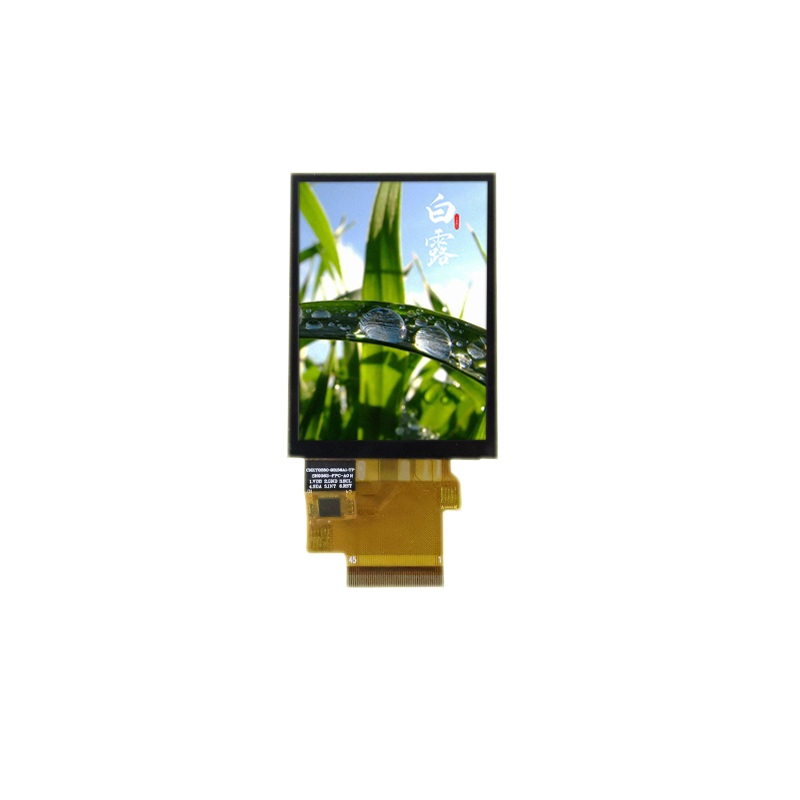
Immersion in visual media has always been about pushing boundaries. From bending the light to fit the curve of the human eye, we've redesigned how pixels meet perception. It’s not just about sharper images—it’s about making the screen disappear altogether.
Our latest approach starts with the way colors are rendered, ensuring they stay true even when the viewer moves. Tiny adjustments in luminance and tone, invisible to the conscious mind, create a depth that feels tactile. Shadows soften, highlights gleam, and motion flows without the usual stiffness you'd expect from a flat panel.
Sound plays its part too, layered and directional, pulling focus beyond the frame. The result is an experience where the world of the content extends beyond the device, drawing you in without the need for extra gear or complicated setups. It’s immersive because it forgets to remind you that you’re watching something at all.
Pioneering Flexible and Foldable Displays
The journey toward truly bendable screens has been anything but straightforward. Early attempts at flexible displays were often marred by creases, poor durability, and washed-out colors. Today, however, a new generation of materials—from ultra-thin glass to advanced polymer substrates—has transformed prototypes into commercially viable devices. These screens can now fold thousands of times without visible damage, opening doors to smartphones that double as tablets and wearables that contour to the wrist.
What sets the latest flexible displays apart isn't just their resilience, but the user experiences they enable. Imagine a phone that unfolds into a seamless canvas for multitasking, or a rollable display that expands at the touch of a button. Engineers have tackled the challenge of maintaining pixel integrity across the fold zone, using innovative hinge designs and adaptive refresh rates. The result is a near-invisible crease that doesn't distract from content consumption, whether you're reading an e-book or watching a high-definition video.
Beyond gadgets, flexible display technology is reshaping industries like automotive and architecture. Curved dashboards effortlessly blend information with design, while foldable signage can be deployed in unconventional spaces. As manufacturing costs drop and yields improve, we're witnessing a shift from novelty to necessity—where displays adapt to human needs, not the other way around. The true breakthrough lies in making this technology so durable and affordable that it fades into the background of everyday life.
Redefining Color Accuracy for Professionals
For years, color accuracy in professional displays has been measured by specs that rarely tell the full story. The real challenge isn't just hitting a certain Delta E value in a lab—it's about consistency across devices, lighting conditions, and the quirks of human vision.
We're moving beyond one-size-fits-all calibration. Think hardware-level adjustments that self-correct minute by minute, paired with software that learns how your team works. It's less about chasing numbers and more about delivering an image that feels right, project after project.
From photographers grading raw files to studios mastering HDR content, redefining accuracy means building trust in what you see. As workflows blend virtual and physical realities, the goal is simple: no surprises, just color you can count on—no matter the medium.
Driving Energy-Efficient Display Solutions
Modern displays account for a sizable chunk of device power consumption, and tackling this inefficiency starts with rethinking how we control each pixel. Traditional screens often blast full brightness regardless of content, but adaptive luminance techniques now let systems dim or turn off inactive zones without the user noticing a drop in visual quality. By pairing ambient light sensors with real‑time content analysis, a display can intelligently fine‑tune its output—dialing back on static interfaces while preserving vividness for video and interactive elements.
The choice of panel technology also plays a quiet yet critical role. Emissive displays, like OLED and microLED, eliminate the need for a power‑hungry backlight by lighting only the necessary pixels, while reflective technologies such as E Ink cut energy use to nearly zero for static content. Even within LCDs, innovations in quantum dot enhancement and dual‑cell modulation are narrowing the efficiency gap, offering rich color without the typical power penalty. These hardware shifts, when combined with smarter driver ICs that reduce refresh rates for still images, compound into substantial battery savings across laptops, phones, and wearables.
Beyond the hardware, the often‑overlooked firmware and operating system layers can make or break energy goals. Thoughtful power profiles, content‑adaptive frame rates, and intelligent caching of on‑screen assets allow the display subsystem to linger in low‑power states longer. Developers are now baking efficiency into the rendering pipeline, so that an interface with muted tones or a dark theme genuinely draws less current—not just fewer visible photons. This holistic approach, where every watt is respected from the pixel circuit to the power supply, is what turns incremental improvements into a leap in real‑world stamina.
Shaping the Future of Interactive Surfaces
Touchscreens and gesture controls have already become second nature, but the next leap is far more subtle. Researchers are now embedding sensors directly into everyday materials—wood, fabric, even glass—enabling surfaces to sense pressure, temperature, and proximity without any visible interface. This shift means objects around us will become active participants rather than passive backdrops, quietly responding to presence and intent.
A key driver here is the blend of printed electronics and machine learning. Rather than wiring up every table and wall with bulky components, flexible circuits and conductive inks are being used to create smart coatings that can interpret touch patterns. These surfaces learn over time, distinguishing between a gentle brush and a deliberate tap, opening up possibilities for adaptive environments in homes, hospitals, and public spaces.
The real challenge, though, isn't just technical—it’s designing for seamless human experience. As surfaces start anticipating our needs, the line between intuitive and intrusive blurs. The most promising projects are those that prioritize subtle feedback, like a subtle warmth or a change in opacity, ensuring that technology recedes into the texture of daily life rather than screaming for attention.
FAQ
TFT LCDs continue to dominate due to their cost-effectiveness and durability. Major manufacturers have refined the technology with quantum dot enhancements and local dimming, achieving impressive contrast and brightness levels that rival OLED in many scenarios.
Samsung Display, LG Display, and BOE Technology are key players. Samsung has pushed LCD with QLED, LG with NanoCell, and BOE has become a powerhouse in large-size panels, driving advancements in 8K resolution and ultra-high refresh rates.
They've adopted advanced IPS and VA panel technologies. For instance, LG's IPS panels offer consistent colors from wide angles, while Samsung's VA panels deliver deeper blacks. Newer implementations use compensation films to minimize off-axis color shifts.
BOE has rapidly scaled to become the world's largest LCD panel supplier. They produce everything from smartphone screens to massive 110-inch displays, and their commitment to Gen 10.5 fabs has lowered costs for large-format TVs.
Manufacturers like AUO and Innolux have developed panels with 360Hz and even 500Hz refresh rates, combined with low response times. These panels use advanced pixel overdrive and backlight strobing to eliminate motion blur, making them ideal for competitive gaming.
Innovations include LED backlights with local dimming, dynamic brightness control, and the use of IGZO (indium gallium zinc oxide) transistors that require less power. This has significantly reduced consumption in monitors and TVs.
Conclusion
Leading TFT LCD display manufacturers are fundamentally redefining visual technology by relentlessly pushing the boundaries of screen resolution, bringing unprecedented clarity to everything from smartphones to large-format displays. This pursuit of pixel perfection goes hand-in-hand with innovations aimed at creating truly immersive viewing experiences, where wider color gamuts, higher refresh rates, and advanced backlighting techniques pull viewers deeper into the content. At the same time, these pioneers are breaking physical constraints by developing flexible and foldable displays, transforming rigid panels into curved, bendable, and even rollable screens that promise to reshape product design across industries.
Beyond raw visual impact, manufacturers are redefining color accuracy for professionals who demand absolute precision, leveraging quantum dot enhancements and factory calibration to meet the exacting standards of photographers, designers, and video editors. Energy-efficient display solutions are also a major focus, with the latest panels drawing significantly less power while maintaining or improving brightness, directly addressing environmental concerns and extending device battery life. Looking ahead, the same companies are shaping the future of interactive surfaces, embedding touch, gesture, and haptic feedback directly into the display to create seamless, intuitive interfaces that turn ordinary screens into collaborative, responsive canvases for the next generation of users.
Contact Us
Contact Person: Vincent
Email: [email protected]
Tel/WhatsApp: 86 135 5485 1379
Website: https://www.jda-display.com/