
Known Double Shaft Shredder: Unlocking Efficiency in Industrial Waste Processing
2026-07-27
When it comes to industrial waste processing, double shaft shredders have long been the workhorses of the industry—but how much efficiency are you really leaving on the table? With mounting pressure to reduce costs and environmental footprint, it's time to look beyond conventional designs. That’s where Shengzhong Shredder comes in, redefining what these machines can achieve. In this article, we’ll explore the hidden potential of double shaft shredders and why upgrading to a smarter solution might be the simplest way to transform your operation.
How Dual Shaft Shredders Turn Waste into Manageable Streams
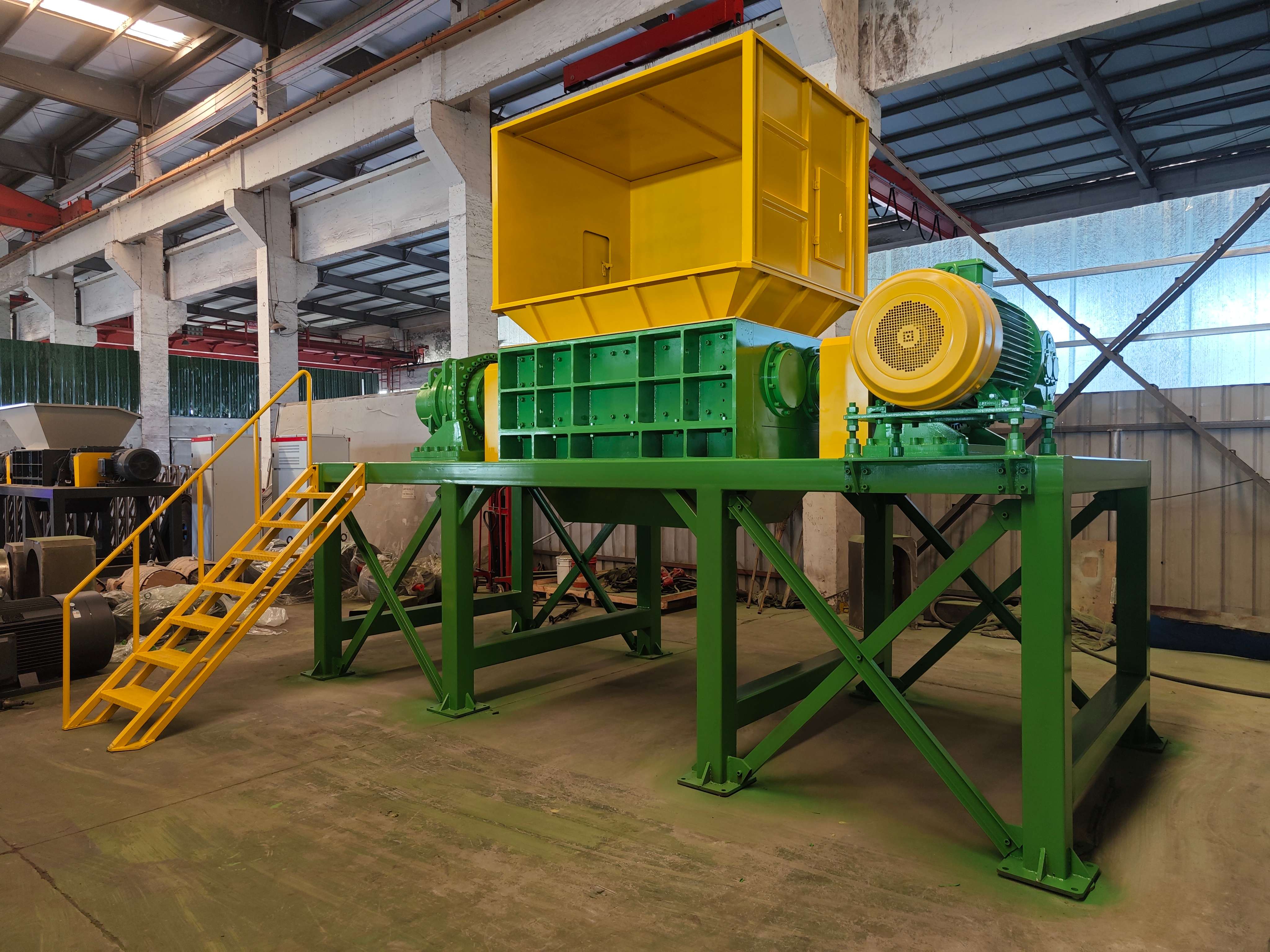
At the core of their design, dual shaft shredders rely on two counter-rotating shafts equipped with interlocking cutting discs. As waste material is fed into the machine, the opposing motion of these shafts draws the material downward, tearing it apart with a combination of shearing and crushing forces. This process ensures that even tough, bulky items like industrial drums or thick plastic pallets are reduced to consistently sized fragments without the need for frequent adjustments or manual intervention.
The shredded output emerges as a steady, predictable stream of material that is far easier to transport, store, or feed into downstream sorting and recycling equipment. By breaking down mixed waste into compact, uniform pieces, these machines transform an unpredictable jumble of refuse into a controlled flow that can be efficiently handled within material recovery facilities. The resulting consistency not only improves conveyor reliability but also simplifies the separation of materials later in the process, effectively turning chaos into a manageable resource.
The Engineering Behind Consistent Output in Tough Materials
Achieving consistent output when working with tough materials begins with a deep understanding of the material's microstructure and how it responds to stress. Instead of relying on generic machining parameters, engineers map out the grain boundaries and phase distributions to predict failure points. This upfront analysis allows for custom tool path strategies that adapt to local hardness variations, reducing chatter and tool wear while maintaining dimensional accuracy across long production runs.
Thermal management plays an equally critical role. In processes like high-speed milling of superalloys, heat generation can quickly degrade both the tool and the workpiece surface integrity. Advanced coolant delivery systems, often using precisely directed high-pressure streams, keep the cutting zone within a narrow temperature window. Combined with real-time sensor feedback that adjusts feed rates on the fly, this prevents the accumulation of residual stresses that lead to distortion or microcracking.
Finally, quality assurance isn't left to end-of-line sampling. In-line metrology tools, such as laser profilometers and vibration spectrum analyzers, continuously monitor the output. Any deviation beyond a preset tolerance triggers an automatic compensation loop that corrects the process parameters before defective units are produced. This closed-loop approach, grounded in robust statistical process control, turns the inherent challenges of tough materials into a manageable, repeatable operation where consistency is the norm, not the exception.
Real-World Applications: From Tires to Industrial Scrap
Every year, millions of worn-out tires and tons of industrial scrap are discarded, often ending up in landfills or illegal dumping sites. However, these materials are far from worthless. Through advanced recycling techniques, old tires are transformed into crumb rubber for playground surfaces, durable mats, or even fuel for energy-intensive industries. Similarly, metal shavings, plastic offcuts, and rubber remnants from factories find new life in construction materials, automotive parts, and consumer goods, quietly reducing the strain on virgin resources.
The journey from tire to reusable granulate is a remarkable feat of engineering. Specialized machinery shreds, grinds, and separates the rubber from steel and fiber, yielding a clean material that can be molded into everything from noise-reducing asphalt to shock-absorbing gym flooring. In parallel, industrial scrap undergoes meticulous sorting and processing, allowing mixed alloys to be smelted back into uniform ingots or composite plastics to be pelletized for injection molding. These processes don't just repurpose waste—they often consume less energy than creating materials from scratch, making them a practical choice for manufacturers.
Beyond the obvious economic and environmental gains, these applications hint at a subtler shift in how industries think about waste. When a cement plant uses shredded tires as an alternative fuel, or when a furniture maker incorporates recycled steel from factory offcuts, they're closing a loop that was once wide open. It’s a quiet revolution driven not by strict regulations alone, but by the growing realization that what we throw away still holds value—if we have the ingenuity to reclaim it.
Reducing Downtime: Maintenance Strategies That Pay Off
Traditional calendar-based maintenance often creates more problems than it solves, replacing components that still have thousands of hours left while missing early signs of failure elsewhere. A smarter approach flips the script: instead of fixing things on a schedule, you monitor real-time data—vibration, temperature, power draw—and intervene only when patterns drift from baseline. This shift cuts unnecessary part swaps and catches subtle deterioration before it cascades into a production halt. The upfront cost of sensors and analytics software can feel steep, but when you weigh it against a single unplanned outage where every minute of downtime burns revenue and erodes customer trust, the math becomes a no-brainer.
Predictive strategies also force honesty about equipment history. When every pump and conveyor has a digital log of past repairs, you stop applying generic fixes and start addressing root causes. Maybe that recurring bearing failure isn’t a lubrication issue—it’s a misalignment that nobody measured because the line was “running fine.” Over time, this creates a library of patterns that turns your most experienced technicians’ gut instincts into teachable rules, so knowledge doesn’t walk out the door when they retire.
Finally, the real payoff comes from integrating maintenance data with production scheduling. If you know a critical spindle has an 85% probability of degrading past safe limits in the next 200 cycles, you can plan the replacement during a low-demand window rather than waiting for it to scream to a stop at peak season. That kind of orchestration turns maintenance from a cost center into a competitive lever—something your competitors will only notice when they’re wondering why your delivery promises keep coming true.
Energy Efficiency Gains Without Sacrificing Power
Modern engineering has blurred the line between conserving energy and maintaining robust performance. Through innovations like advanced thermal management and precision control algorithms, systems now dynamically adjust power draw without the driver feeling a dip in responsiveness. It’s no longer a trade-off—it’s a harmonious balance where efficiency and strength coexist seamlessly.
The secret lies in intelligent component design. Lightweight materials reduce inertia, while regenerative braking and smart load distribution recapture energy that would otherwise be wasted. These incremental gains add up, delivering the same exhilarating experience with a fraction of the consumption. What was once a compromise has evolved into a smarter way to harness power, proving that you don’t have to choose between eco-conscious driving and heart-racing performance.
Future-Proofing Waste Operations with Modular Design
Waste processing facilities can’t afford to be static. Regulations shift, waste streams evolve, and technology leaps forward—yet traditional plants are often locked into rigid designs that become obsolete too quickly. Modular design flips the script by treating a facility as a set of interchangeable building blocks. When a new recycling mandate drops or a processor is ready to scale, operators simply plug in a new module or swap out an outdated one, keeping the operation fluid without a total overhaul.
This approach turns expansion from a massive capital gamble into a series of measured steps. A facility might start with a core sorting line, then add a composting module later, or integrate a plastics-to-fuel unit as markets mature. Because each module functions independently, there’s no need to pause the whole plant for upgrades—modules can be added, removed, or updated in isolation. This keeps disruption low and allows operators to chase new revenue streams without betting the farm on a single, inflexible layout.
Beyond growth, modular setups make maintenance far less of a headache. A failed conveyor or sensor package doesn’t cascade into a full shutdown if the surrounding modules can keep running. Technicians can wheel in a replacement module, fix the old one offline, and slide it back into place, cutting downtime to hours instead of days. Over time, this piecemeal approach also simplifies budgeting: capital outlays sync more naturally with actual needs, and the site stays perpetually current without the burden of constant, disruptive retrofits.
FAQ
It’s a heavy-duty machine with two parallel shafts equipped with interlocking blades that rotate in opposite directions. Unlike single shaft models, the dual-shaft design grabs and tears material more aggressively, handling bulky, tough waste without clogging.
That’s one of its strong points. You can feed it a chaotic blend—wood pallets, plastic drums, metal scraps, even tires—and it’ll chew through them simultaneously. No presorting needed for most applications.
It comes down to torque and speed control. The low-speed, high-torque action minimizes dust and noise while maintaining a steady throughput. Plus, it automatically reverses if a jam occurs, so downtime is rare.
Typically an electric motor paired with a heavy-duty gearbox. The gearbox is the heart—quality ones use planetary or parallel shaft designs to distribute force evenly, preventing breakage even with 24/7 operation.
Rotate or flip the blades regularly since wear tends to concentrate on one edge. Also, keep an eye on the hydraulic pusher (if equipped) and avoid running it dry. A simple weekly inspection catches most issues early.
Waste management companies, recycling plants, cement kilns using alternative fuels, and manufacturing facilities with high-volume scrap. Basically anyone dealing with bulky waste streams that need volume reduction before further processing.
The cutter spacing and blade thickness determine the nominal size, but many units have a screen or grid at the discharge. Swapping the screen changes the output particle size; some hydraulic systems allow quick changes without dismantling the shaft.
Because it runs at low RPM, the noise is more of a low rumble—not the high-pitch whine of high-speed grinders. Dust is minimal, but you should still consider a simple dust extraction hood if processing dry, friable material.
Conclusion
The known double shaft shredder has quietly reshaped industrial waste processing, turning chaotic mounds of material into clean, manageable streams. At its core, the dual shaft design tackles everything from bulging tires to rugged industrial scrap, pulling in waste with aggressive hooks and shearing it down to uniform chips. Operators quickly learn that consistent output isn’t an accident—it’s rooted in sturdy engineering where counter-rotating shafts and precise cutter spacing leave little room for oversized rejects. In real facilities, this means a single machine can swallow a mixed diet of metals, plastics, and rubber, trusting the shredder’s geometry to deliver a homogenous product ready for sorting or further processing.
What separates a reliable setup from constant headaches is the attention paid to maintenance without overcomplicating routines. Smart facilities focus on accessible wear parts, quick-change blade systems, and built-in intelligence that flags anomalies before a cascade of failures. This practicality doesn’t stop at uptime—modern designs prove that energy efficiency gains come without sacrificing torque, using optimized drive trains that draw only what the load demands. Looking forward, modular construction allows operators to adapt cutting chambers and shafts as material streams evolve, effectively future-proofing the waste operation. Instead of buying entirely new lines, they reconfigure, keeping capital costs low while staying ahead of shifting regulations and incoming tonnages.
Contact Us
Contact Person: Leon
Email: [email protected]
Tel/WhatsApp: 8615385558866
Website: https://www.shred-waste.com