

Inside a Dry Type Transformer Factory: Efficient Production and Quality Control
2026-08-08
Step inside a dry type transformer factory where precision meets speed. From automated winding to rigorous testing, every stage is optimized for efficiency without compromising quality. At the heart of this seamless production is Deepwill, a brand that redefines reliability in power solutions. Curious about what makes their process stand out? Let’s explore the innovations driving this factory forward.
Raw Material Receiving and Inspection
The moment a shipment arrives at the dock, the clock starts ticking on quality assurance. Every pallet, drum, or bag is visually scanned for transport damage, labeling accuracy, and batch integrity before it even enters the warehouse. This first checkpoint isn't just about rejecting obvious dents or tears—it's about spotting subtle inconsistencies that could snowball into production bottlenecks later. Teams cross-check carrier documents against purchase orders in real time, flagging anything from temperature excursions on sensitive resins to mismatched lot numbers that might hint at a supplier mix-up deep in the supply chain.
Once the inbound materials clear the visual gate, the real scrutiny begins at the inspection bench. Here, incoming lots face a battery of tests tailored to the material's role: melt flow indexes for polymers, particle size distributions for powders, moisture content for hygroscopic compounds, and more. The inspection protocol isn't static; it adapts based on the supplier's track record and the criticality of the component. A new supplier might see 100% attribute inspection on their first three shipments, while a long-standing partner with a spotless history slides into a skip-lot rhythm—provided nothing trips the warning flags during annual requalification.
Data from receiving and inspection doesn't just greenlight a lot for production—it feeds into a living quality ecosystem. Test results are logged against material codes and vendor IDs, building a historical performance profile that shapes future procurement decisions. When a batch shows borderline results, it triggers a joint review with the supplier rather than an automatic rejection, fostering a collaborative improvement loop. That dialogue often uncovers root causes upstream—like a change in raw ore sources or a calibration drift in the supplier's own lab—and prevents a single out-of-spec shipment from becoming a recurring headache. In this way, receiving becomes less of a checkpoint and more of a partnership checkpoint that keeps the entire manufacturing pulse steady.
Core Cutting and Assembly
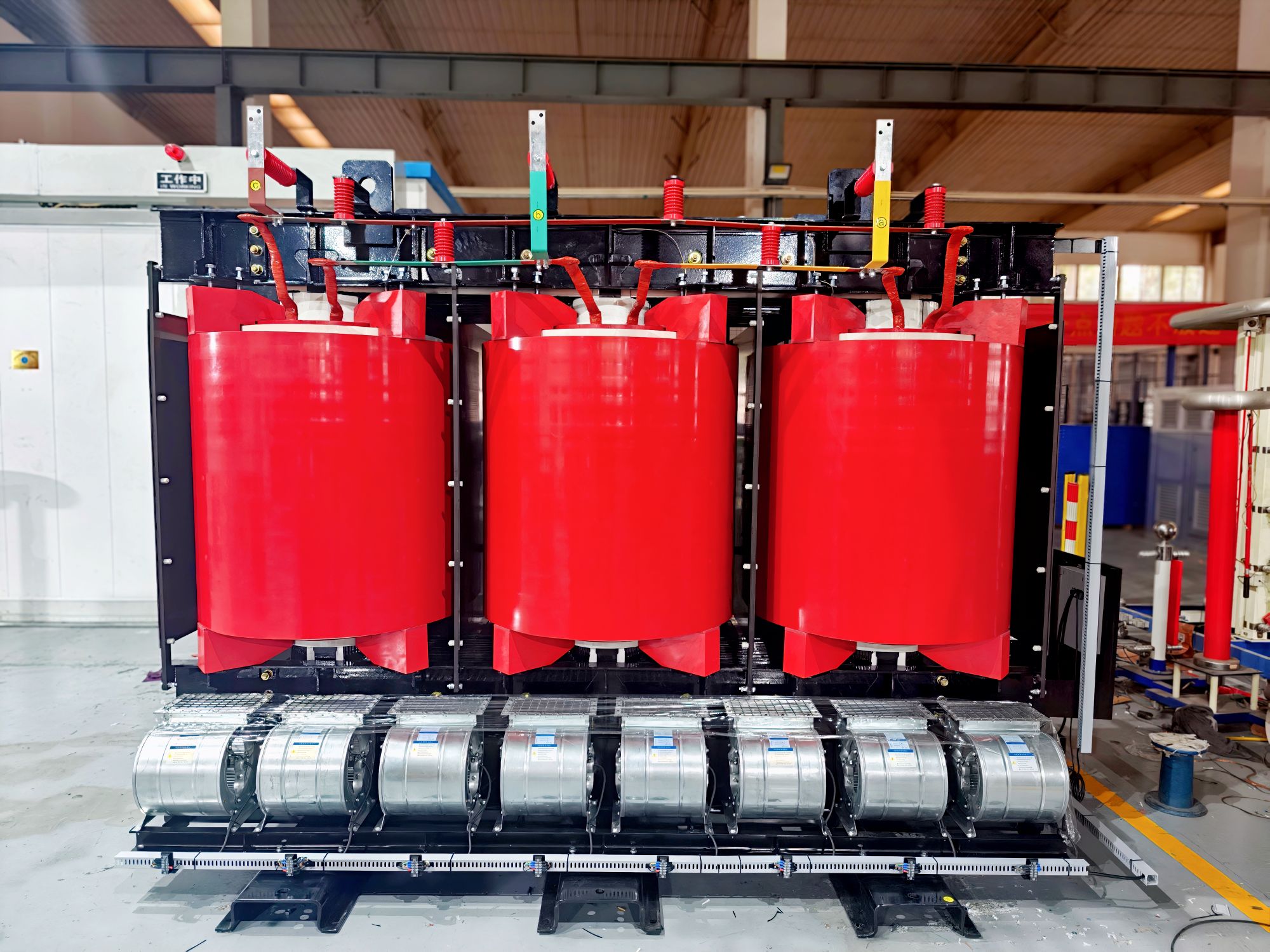
Precision in core cutting sets the foundation for a reliable transformer. Every lamination is sheared to exact dimensions, ensuring minimal burrs and consistent grain orientation. This attention to detail preserves magnetic properties and reduces no-load losses, which directly impacts long-term efficiency. Operators use specialized slitting and cut-to-length lines, constantly monitoring for variations in material thickness or camber that could compromise stack alignment.
Once the cores are cut, the assembly process demands both skill and patience. Laminations are interleaved with careful overlap patterns—often step-lap designs—to distribute flux smoothly and dampen mechanical noise. The core is then clamped under controlled pressure, avoiding stress points that would otherwise distort flux paths. Final checks on geometry and leg alignment confirm that the assembly will withstand thermal cycling and vibration once in service. It’s a methodical process where even small missteps can cascade into significant performance gaps.
Winding Precision and Insulation
Precision in winding isn't just about neat coils—it's what prevents subtle performance drift over time. Even slight variations in tension or overlap can create hotspots, degrade insulation, and invite early failure. By controlling every turn with consistent layering and exact placement, the risk of internal short circuits drops dramatically, and the magnetic field stays uniform under load.
Insulation is the silent safeguard that often gets overlooked until it's too late. Beyond basic enamel coatings, modern windings rely on multi-layer barriers that withstand voltage spikes and thermal cycling without cracking. Materials like polyimide tape or high-grade epoxy encapsulation create a barrier that's tough enough to handle surges while staying thin enough not to waste space. The real trick is making sure there are no pinholes or thin spots, which is where automated inspection during winding makes all the difference.
When precision winding and robust insulation come together, the result is a component that runs cooler and lasts longer, even in demanding environments. It's not just about hitting spec—it's about building in headroom so that the part doesn't slowly degrade every time it heats up or encounters inrush current. That combination of careful geometry and uncompromising dielectric protection is what separates a winding that works on paper from one that holds up in the real world.
Dry Type Transformer Assembly
The assembly of a dry type transformer begins with careful preparation of the core, typically made from high-grade grain-oriented silicon steel laminations. These laminations are precisely stacked and clamped to minimize losses and noise, forming a sturdy foundation that requires no liquid coolant. Skilled technicians then insulate the core using advanced materials like Nomex or epoxy resin, ensuring superior dielectric strength even under demanding conditions.
Once the core is ready, windings are crafted from copper or aluminum conductors, often foil-wound or continuously transposed to reduce eddy currents and hot spots. Each layer is meticulously insulated and separated by cooling ducts, allowing natural or forced air to circulate and dissipate heat effectively. The winding process emphasizes mechanical stability, with robust clamping systems that keep coils firmly in place during short circuits or thermal cycling.
Final assembly integrates all components into a rugged enclosure, with attention to connection points, tap changers, and protection devices. Quality checks at every stage—from core stacking to final testing—verify insulation resistance, turns ratio, and dielectric integrity. The result is a reliable, low-maintenance transformer suited for indoor installations, renewable energy systems, and any application where fire safety and environmental concerns demand a dry-type design.
Rigorous Testing Protocols
Every feature we build goes through a gauntlet of automated checks before a human ever looks at it. Unit tests, integration tests, and end-to-end simulations run in parallel across multiple environments. We don’t just verify that things work on a developer’s machine—we replicate real-world conditions, from spotty networks to heavy concurrent usage.
Manual testing plays a critical supporting role, but it’s focused where automation can’t reach: edge cases, usability quirks, and visual regressions. Our QA engineers maintain living test plans that evolve with the product, and every bug fix triggers a new test case to prevent recurrence. This feedback loop keeps the process sharp without slowing down releases.
We also enforce strict staging and canary deployments. New code is exposed to a fraction of real traffic while we monitor error rates, latency spikes, and user behavior before a full rollout. If anything deviates from the baseline, the deployment is rolled back automatically within minutes.
Packaging and Final Dispatch
Once production wraps up, every item moves to a dedicated staging area where a final quality sweep takes place. Team members hand-check for cosmetic flaws, verify the integrity of seals and labels, and cross-reference the batch number against the pick list. This isn't a rushed box-ticking exercise—it's where the accumulated care of the entire production line gets its last layer of scrutiny before anything goes out the door.
Packaging choices are tuned to the product, not a one-size-fits-all approach. Fragile components get custom-cut foam inserts and double-walled cartons tested for drop vulnerabilities. Moisture-sensitive goods are sealed with desiccant packs and barrier foils, then held in climate-controlled zones until dispatch. Even the packing tape tells a story: tamper-evident strips and branded reinforcement ensure the customer knows the box hasn't been compromised.
Dispatch timing is orchestrated around carrier cut-offs, regional holidays, and real-time weather holds. Rather than relying solely on automated shipping labels, a small logistics crew reviews every outgoing pallet, matching documentation to physical parcels one last time. The result isn't just on-time delivery—it's a handoff that preserves the condition and promise of the product from our floor to the customer's hands.
FAQ
Dry type transformers offer enhanced safety since they don't use flammable liquids, making them ideal for indoor installations. They also require less maintenance and are more environmentally friendly because there's no risk of oil leaks.
The factory uses automated winding machines and precision cutting tools to speed up coil production. Lean manufacturing principles are applied to minimize waste, and workers are cross-trained to handle multiple tasks, keeping the assembly line moving smoothly.
Each transformer undergoes rigorous testing at multiple stages. This includes insulation resistance checks, partial discharge measurements, and temperature rise tests. Any unit that doesn't meet strict standards is reworked or scrapped.
Insulation is critical because it prevents electrical faults and ensures long-term reliability. The factory uses high-grade epoxy resin to encapsulate the windings, providing excellent dielectric strength and protection against moisture and dust.
Engineers work closely with clients to design transformers that match exact specifications. The production line is flexible enough to accommodate different core sizes and winding configurations without major downtime.
Workers receive regular training on the latest assembly techniques and safety protocols. There's a strong focus on quality awareness, with team leaders conducting daily briefings to review potential issues and reinforce best practices.
The factory uses energy-efficient equipment and recycles scrap materials like copper and steel. Dry type transformers themselves are eco-friendly because they can be recycled at the end of their life cycle without hazardous waste disposal challenges.
The facility has an in-house high-voltage lab where every transformer is subjected to impulse tests and prolonged load tests. This goes beyond standard industry requirements and ensures each unit can handle real-world surges and overloads.
Conclusion
Walking through the factory floor, the journey begins with meticulous raw material receiving and inspection, where every sheet of electrical steel and batch of copper wire is checked against stringent specifications. In the core cutting area, precision lasers and shears shape silicon steel laminations that are then stacked and assembled into sturdy cores, minimizing losses and ensuring magnetic performance. Nearby, winding stations hum with activity as operators layer conductors and high-grade insulation materials, carefully controlling tension and geometry to achieve exacting electrical characteristics and thermal endurance.
Once the cores and coils are ready, they converge in the assembly bay, where skilled technicians integrate them into robust enclosures, paying close attention to clearances, connections, and vibration damping. Every completed unit passes through a series of rigorous testing protocols—routine tests, type tests, and even special tests—verifying dielectric strength, insulation resistance, partial discharge levels, and temperature rise. Only after flawless performance does each transformer move to packaging, where it is secured for safe transport, and then dispatched with complete documentation, reflecting a production cycle that blends advanced automation with uncompromising quality control.
Contact Us
Contact Person: Julion
Email: [email protected]
Tel/WhatsApp: 8617351370631
Website: https://www.deyunelectric.com