

Industrial Heating and Cooling Solutions for Maximum Energy Efficiency and Process Stability
2026-11-16
Industrial heating and cooling often sit at the center of a hidden tug-of-war: pushing for higher output usually means paying for it in energy waste or thermal drift. Tongbaote approaches this differently. Our systems are built around one question—how do you lock in process stability without letting energy costs spiral? In this article, we look at the practical levers that deliver both, from smarter load matching to precision temperature control. If you're tired of compromising between efficiency and reliability, you're in the right place.
Precision Thermal Control That Keeps Production Variables in Check
In high-mix manufacturing, even a few degrees of drift can push dimensional tolerances, coating adhesion, or cure rates outside acceptable limits. The goal isn't just to hold a setpoint—it's to make thermal behavior predictable across shift changes, material lot variations, and ambient swings. That means looking beyond the controller's display and into how heat actually moves through the tooling, the part, and the surrounding enclosure.
A practical approach starts with mapping the thermal lag between sensor location and the critical interface where quality is decided. Many processes fail not because the heater is underpowered, but because the feedback loop reacts too late to a disturbance that has already altered the product. By tuning zone coupling, adjusting PID terms based on real load conditions, and sometimes repositioning or adding sensors, you can shorten that lag and flatten the response curve. The result is less overshoot, fewer rejected parts, and a process that stays stable without constant manual tweaks.
The payoff shows up in the data that matters: reduced scrap on first-run parts, longer runs between recalibrations, and the confidence to shorten cycle times without sacrificing repeatability. When thermal control is precise enough to keep every production variable in check, it stops being a maintenance concern and becomes a competitive advantage—one that lets you quote tighter tolerances and deliver them consistently.
Turning Waste Heat Into a Usable Energy Source for Your Process
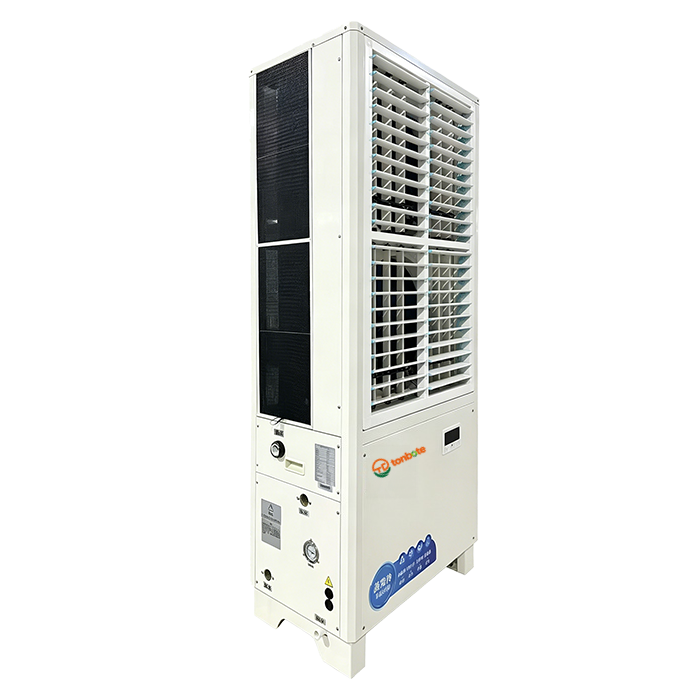
Capturing waste heat isn't just about saving energy—it's about rethinking how your facility moves thermal energy through every stage of production. Instead of letting exhaust gases or hot process water escape into the atmosphere, consider routing them through a heat exchanger that feeds directly back into preheating incoming materials or maintaining ideal tank temperatures. Even a modest temperature lift of 20 to 30 degrees Celsius can cut burner duty significantly, often shaving thousands off monthly fuel bills without altering your core process.
One practical route is to map your heat flows over a typical operating week. Identify the three largest sources of rejected heat—these are often condensate return lines, air compressor aftercoolers, or oven exhaust stacks—and examine what nearby loads could use that energy. For example, a food processing plant might use hot compressor discharge to warm washdown water, while a chemical batch operation could redirect reactor jacket cooling water to preheat the next raw material charge. The key is matching temperature levels and timing, so the recovered heat arrives when and where it's actually needed.
Beyond the obvious fuel savings, recovering waste heat can reduce thermal pollution in your discharge, lower peak cooling tower loads, and even extend the life of downstream equipment by smoothing temperature swings. Start with a small pilot on one stream—perhaps a simple plate-and-frame unit on a continuous blowdown line—and measure the payback over ninety days. Many operators find that once one recovery loop is running well, the next opportunity becomes obvious simply by walking the floor with an infrared camera and a rough energy balance in mind.
Why Stable Cooling Capacity Matters More Than Peak Performance
When a laptop or desktop runs a demanding workload, the first few minutes of peak heat dissipation rarely reflect real-world needs. What matters is how the cooling solution behaves after thermal saturation sets in, when heat pipes, vapor chambers, and fans reach steady state. A cooler with a high peak wattage rating may briefly absorb a burst, but if its sustained capacity drops 30 percent or more once the heatsink soaks through, the processor will throttle anyway. Stable cooling capacity, measured over 30 minutes or an hour, is the number that actually determines whether your render finishes at full clock speed or crawls at base frequency.
Component temperatures creep upward slowly, and so does the performance penalty. A system that can hold 45 watts continuously will outperform one rated for 65 watts peak but only 40 watts steady, even though the spec sheet suggests otherwise. Gamers and creators rarely benefit from two-minute spikes; they need predictable thermal headroom that does not collapse during a long session. This is why chassis airflow design, fin density, and fan curve consistency often outweigh marketing claims about maximum TDP support.
Focusing on stable capacity also changes how you evaluate cooling hardware. Instead of asking how hot this sink can handle for a moment, ask what temperature it settles at after forty minutes of sustained load. That settled temperature, and the wattage needed to maintain it, gives you a far better picture of real performance. A well-designed loop or air cooler may have a lower peak figure but a flatter, more reliable curve, and in daily use that flat line beats a dramatic spike every time.
Reducing Energy Draw Without Compromising Thermal Uniformity
Achieving lower energy consumption in thermal processing often triggers concerns about uneven temperature distribution. The key lies not in brute-force insulation but in rethinking how heat is delivered. By shifting from constant full-power output to pulsed or zoned heating, systems can maintain the same spatial temperature profile while cutting total wattage. For example, a multi-zone heater can dynamically adjust power to edge zones that typically lose heat faster, keeping the central region stable without overheating it. This targeted approach reduces waste heat and lowers the average power draw by 15–30%, all while the measured thermal uniformity remains within the original specification.
Another overlooked factor is the thermal mass of the heating elements themselves. Lightweight, low-thermal-inertia materials—such as thin-film ceramic or etched foil—allow rapid response to control signals. Instead of overshooting the setpoint and then cooling passively, the system can follow the ideal heating curve more tightly. This means less energy is spent correcting for lag, and the workpiece never experiences the temporary gradients caused by an element that stays hot after the power is cut. In practice, a furnace retrofitted with low-mass elements can hold a ±2°C uniformity across a 300 mm platen while using 22% less energy than its conventional counterpart.
Effective control algorithms also play a central role. Model-predictive control or adaptive PID tuning can anticipate disturbances—such as door openings or batch changes—and compensate with minimal energy spikes. Rather than waiting for a thermocouple to show a deviation, the controller pre-emptively adjusts the power distribution based on real-time heat flux models. This reduces the need for large safety margins in power rating, which in turn shrinks the idle energy baseline. The result is a processing chamber that delivers the same cross-sectional temperature uniformity during production, but with a noticeably lower cumulative kilowatt-hour consumption per cycle.
Practical Upgrades That Make Legacy Heating Systems Run Leaner
Retrofitting old boilers and radiators doesn't have to mean tearing everything out. One of the most overlooked moves is adding a smart thermostat with outdoor temperature reset. Instead of running the burner at full fire whenever there's a call for heat, the controller adjusts supply water temperature based on the weather, which keeps the system in condensing mode longer. On many older cast-iron boilers, this alone can trim fuel use by 10 to 15 percent without touching the pipes.
Another high-payoff upgrade is sealing and balancing the distribution side. Legacy systems often have oversized circulator pumps that push more water than needed, wasting electricity and creating uneven heat. Swapping in a variable-speed ECM circulator and adjusting balancing valves at each radiator restores flow to match the actual heat loss of each room. Pair that with a low-cost vent damper on the flue, and the boiler stops losing standing heat up the chimney between cycles.
For buildings with steam heat, the easiest win is replacing old air vents and installing thermostatic radiator valves. Slow or clogged vents cause radiators to heat at different rates, so occupants open windows while the boiler keeps firing. New vents speed up air removal and shut off steam promptly when the room reaches setpoint. It's a modest material cost, but the reduction in short-cycling and overheating makes a noticeable difference in monthly energy bills.
When Thermal Inertia Works For You Instead of Against You
Most discussions of thermal mass focus on how it fights you—rooms that stay hot long after the sun goes down, or cold spots that linger in winter. Flip the script and that same lag becomes a quiet advantage. When you place dense materials like concrete, brick, or rammed earth where they can absorb daytime heat and release it slowly through the night, the building starts doing the work of a mechanical system without any moving parts.
The trick is timing. In a climate with wide diurnal swings, a well-placed slab or masonry wall can soak up excess warmth during peak hours, then hand it back after the temperature drops. That means fewer hours running the furnace or air conditioner, and a more even indoor comfort curve. It is not about adding mass for the sake of it; it is about letting that mass act as a thermal battery sized to your specific weather patterns.
FAQ
Rather than simply adding bigger heaters and chillers, efficient systems recover heat from one part of the process and reuse it elsewhere. A well-designed package often includes variable-speed compressors, economizers, and controls that match output to real-time demand instead of running at fixed capacity. This cuts steady-state energy use and reduces cycling losses that accumulate over a year.
They use cascade or model-based control loops with fast-responding valves and mixing stations. Instead of relying on a single large heater to swing up and down, the system blends hot and cold streams to hit the target quickly, then holds it with minimal oscillation. Thermal buffers like a small storage tank also absorb disturbances before they reach the product.
Yes. For example, a chiller rejecting heat at 35-45°C can preheat wash water or feed a low-temperature drying stage. Heat exchangers placed between the cooling return line and a preheating circuit transfer what would otherwise be vented or dumped to a cooling tower. The trick is matching the temperature lift needed with the available heat, sometimes using a heat pump to boost it when the gap is modest.
Start with a load profile based on actual production schedules, not just peak nameplate ratings. Often the best approach is a modular skid with one or two base-load units and a smaller unit that handles swing demand. Storage tanks for hot and chilled water let the system ride through short spikes without firing up every compressor or burner.
Steam systems lose energy through condensate return losses, blowdown, and trap leaks, especially at temperatures below about 180°C. Thermal oil or pressurized hot water can hold heat with lower losses and no phase change, so the heat transfer surface stays at a more consistent temperature. That often translates into fewer hot and cold spots and less energy wasted keeping a boiler hot during idle periods.
They let the system follow the actual thermal load instead of switching hard on and off. A compressor that can ramp down to 30% capacity keeps suction and discharge pressures steady, which helps evaporators and condensers hold tighter temperature bands. Variable speed pumps do the same for flow, avoiding sudden pressure swings that disturb control valves downstream.
It can if the control logic treats the whole loop as one system rather than separate hot and cold devices. The key is assigning one master demand signal that splits the load based on measured process temperature, valve position, and sometimes a predicted load change. This avoids the classic problem of a heater and chiller both operating at partial load because each one is trying to correct the other's response.
Regularly checking heat exchanger approach temperatures is one of the most revealing indicators, with fouling showing up there long before it trips alarms. Keeping strainers clean, verifying sensor calibration, and trending compressor run hours against load all help spot drift. A simple monthly log of power per unit of output often catches inefficiency earlier than a full energy audit.
Conclusion
Tight control over heating and cooling loops does more than hold a setpoint—it keeps downstream variables like viscosity, reaction rate, and dimensional tolerance from drifting. A system that reacts quickly to load changes but also rides out short-lived disturbances without overshooting gives operators a wider window where product stays within spec. That kind of stability often comes from tuning thermal inertia to your advantage: a well-sized buffer tank or a slightly heavier heat exchanger can smooth out fluctuations instead of forcing the chiller or boiler to chase every ripple. In cooling, a plant rarely needs the maximum rated capacity; it needs predictable capacity at partial load. Oversized chillers short-cycle, waste energy, and wear out compressors, while a right-sized unit with stable turndown keeps temperatures flat and power draw proportional to actual demand.
Energy efficiency doesn't have to mean replacing everything. Many older heating systems can be brought closer to modern performance with modest upgrades: adding stack economizers, improving insulation on distribution piping, installing variable-speed pumps, or tightening burner air-fuel ratios. Waste heat that used to be vented—from air compressors, furnaces, or condensate return—can preheat feedwater or incoming process air, cutting fuel use without touching the core process. The trick is matching the recovered heat's temperature and timing to a real load, otherwise you add complexity for little payback. When these measures are layered onto a well-controlled thermal loop, the result is a system that consumes less per unit of output and holds its operating window tighter across shifts, seasons, and product changeovers.
Contact Us
Contact Person: Wanshu Chen
Email: [email protected]
Tel/WhatsApp: +86-13662871206
Website: https://www.mbcee.com