

High Temperature Reactor Heater Manufacturer: Selecting the Right Industrial Partner
2026-10-10
Most high temperature reactor heater suppliers can quote a heat output. Few can tell you how their design behaves after 10,000 hours under cyclic thermal load — or why that gap matters for your process. Shenzhou Chemical Industry built its name on answering those uncomfortable questions first, which is precisely what you need when selecting an industrial partner.
Why Do Some High-Temperature Heaters Fail Early? The Material Science Answer
Many premature failures in high-temperature heaters trace back to thermal fatigue rather than manufacturing defects. Each heating and cooling cycle subjects the resistive element to differential expansion and contraction, especially at grain boundaries and phase interfaces. Over thousands of cycles, these repeated stress reversals nucleate microcracks that grow along weak crystallographic planes. The cracks gradually reduce the effective cross-sectional area, raising local current density and accelerating failure even though the bulk material has not exceeded its melting point or nominal tensile limit.
A second silent killer is oxidation under cyclic conditions. Alloys like Nichrome or Kanthal rely on a protective oxide scale—chromia or alumina—to slow further attack. But when the heater cycles rapidly, thermal expansion mismatch between the oxide and the base metal causes the scale to spall off. Fresh metal is then exposed, oxidizes quickly, and the cycle repeats. This not only thins the wire but also creates uneven surface topography, which generates localized hot spots. Those hot spots oxidize faster, enter a runaway feedback loop, and eventually melt or burn open long before the designed service life.
Microstructural evolution at temperature also plays a decisive role. Grain growth, precipitate coarsening, and solute segregation can all degrade mechanical and electrical properties. For instance, in iron-chromium-aluminum heaters, aluminum near the surface is consumed to form alumina, creating a depleted zone that weakens the alloy. Simultaneously, chromium carbides may precipitate at grain boundaries, causing embrittlement. The result is a heater that appears intact from the outside but has lost its ability to withstand even mild thermal shock, failing prematurely under conditions that a well-aged but correctly conditioned element would easily survive.
Is Your Reactor Heater Truly Customized, or Just a Modified Catalog Unit?
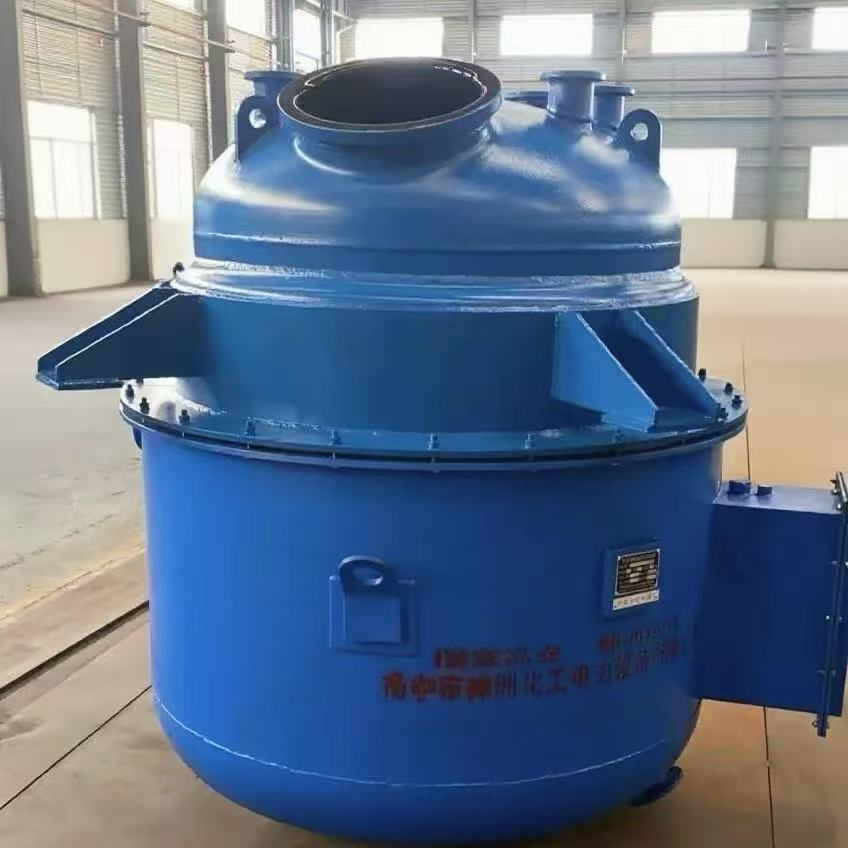
Many suppliers will tell you their reactor heater is custom, but what they often mean is they tweaked a standard model—maybe changed flange size or added a different terminal box. True customization goes far deeper: it starts with your process conditions, not their inventory. The heater's watt density, sheath material, element layout, and even the thermal profile across the vessel need to be engineered around your specific reaction kinetics, temperature limits, and fouling tendencies.
A modified catalog unit can leave you with cold spots, uneven heating, or premature failure because the internal geometry wasn't designed for your flow patterns. Genuine custom designs often involve computational thermal modeling, custom-formed elements that match the reactor's shape, and careful zoning so that heat is delivered exactly where the reaction demands it. If your supplier can't show you how the design addresses your unique heat flux requirements, you're probably getting an off-the-shelf product with minor adjustments.
Ask the right questions: Was the element layout derived from your reactor's dimensions and agitation pattern? Did they consider your exothermic peaks or viscosity changes during the batch? These details separate a true customized solution from a catalog compromise.
Safety in Extreme Heat: Which Certifications Should You Actually Demand?
When temperatures climb past 40°C, the difference between a safe workplace and a lawsuit often comes down to one question: what proof do you have that your equipment and protocols can handle it? Too many buyers accept vague marketing claims like "heat-resistant" or "built for the desert" without checking the actual test standards behind those words. If you're sourcing PPE, cooling systems, or even building materials for extreme environments, you need certifications that measure real-world performance—not just flashy spec sheets.
Start with the core thermal standards. For protective clothing, look for ISO 11612 (which tests flame spread and radiant heat) and ISO 7933 (predicted heat strain for workers). For electronics and enclosures, don't settle for a generic IP rating—demand IEC 60068-2-78 (damp heat, steady state) or MIL-STD-810H Method 501.7 (high temperature operational). Cooling vests and active systems should carry evidence of EN 342 or equivalent cold/heat stress testing, not just a CE mark. The key is that the certification must specify the temperature range, duration, and failure threshold—not a pass/fail with no numbers attached.
Finally, ask for documentation that ties certification to your actual use case. A hard hat certified for 50°C ambient may still fail if exposed to direct solar radiation on a metal roof at 70°C surface temperature. Demand third-party lab reports with traceable test conditions, and verify that the certifying body is accredited to ISO/IEC 17025. If a supplier hesitates to share the full test report—not just the certificate logo—walk away. In extreme heat, trust is earned through paper, not promises.
Can Your Supplier Deliver When Global Supply Chains Tighten?
When a port closes without warning or a key component suddenly goes on allocation, the gap between a supplier's promise and their actual performance becomes painfully clear. Many companies find out too late that their supplier's "just-in-time" model is only robust when everything runs on schedule. The real question isn't whether disruptions happen—they will—but whether your supplier has the buffer capacity, alternative routes, and honest communication to absorb the shock without leaving you stranded.
A supplier's track record during calm periods tells you almost nothing about their reliability under pressure. You need to look for evidence of proactive risk planning: dual sourcing for critical materials, regional warehousing, or at least a willingness to share real-time inventory data when things go wrong. Suppliers that hide behind vague updates or suddenly go silent are the ones most likely to fail when a major event hits.
Ultimately, this isn't a checkbox exercise. It's about recognizing that your supplier's resilience is now your own. If their lead times balloon from six weeks to six months, your customers won't care whose fault it is. Building a relationship where you can pressure-test their contingency plans—and walk away if the answers are weak—is the only way to protect your delivery promises when global trade gets squeezed.
The Hidden Costs of Cheap Heaters: Support, Spare Parts, and Downtime
Those bargain heaters look great on the invoice until a thermal cutoff fails at 2 a.m. and you realize the manufacturer doesn't offer after-hours support—just a web form that auto-replies with a ticket number. Meanwhile, your maintenance team is stuck with a wiring diagram that doesn't match the actual unit and a phone line that goes to a generic call center.
Spare parts tell the same story in slower motion. A $40 heater might need a $12 relay every eight months, but if that relay is only stocked by one distributor in another country, the real cost isn't the part—it's the three-week wait, the expedited shipping fee, and the improvised bypass that violates your safety checklist. Cheap heaters often use proprietary sensors or mounting brackets, so you can't just grab a universal replacement from the local supplier.
Then there's downtime, which is where the math really falls apart. Every hour a production line sits idle waiting for a heater repair can erase months of energy savings. Budget units tend to have shorter lifespans and fewer diagnostic indicators, so troubleshooting becomes guesswork instead of a quick swap. A quality heater with local support and standard parts might cost twice as much upfront, but it rarely leaves you watching a frozen process and wondering if the savings were worth it.
Field-Tested Longevity: What Real Operating Data Tells You About Heater Quality
Most heaters look great on a spec sheet, but the ones that earn their keep are the ones that have logged thousands of hours in demanding environments. A closer look at service logs from processing plants, cold storage facilities, and remote pumping stations shows a pattern: units that survive beyond the five-year mark do so because their heating elements are matched to actual load cycles, not just peak wattage. Data from these sites reveals that failures rarely happen during steady operation—they cluster around start-up sequences and rapid temperature swings, which stress the element and its terminations far more than constant output ever will.
Field records also highlight a quiet predictor of lifespan: the quality of the connection points. Heaters with crimped or soldered joints that experience frequent thermal expansion tend to develop micro-gaps, leading to hot spots and eventual burnout. In contrast, units using compression fittings or welded terminals show a much lower incidence of early failure, even when operated near their upper temperature limits. This kind of detail doesn't show up in marketing materials, but it's exactly what maintenance teams count on when they recommend one brand over another after a decade of use.
Perhaps the most telling data comes from retrofits. When a facility replaces a failed heater, the old unit's logged hours, cycle counts, and temperature profiles become a practical benchmark. Heaters that manage 20,000 or more on/off cycles without measurable drift in resistance are the ones that get specified again. The numbers don't lie: longevity isn't an accident of overbuilding, but a result of careful material selection and honest testing under conditions that mimic the real world, not a controlled lab bench.
FAQ
Beyond just selling standard units, a capable manufacturer should show real depth in thermal calculations, material selection, and custom design. Ask for evidence of finite element analysis, understanding of heat flux distribution, and the ability to handle unusual flange or vessel geometries without simply copying a previous job.
The sheath alloy, insulation type, and terminal sealing method determine how well the heater survives thermal cycling, oxidation, and chemical attack. A nickel-based sheath with high-purity magnesium oxide insulation and a robust cold-end design will outlast cheaper stainless steel options in most high temperature reactor environments.
You should receive detailed test reports covering insulation resistance, dielectric strength, and a full power heat-up test that proves the heater reaches the specified watt density without premature failure. Material certificates for all wetted and high-stress components, plus weld inspection records, are also standard for a serious supplier.
Ask for a list of completed installations with similar process temperatures, pressures, and corrosive conditions rather than just a general brochure. A candid conversation with their engineering team about past failures and design changes often tells you more than a polished case study.
Depending on your location and the reactor atmosphere, look for ASME Section VIII or PED compliance for pressure-containing parts, ATEX or IECEx certification if the heater sits in a hazardous area, and ISO 9001 for overall quality management. Some applications also require UL or CSA recognition for the electrical assembly.
A custom design starts with your specific heat duty, temperature profile, and available nozzle size, then builds the heater bundle around those constraints to avoid hot spots and ensure uniform heat transfer. Off-the-shelf units force you to adapt your process to a fixed heater, which almost always costs more in energy and maintenance over time.
Expect commissioning assistance, clear installation and operating manuals, and quick access to replacement heaters or spare parts without a month-long wait. A good partner will also offer periodic inspection services and honest advice on extending heater life through better control strategies.
Price should never be judged on the heater purchase alone; evaluate total cost including energy consumption, expected service life, and downtime risk. Lead times vary widely, so balance urgency against the value of a manufacturer who can deliver a fully documented, tested heater rather than a rush job with questionable quality control.
Conclusion
Choosing a high-temperature reactor heater manufacturer goes far beyond comparing wattage and flange sizes. Early failures almost always trace back to metallurgy and insulation chemistry—cheap alloys oxidize faster under thermal cycling, while substandard ceramic fiber breaks down and creates hot spots. So the first filter is a vendor who openly discusses material selection, not just temperature ratings. The second question is whether the heater was actually engineered around your process fluid, pressure drop, and control logic, or is simply a catalog flange heater with a longer sheath bolted on. Real customization means revised thermal modeling and often a different resistance wire layout, not a cosmetic tweak.
Then there’s the less visible side of the purchase. Demand certifications that match your operating environment—ATEX, IECEx, ASME code stamps, or regional equivalents—and ask for the actual test reports, not just certificates on a website. A serious partner will also have a plan for when global lead times stretch: local stock, alternate alloy sources, or in-house machining capacity. The cheapest bid rarely accounts for support after startup. When a heater fails, you’re paying for downtime, not just a replacement part. Look at field data from similar reactors: how many thermal cycles have their units survived, and what does the maintenance log actually show? A manufacturer that can show you long-term operating data—and stands behind it—is the partner worth keeping.
Contact Us
Contact Person: Mr. Wang
Email: [email protected]
Tel/WhatsApp: 8613705299955
Website: https://vip.e-baixing.com/szhgyw