

General-Purpose Silicone Sealant Manufacturer Sourcing Tips for Consistent Quality
2026-11-20
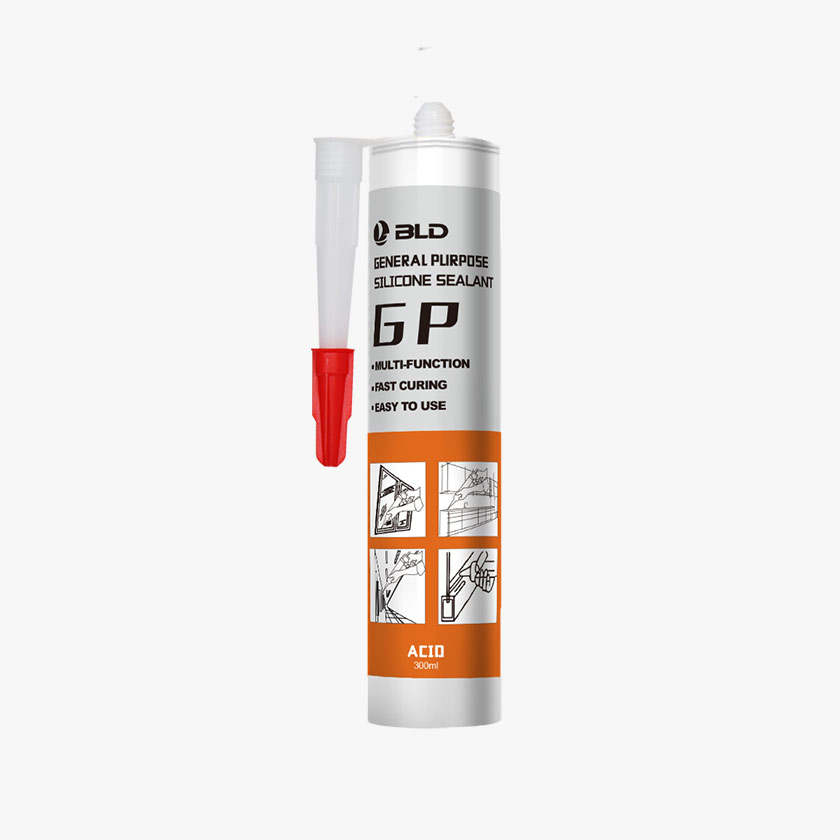
Sourcing general-purpose silicone sealant can feel like a gamble: batches that cure unevenly, adhesion that fades, and suppliers who disappear when specs tighten. The real differentiator isn't just a datasheet—it's how consistently a manufacturer controls raw materials, curing chemistry, and batch testing. In this guide, we break down practical sourcing tips, with insights from Baolongda Group, to help you lock in quality that holds up order after order.
Why a Low Price Usually Hides a Cheaper Filler System
Price tags often guide buying decisions, but with filler systems the visible sticker rarely tells the whole story. Manufacturers competing on upfront cost have to save somewhere, and the filler mechanism, valve seals, tubing, and control components are usually the first places that get downgraded. These parts sit behind panels and inside housings, so the lower material grade is easy to miss during a quick showroom comparison.
A cheaper filler system can force operators into slower cycles, more frequent recalibration, and higher rejection rates. Low-cost seals wear unevenly and start leaking after short runs, while basic controls offer limited adjustment and create inconsistent fill volumes. The result is not just wasted product but extra labor hours spent on cleaning, reworking, and troubleshooting lines that should run unattended.
Over a year or two, the savings from that lower purchase price often disappear into replacement parts, downtime, and lost capacity. When buyers evaluate total operating cost rather than the initial quote, a more robust filler system usually turns out to be the less expensive option. That is why a suspiciously low price deserves a closer look at exactly where the value was removed.
How to Compare Cure Curves Without a Lab Full of Equipment
A decent comparison starts with the data you already have. Pull the gel time, tack-free time, hardness build at a few marked intervals, and any viscosity notes from supplier bulletins or previous batch records. Put those numbers side by side on a simple table and look for gaps that repeat across conditions. A resin that reaches a soft but stable surface an hour earlier in a thin film will usually do the same in a thicker section, so even incomplete data can reveal which formulation moves faster early in the cure.
If you have small samples, run a rough side-by-side bench test under the same temperature and keep a timer running. Touch the surface with a gloved finger or a wooden pick every few minutes; watch for stringiness, skin formation, or the point where a thumbnail no longer leaves a mark. Record these moments on your phone so you can replay them next to each other. This kind of test will not give you a true rheology curve, but it does show the order of transitions and sometimes a surprising difference in open time or final hardness.
When you have a few reference points from different sources, normalize them to a common scale such as percent of final hardness or fraction of total conversion. Plot those normalized points and connect them lightly. You are not trying to publish the curve; you are trying to see whether one material builds properties steadily while another lags, then jumps. That pattern is usually what matters for handling, stacking, or shipping parts, and it can be judged without a single piece of lab equipment.
What Three Consecutive Batches Reveal About Real Consistency
Three consecutive batches rarely prove stability, but they do expose how a process responds to the small shifts that happen between runs. Real consistency shows up when the second and third lots behave like the first, not just when their averages land inside a specification window. A single good batch can hide noisy measurements, operator differences, or a drift that only becomes visible once you look at the next run against the previous one.
The value of looking at three straight batches is not in counting passes. It is in comparing the spread within each batch to the gap between one batch and the next. If the between-batch variation is larger than the within-batch variation, the process is already telling you that something changes when you stop and start again. That could be raw material moisture, a tool warming up, or a line changeover. Until that gap shrinks, the process only looks consistent while conditions are held tight.
Sometimes three lots pass every check but still show a warning pattern. The first sits near the upper control limit, the second drops back to center, and the third approaches the lower edge. That movement can mean the process is wandering and getting corrected too late, or that the measurement system is picking up drift it cannot fully capture. Averages alone will miss this. Recording the range, the order of runs, and the adjustment made after each batch turns three data points into a small but useful picture of whether the line can hold its center without constant intervention.
The Substrate Test That Catches Adhesion Failures Early
Adhesion problems tend to show up at the worst possible moment, usually after a coating or adhesive has already gone through full production. The substrate test flips that timeline by placing a small, controlled stress on the bond before any large batch is committed. Instead of waiting for a field failure or a returned batch, the lab can spot weak links between surface energy, primer choice, and coating chemistry in hours.
What makes this check useful is how close it stays to actual handling conditions. A quick pass on a clean steel coupon doesn't say much about what happens on a slightly oxidized surface or a plastic with uneven treatment. Running the test across several substrate lots, including some that are deliberately less than perfect, gives a better read on how forgiving the bond really is.
The output isn't just a pass or fail mark. It points to whether the failure is cohesive, adhesive, or tied to surface preparation. That distinction matters because the fix for a primer issue is very different from adjusting a curing schedule. Catching that distinction early keeps the line moving and avoids the expensive habit of troubleshooting after the fact.
When a Supplier’s ‘Equivalent Formula’ Is Not Actually Equivalent
A supplier’s assurance that a revised formulation is equivalent can sound reassuring, but the claim often rests on little more than a matching ingredient list. The same chemical name or CAS number does not guarantee that a material will behave the same way in production. Particle size, moisture content, residue levels, and even the origin of a raw material can shift in ways that a paper comparison never captures. When those variables change, downstream performance can change with them, even if the label looks identical.
The gap between nominal and actual equivalence tends to appear under real processing conditions. A replacement excipient may pass a routine specification yet flow differently through a hopper, compress unevenly, or alter the release profile of an active ingredient. In some cases, the supplier has simply reformulated around a shortage or a cost increase and framed the change as a drop-in substitute. Testing that focuses only on assay and appearance can miss the very properties that keep a process stable.
Treating an equivalence statement as evidence rather than a starting point is usually where problems begin. A more reliable approach is to map the critical material attributes against the intended use, then compare the old and new materials under conditions that resemble production. If the supplier cannot supply bridging data for those attributes, the burden falls on the buyer to generate it. Without that step, a convenient substitution can quietly turn into a recurring quality issue that no amount of paperwork resolves.
Storage Heat Aging Tests That Predict Shelf-Life Problems
Heat aging studies are useful only when the failure mechanism at elevated temperature matches what actually happens on the shelf. Running samples at 50°C or 60°C can quickly reveal whether a formulation drifts in potency, changes color, or picks up moisture, but the results stop being meaningful if the heat itself triggers chemistry that would never occur under normal storage. A better approach is to run several temperatures and watch whether the degradation rate climbs in a predictable way, rather than assuming one hot chamber will answer everything.
The choice of time points matters more than many teams expect. Pulling samples only at the final week hides nonlinear behavior, such as an early drop in pH or a delayed increase in related substances. Short intervals early on, followed by longer gaps later, tend to capture both fast and slow changes without wasting stability chambers. It also helps to include a control stored at the intended label temperature, because the gap between accelerated and real conditions often tells you more than the accelerated data alone.
One common misread is treating an accelerated result as a direct expiration date. The numbers give a projection, not a promise. Packaging interactions, oxygen permeation, and humidity effects can shift the picture once the product sits in its final container long enough. When the accelerated data and real-time data disagree, the real-time data should carry more weight. Heat aging is best used to spot early warnings and compare formulations, not to replace a well-monitored stability program.
FAQ
Request the master batch record or formulation version log. If a manufacturer hesitates to share a version-controlled recipe summary, that is usually a warning sign. Confirm whether the polymer, plasticizer, and curing system have fixed supplier codes rather than being swapped based on spot market pricing.
Ask for a pilot-to-production scale-up report covering mixing time, vacuum level, and extrusion rate. Compare a retained sample from the pilot batch with a random carton from the first production run. If both smell, cure, and tool the same in side-by-side tests, the process is under control.
Look at how they handle raw material quarantine and line clearance. A good sign is dedicated silos or sealed drums with clear lot tracking, not open containers with handwritten labels. Also watch whether operators record actual mixing temperatures and times rather than just ticking boxes.
Require a certificate of analysis for every batch that includes slump, skin time, tack-free time, Shore A hardness, and adhesion to glass and aluminum. If the CoA lists only pass without numeric values, ask for the raw test data or a batch traceability report.
Neither guarantees consistency by size. A smaller producer with fewer product lines and a stable raw material shelf may actually provide tighter batch control. Judge by their change-control process, customer complaint records, and willingness to send retained samples before any shipment.
Set a contractual requirement that any change in polymer, crosslinker, or adhesion promoter supplier triggers written notice and a new qualification sample. Then test the replacement sealant on the actual building materials you use, not just standard glass plates.
Run a simple extrusion test at a controlled temperature, check skin-over time with a gloved fingertip, and do a peel adhesion test on the substrates that matter locally. Keeping small cured strips from each delivery in a labeled zip bag is a cheap way to compare future batches.
Cure speed often shifts because of moisture access, ambient temperature, or minor changes in catalyst level. A manufacturer with tight control will still have small variation, so ask for the acceptable cure range and store product above the dew point before use. If a batch falls outside the stated range, it should be flagged, not blended into inventory.
Conclusion
Sourcing general-purpose silicone sealant comes down to reading between the lines of a supplier's data. A sharp price rarely means an efficient plant; it usually points to a cheaper filler system with less polymer, which shows up later as reduced joint movement and early hardening inside the cartridge. Rather than trusting a single tack-free time, compare cure curves on glass and powder-coated aluminum. Watch skin time, through-cure at 24 and 72 hours, and whether the bead remains elastic or turns boardy. Ask the manufacturer to lay out three consecutive production batches together. Small drifts in slump, extrusion rate, Shore A hardness, and adhesion on the same substrate will reveal factory discipline better than polished certificates.
A practical substrate test catches bonding problems early. Run peel or snap checks on the exact surfaces your production line touches, such as coated aluminum, uPVC, glass, and lightly damp concrete. If a supplier offers an equivalent formula, press for the substitution details: plasticizer type, filler treatment, catalyst package, and rheology modifier. A formula can pass a basic ASTM or ISO check while still shifting cured modulus or staining behavior. Finally, ask for storage heat aging results, not just fresh lab samples. Cartridges held at 40 to 50 degrees Celsius for four to eight weeks should show only minor viscosity drift and no separation. Surviving that cycle without gassing or nozzle hardening is a much better sign of shelf-life stability than a perfect sample cured the day it was made.
Contact Us
Contact Person: Charles
Email: [email protected]
Tel/WhatsApp: +86-0536-3350888
Website: https://www.baolongda.com/