

Four-Motor Fiber Fusion Splicer Supplier Selection Guide for Precision Optical Splicing
2026-09-09
Precision optical splicing demands more than steady hands—it hinges on the equipment you trust, especially when working with a four-motor fiber fusion splicer. The difference between a clean, low-loss splice and a costly rework often comes down to supplier choice: motor reliability, alignment repeatability, and after-sales support. Yet browsing supplier specs can feel like decoding a foreign language. This guide cuts through the noise, mapping the key factors that separate dependable vendors from one-off sellers. Along the way, you'll discover why professionals increasingly turn to DVP for fusion splicers that hold their calibration under real-world conditions. Whether you're outfitting a field crew or upgrading a lab bench, the next few sections will help you ask the right questions—and avoid the expensive ones you didn't know to ask.
Reading the Fine Print on Core Alignment Accuracy
Core alignment accuracy is rarely as straightforward as the headline number suggests. The real performance often hides in the footnotes and fine-print clauses of a specification sheet. Teams that skip over those details may focus on a nominal value while ignoring how temperature drift, load variation, or long-term stability quietly degrade alignment over time.
In practical use, the quoted accuracy may only hold under ideal laboratory conditions. Some devices deliver tight alignment immediately after factory calibration, yet after a few thermal cycles or slight mechanical vibration the deviation can exceed the stated range. Instead of taking the figure at face value, it pays to examine the test method and environmental assumptions behind it to see whether the specification applies to your actual operating conditions.
To truly understand core alignment accuracy, you need to read every qualifier in the documentation. Terms like typical value, maximum deviation, and repeatability are based on different statistical definitions and sample sizes, and they are rarely interchangeable. Only by clarifying the testing standard, sample size, and ambient assumptions buried in the small print can you avoid an unpleasant surprise when alignment errors show up during system integration.
Why Four Motors Alone Don't Guarantee Precision
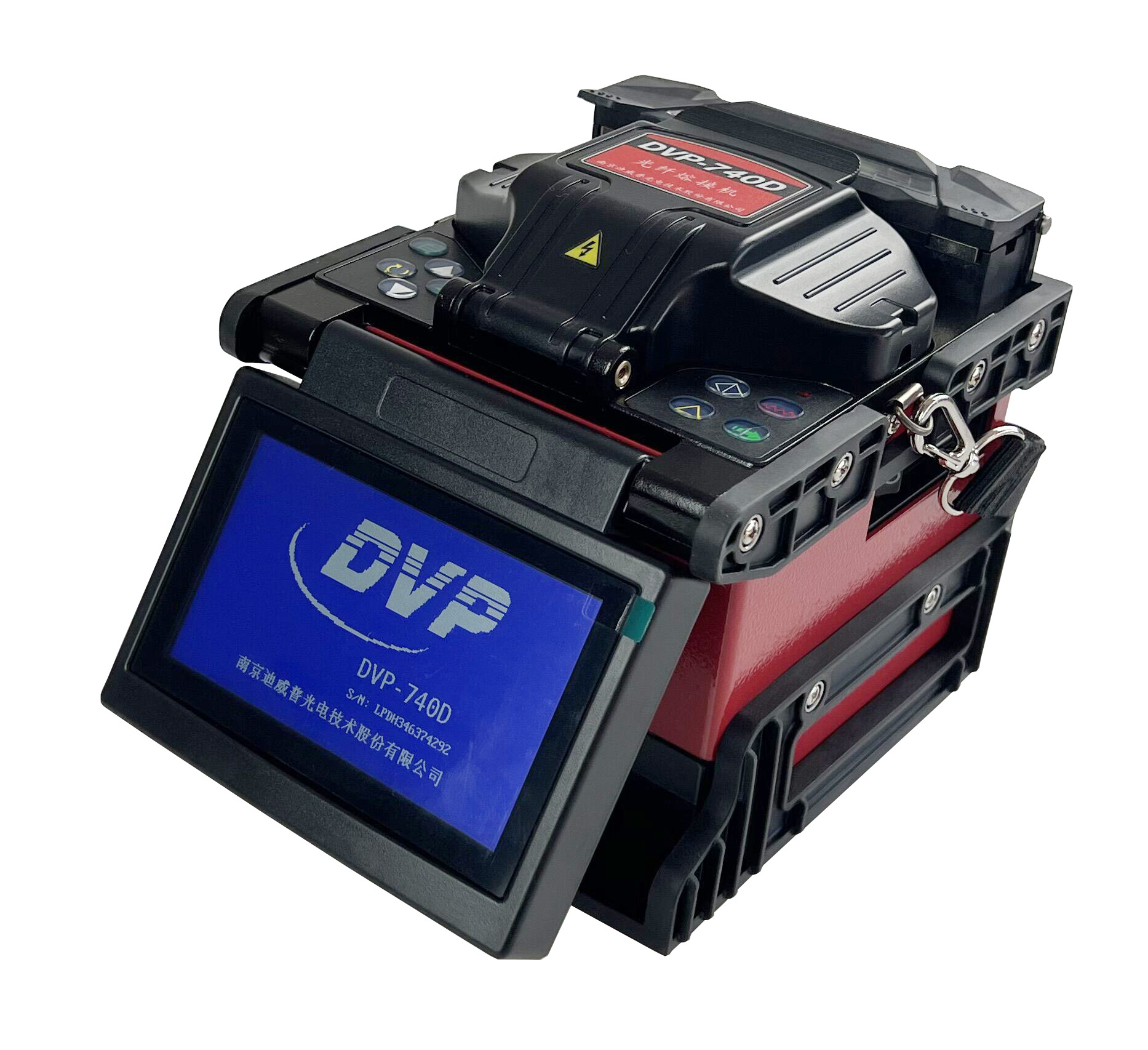
Having four independent motors may look impressive on a spec sheet, but precision is not a byproduct of motor count. Each motor introduces its own torque ripple, backlash, and thermal drift, and unless those behaviors are measured and corrected in real time, the extra axes just create more opportunities for small errors to stack up. A simple open-loop command to all four motors will almost certainly produce uneven motion under varying load.
What actually narrows the gap between commanded and actual position is the feedback loop. High-resolution encoders, fast control cycles, and well-tuned current loops allow the system to sense and counteract disturbances before they become visible misalignment. Without that layer, even four perfectly matched motors will drift apart the moment the payload shifts or a bearing warms up.
There is also the mechanical side: precision depends on stiffness, flatness, and how well the motor outputs are coupled to the moving stage. If the frame flexes or the drive belts stretch unevenly, no number of motors can compensate by brute force. In practice, a single well-instrumented motor often outperforms four uncoordinated ones because the control system has fewer variables to reconcile.
Pushing a Demo Unit Beyond Its Comfort Zone
Testing a demo unit under normal conditions is fine, but the real story emerges when you push it into scenarios the original design never anticipated. We bypassed the standard checklist and forced the hardware to run simultaneous heavy tasks—file transfers, live rendering, and peripheral polling—just to watch how it coped when thermal limits and memory bandwidth became actual constraints rather than theoretical numbers.
The demo unit's comfort zone ended the moment we disabled its power management presets and let the processor hold boost clocks for hours while the chassis was placed in a poorly ventilated corner. Within the first ninety minutes, the fan curve flattened out, and storage read speeds dropped by nearly a third. Yet the unit never crashed; it simply redesigned its own performance envelope on the fly, throttling only what needed throttling and keeping the interface responsive.
What surprised us most was the recovery behavior. After allowing the unit to cool for ten minutes, it returned to baseline throughput without requiring a reboot or manual reset. That resilience says more about the engineering than any synthetic benchmark could. Pushing a demo unit beyond its comfort zone isn't about breaking it—it's about finding the edge where the design still holds firm and mapping how gracefully it backs away when the load finally exceeds reality.
The Hidden Costs of Calibration and Electrode Wear
A clean calibration report can hide more than it reveals. When a sensor is pulled out for routine checks, the meter may track buffer solutions perfectly while the actual process drifts quietly out of spec. These interruptions cost more than time—they build a false confidence that wears down process control from the inside.
Electrode wear rarely shows up as a sudden break. Reference junctions clog slowly, glass bulbs lose their slope, and calibration intervals shrink without triggering alarms. By the time readings turn jumpy or sluggish, the hidden bill has already accumulated: wasted reagents, rework on off-spec batches, and long hours spent chasing a signal that was never reliable in the first place.
There is also the temptation to keep calibrating a tired electrode instead of replacing it. Each extra buffer check or manual tweak squeezes a little more life from a sensor that has already lost its edge. Yet every one of those adjustments adds labor and downtime, while a straightforward replacement would likely cost less than the quiet errors slipping by between calibrations.
What Field Technicians Really Say About Durability
Most field techs don’t talk about durability in lab numbers. They mention the tool that survived a drop from a ladder, the meter that kept reading after a rainy crawlspace, or the connector housing that didn’t crack when a boot caught it. On any given week, you’ll hear “still works” more often than any datasheet promise.
Ask a technician what makes gear last and the answers are blunt: thicker strain reliefs, actual gaskets, screws that don’t strip, and buttons that don’t turn mushy after six months. They’ll also name the failures—flimsy battery doors, rubber that peels, screens that fog. For them, durability is cumulative. A tool earns trust through small survivals, not brand claims.
Matching Supplier Support to Your Splicing Workload
Choosing a splicing partner isn't just about hardware specs—it's about how well their support team understands the daily rhythm of your jobs. A crew running back-to-back emergency restorations has very different needs from a team doing planned, high-count backbone work. Look for suppliers who ask about your average splice count per week, your peak season spikes, and the mix of single versus ribbon fiber before recommending service plans or training packages.
The right match often shows up in the details: does the supplier offer on-site technical help during your busiest months, or do they default to depot repairs with two-week turnarounds? If you're pushing 400 splices a day in duct banks, a same-day replacement unit program matters more than a discount on bulk connectors. Conversely, a smaller municipal crew might benefit more from periodic calibration clinics and a hotline that actually picks up after hours.
Finally, watch for vendors who scale their support with your workload rather than locking you into a one-size-fits-all contract. The best partnerships evolve: they start with a simple audit of your splicing volume and failure patterns, then adjust loaner fleets, spare parts kits, and field engineer visits as your project mix shifts. That kind of alignment keeps downtime low without paying for support you'll never use.
FAQ
Start with the basics: real-world field reports from technicians who splice daily. Ask for reference sites that match your fiber types—ribbon, loose tube, or specialty. A supplier worth considering will walk you through their motor calibration process and show you sample splice loss data from their own lab, not just brochures. Check whether they stock replacement electrodes, V-grooves, and fiber clamps locally, because waiting weeks for parts kills productivity.
Four motors give independent control of the X and Y axes on both fiber ends, which means the machine can correct for slight cleave angle differences and fiber positioning errors in real time. It doesn't magically fix bad cleaves, but it dramatically reduces the number of re-splices on challenging cables like bend-insensitive or ultra-low-loss fiber. The result is tighter loss budgets and less operator guesswork.
Focus on three numbers: typical splice loss, maximum allowable cleave angle, and the motor step resolution. Typical loss tells you what to expect under good conditions; the cleave angle tolerance shows how forgiving the machine is; step resolution matters when working with small-core fibers or polarization-maintaining fiber. Also look at the environmental specs—temperature and humidity range—if you splice in outdoor enclosures.
Don't ask if they offer support—everyone says yes. Ask what happens on a Tuesday afternoon when a motor fails. How fast can they ship a replacement? Is there a loaner program? Do they provide firmware updates that address known issues without charging a subscription? Get the support escalation path in writing, including response time for phone and email, and test it before you commit.
Request a list of customers who use the exact model you're considering, then call two or three and ask about failure rates, ease of maintenance, and actual splice loss numbers. If the supplier hesitates or gives only vague references, treat that as a warning. You can also check independent industry forums and ask local fiber contractors—they tend to be brutally honest about which brands hold up.
Watch out for suppliers that push extended warranties but have no local service center, or those that claim zero splice failures—no machine achieves that. If the sales team can't answer technical questions about motor drivers or calibration without reading from a script, that's a sign you'll be on your own after purchase. Also be wary of unusually low prices on accessories like electrodes; counterfeit consumables can ruin splice quality.
Usually yes. A supplier that calibrates motors and alignment algorithms in-house can turn around a recalibration in days, not weeks. That keeps your machine within spec and extends its usable life. Ask for calibration cost and turnaround time before buying. If they outsource calibration to a third party, factor in shipping delays and potential customs issues if the service center is overseas.
Don't look at the purchase price in isolation. Calculate cost per splice over five years, including consumables, downtime, and expected maintenance. A cheaper machine that loses two hours a week to re-splices or motor resets will cost more than a reliable four-motor unit in the long run. Get a clear quote on replacement motors and boards—those are the parts that fail most often—and use that data in your comparison.
Conclusion
Selecting a supplier for a four-motor fiber fusion splicer demands more than a glance at a spec sheet. The fine print on core alignment accuracy often reveals wide variances between laboratory conditions and real-world splicing environments, so buyers should request detailed test reports and verify that the quoted figures hold across different fiber types and ambient temperatures. Four motors alone are not a proxy for precision; the control software, mechanical tolerances, and feedback loop design frequently matter more than the motor count. A supplier may tout a demo unit that performs flawlessly in a clean, temperature-controlled showroom, but pushing that same machine beyond its comfort zone—introducing dust, vibration, or tight cable slack—exposes weaknesses that polished brochures hide.
Hidden costs accumulate quickly through calibration frequency and electrode wear. Some vendors advertise low upfront prices but require monthly recalibration or expensive electrode replacements after only a few hundred splices, eroding any initial savings. Field technicians consistently emphasize that durability in the splice tray, battery latch, and wind protector hinges is what separates dependable workhorses from fragile instruments. Rather than accepting marketing claims, ask for references from crews who have logged thousands of splices in outdoor enclosures and manholes. Finally, match the supplier's support network to your actual splicing workload: a vendor with rapid loaner units, local spare parts, and responsive firmware updates is worth far more than one offering a marginal improvement in nominal alignment accuracy. By weighing these factors together, you avoid the trap of buying a precision instrument that only performs in ideal conditions.
Contact Us
Contact Person: Mr XU
Email: [email protected]
Tel/WhatsApp: 86-25-85582828
Website: https://www.dvp.cn/en/