
Custom Water Rescue Helmet Features That Improve Safety and Performance
2026-11-26
When fast-moving water turns a routine operation into a life-threatening situation, the gear on your head is often the last line of defense. Most rescue helmets look similar on paper, yet small design choices in shell strength, drainage, and accessory mounting can make a measurable difference in real conditions. This post examines what sets high-performance water rescue helmets apart and why teams increasingly turn to Jianghe Flood Prevention for equipment that holds up when it matters.
Buoyancy That Holds When the Rest of Your Gear Is Soaked
Most paddling gear turns into dead weight the moment it takes on water, but this buoyancy doesn't quit when the rest of your kit is soaked. The panels are placed where they matter most, so even a fully swamped bag or jacket stays lifted instead of dragging you down. You won't notice it working until you're already in rough conditions, and by then it's doing exactly what it should.
What sets it apart is how the floatation holds up over hours, not minutes. Synthetic foam cores keep their lift without absorbing moisture, and the outer shell sheds water instead of holding it. That means the second dunking is no different from the first, and the third dunking doesn't leave you fighting your own equipment. The buoyancy feels like a constant, quiet backup rather than a bulky add-on.
In practice, that reliability changes how you move through water. You can focus on the line, the paddle stroke, or the next handhold without constantly adjusting straps or pulling gear higher. When everything else is heavy and cold, this stays light and predictable, and that difference is what keeps you moving when conditions get messy.
Impact Shells Built for Rocks, Concrete, and Hard Hits
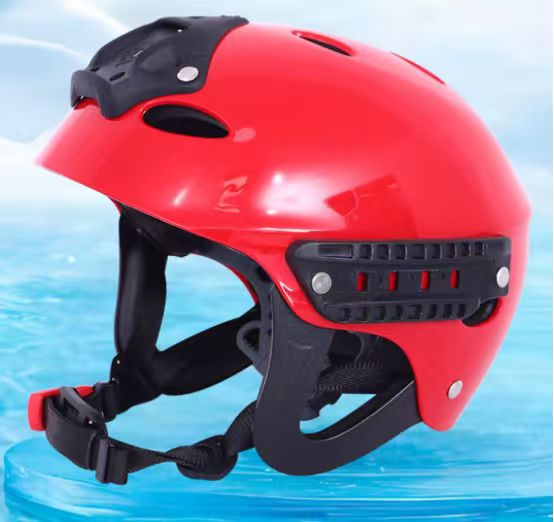
Dropping a phone on pavement is one thing; sliding it across crushed granite or letting it kiss a concrete edge is another. The shell uses a dual-layer structure that spreads impact outward before it reaches the frame, so the corners and back don't take the full force at a single point. The outer skin has a slightly rough texture that stays put on dusty, uneven surfaces instead of skating off them.
Repeated drops onto rock piles, unfinished concrete, and angled steel edges left most of the damage on the replaceable outer band rather than the device itself. The raised lip around the screen and the reinforced sidewalls keep debris from grinding against glass when the phone lands face down. The thickness is deliberate—it absorbs hits that softer cases buckle under, and it shows before you even put it on.
Drainage Ports Designed to Shed Water Weight Fast
Water gets trapped in footwear faster than most people notice, and that added weight changes your stride before you realize it. The drainage ports here are placed along the lower edge of the shoe, angled so each push-off forces trapped water out through the openings. After a stream crossing or a sudden downpour, the shoe empties itself in a few steps instead of holding onto that extra half pound mile after mile.
The quick release is more noticeable on steep or uneven ground, where soggy footbeds usually feel squishy and unstable. By letting water leave through dedicated channels rather than relying on evaporation, the materials dry from the inside out and the footbed regains grip much sooner. You stay lighter on your feet without stopping to drain shoes by hand or wring out socks midway through the day.
Even after full submersion, the difference shows up within seconds, not minutes. The ports work passively with your natural foot motion, so there is nothing to toggle or adjust. That means less time squelching through the next section of trail and more attention left for the terrain ahead.
Mounts That Keep Lights, Cameras, and Tools Within Reach
A solid desk clamp with a pivoting arm can hold a compact LED panel just above the work surface, which keeps lighting adjustments close while your hands stay free for positioning gear. Because the arm folds sideways when not needed, the setup doesn’t crowd the bench or block the monitor.
For mobile shoots, adding a ball-head adapter to an existing tripod leg turns that unused section into a stable mount for a field monitor, a small camera, or even a cable organizer. Quick-release plates help here, letting you switch between tools without reaching for a different bracket each time.
Overhead rails and threaded crossbars are worth considering when floor space is tight. They hold lightweight fixtures, hooks, and spare clamps above the table, so cables stop tangling at your feet and everything remains visible at a glance. Modular arms make it easy to slide a light from one side of the workspace to the other without loosening and re-clamping the whole rig.
Retention Straps That Stay Locked When the Current Picks Up
Most retention straps hold fine during a bench test, then turn unreliable exactly when load current rises. This design takes the opposite approach: the locking tab is shaped so that any increase in conductor temperature works with the spring tension, not against it. The result is a strap that seats tighter during high-current operation instead of loosening under thermal cycling.
The strap body uses a glass-reinforced polymer that keeps its stiffness up to the rated short-time temperature, while the metal insert carries the mechanical load without relying on the polymer for clamping force. Field installations tend to settle over time, but the lock position self-adjusts and holds without re-torquing. That means fewer maintenance visits and fewer loose connections that lead to hot spots.
For applications where current spikes are routine, the locking mechanism includes a secondary detent that prevents partial disengagement from vibration. Even if the strap is bumped during service, the latch has to pass a deliberate release angle before it can open. It stays put when current picks up, which is precisely when a failed retention strap becomes a safety issue.
Visibility Panels That Read Clearly in Spray and Low Light
Reading a panel in bright sunlight is hard enough, but the real test comes when a quick glance is all you get. Our visibility panels use a matte surface that breaks up glare without dulling the core text, so spray from a passing boat or the flat gray of dusk doesn't wipe out the information. The letterforms are spaced a touch wider than standard, which keeps numerals and abbreviations distinct even when your eyes are tired or the light is fading fast.
We tuned the contrast in the gray zone between full daylight and true night, where most reflective materials turn muddy. A low-gloss overlay holds the ink layer in place against salt, fuel mist, and repeated wiping, while the background stays light enough to bounce back whatever ambient light remains. Small alignment notches along the edge snap into the mount, so panels sit flat without bowing, which is often the hidden reason text smears or catches uneven reflection.
The result isn't about making everything brighter; it's about removing the exact moments when a panel goes unreadable. You won't find heavy borders or decorative fills here, just a quiet layout that leaves the important data standing on its own. In a downpour or under a single dock light, the message stays put and stays legible.
FAQ
A rescue helmet is built around the moments you cannot control. The shell tends to be thicker around the temples and back, the drainage channels are positioned to clear water fast after a submersion, and the chin strap is designed to stay put if a panicked swimmer grabs at your head. Climbing helmets often leave too many snag points and lack the buoyancy or mounting hardware needed on moving water.
You want a polycarbonate or ABS shell paired with closed-cell foam liner that will not soak up water. The hardware matters just as much; stainless steel or coated brass buckles handle salt and grit far better than standard steel. If the lining is open-cell, it becomes a sponge after the first rescue and makes the helmet heavier for no reason.
Yes, but only if the electronics are sealed and the microphone is placed where rushing water does not sit directly over the pickup. Many teams use bone conduction pads or waterproof earpieces paired with a push-to-talk radio. The key is routing cables inside the shell or through low-profile clips so they do not catch on rope or debris.
A small amount of buoyancy helps take strain off the neck, but too much can make the helmet lift and slide in aerated water. The fit should come from a rear tension system and replaceable pads that grip wet skin instead of relying on the chin strap alone. In fast currents, you want the helmet to move with the head, not float around it.
Look for integrated rails or reinforced mounting points rather than drilling holes after purchase. A good setup can hold a small waterproof light, a camera, and a face shield or goggles without adding sharp edges. The attachments should break away under heavy load so they do not turn the helmet into a snag point.
Bright orange or yellow helps in daylight, but at night and in spray, reflective bands and a blinking LED on the back make a bigger difference. Some teams add customized number panels or name patches on the sides so shore spotters can identify who is in the water without relying on radio chatter.
Rinse the whole helmet in fresh water after salt or debris exposure, remove the pads if they are detachable, and check the shell for hairline cracks around any drilled or molded mounting points. If the foam liner has been compressed by a hard hit, replace the helmet even if the outer shell looks fine. Salt crystals can quietly abrade straps and buckles, so rinsing the retention system matters as much as cleaning the shell.
Conclusion
A rescue helmet either works with the water or against it, and that becomes obvious the moment everything else is soaked. The shell is shaped for places where mistakes hurt, such as concrete ledges, bridge abutments, rock ledges, and sudden contact with a boat hull. It absorbs those hits without feeling like a weight on the shoulders. Buoyancy is not an afterthought. When a rescuer ends up in moving water with gear pulling from every direction, a helmet that fights the downward pull changes body position and reduces fatigue. Drainage ports support that same goal. Water leaves the shell quickly after a dunk or a wave, so the rescuer is not balancing extra weight around the head and neck while trying to get back to the boat or climb onto a bank.
Mounts, straps, and visibility panels tend to decide how useful the helmet is over hours rather than minutes. A reliable mount keeps a light or camera close enough to reach without taking eyes off the task, and small tools are less likely to get lost when they have a fixed place. The retention system has to hold under strain, especially when a current grabs and twists the helmet. A secure chinstrap and rear adjustment keep it from slipping forward or back at exactly the wrong time. High-contrast visibility panels then help the team read position and movement through spray, rain, and low light, which is often the first warning that someone needs a hand. These details matter because water rescue rarely allows time to stop and adjust gear.
Contact Us
Contact Person: Kristin Zhang
Email: [email protected]
Tel/WhatsApp: +8615366239752
Website: https://www.jianghecn.com/