

Commercial and Industrial Energy Storage System (C&I ESS) Technology Providers Unlock New Revenue Streams
2026-11-16
Every afternoon at 3 p.m., your facility’s energy bill spikes—and that’s just the tip of the iceberg. Commercial and industrial energy storage systems (C&I ESS) are changing the math, and the technology providers behind them are unlocking revenue streams that most businesses haven’t even heard of yet. UNC is one of the players rewriting the rules. Here’s what you need to know before your competitors do.
Cut Demand Charges First, Then Scale
Many facilities rush into larger battery installations expecting immediate savings, but that's backwards. The first target should be the demand charge—the fee based on your highest 15-minute interval of grid draw each billing cycle. Trimming that peak with a smaller, well-tuned storage system often delivers better ROI than buying more capacity upfront.
Peak shaving works by discharging stored energy during your site's top usage windows, knocking down the spike that drives the demand charge. Before adding capacity, analyze interval data to find exactly when those peaks occur and how sharp they are. A modest battery that shaves 20-30% off the peak can cut a large share of the demand charge because of how utilities calculate it—marginal savings shrink as the system gets bigger.
Once the demand charge is under control and the discharge schedule is proven, then scale storage or add solar. But scaling too early locks in higher capital costs and may leave you with underused capacity. Get the dispatch strategy right first, then grow.
Virtual Power Plants Turn Distributed Storage Into Revenue
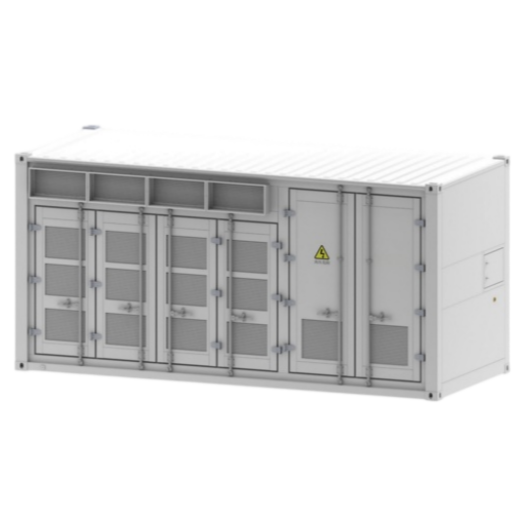
Distributed batteries have long been viewed as backup power, but a shift is underway. Through virtual power plant platforms, these assets are now pooled and dispatched as a single flexible resource, unlocking payments from utilities and grid operators.
The revenue mechanics vary by market. In some regions, homeowners earn capacity payments simply for making their batteries available during peak hours. Elsewhere, participants receive per-event payments for frequency response or demand reduction. Software orchestrates the charge and discharge cycles without disrupting the owner's daily use.
This turns a passive asset into a recurring income stream. For many, the earnings offset a meaningful portion of the original battery investment. As market rules evolve, the line between consumer electronics and grid infrastructure continues to blur.
Frequency Response: Fast Cash From Grid Operators
Grid operators don't pay for idle capacity—they pay for speed. Frequency response flips that logic by rewarding assets that can react to frequency deviations in under a second. A battery or flywheel that adjusts its charge or discharge to stabilise the grid can earn payments per megawatt of availability, often with separate rates for response speed and accuracy. The faster your system, the higher the revenue stack tends to climb.
In markets like the UK's Dynamic Containment or continental Europe's FCR, participants bid into daily or weekly auctions. Payment isn't tied to how much energy you shift; it's tied to being on standby and delivering precisely when system frequency dips or spikes. This creates a recurring cash stream for assets that might otherwise sit idle between peak-price cycles.
Operators looking for quick wins often start with smaller batteries or hybrid supercapacitor setups. The hardware matters less than control firmware and reliable metering. Once you prove consistent response within tolerance bands, grid operators treat you as a dependable reserve—and that reliability converts directly into longer contract terms and better clearing prices.
Storage-as-a-Service Removes the Capex Barrier
Buying storage hardware outright often forces organizations into rigid, multi-year budget approvals and expensive refresh cycles. Storage-as-a-Service flips that model by shifting the financial burden from a large upfront capital expenditure to a predictable operating expense. Instead of paying for racks of disks that may sit half-empty, you pay only for the capacity you actually use, with the flexibility to scale up or down as business needs change. This removes the biggest psychological and practical hurdle for many IT teams: convincing the CFO to sign off on a million-dollar purchase that might be obsolete in three years.
The capex barrier isn't just about money—it's about risk. When you buy storage, you're betting on your own growth forecasts, application demands, and technology roadmaps. Get any of those wrong and you're stuck with stranded hardware, costly migrations, or painful write-offs. Storage-as-a-Service absorbs that risk for you. The provider owns the equipment, handles upgrades, and guarantees performance levels in the contract. Your team avoids forklift upgrades, lengthy procurement cycles, and the hidden costs of power, cooling, and floor space that rarely show up in the initial quote.
This shift also changes how teams approach capacity planning. Rather than overprovisioning for a worst-case scenario that may never arrive, you can start lean and grow incrementally. A sudden analytics project, a new video archive, or a merger no longer triggers an emergency budget request. You simply adjust the service tier. For finance leaders, this turns storage from a capital-intensive liability into a manageable line item—one that can be tied directly to revenue-generating initiatives instead of sitting on the balance sheet as depreciating infrastructure.
Solar Plus Storage: Higher Returns From One System
Pairing solar panels with battery storage changes the economics of a renewable setup. Instead of sending excess generation back to the grid during midday peaks, homeowners and businesses can hold that energy and use it when rates are highest. This shift alone often lifts annual returns by 10–20%, depending on local tariff structures.
The real gain comes from stacking value streams. A combined system can deliver bill savings, backup power during outages, and demand charge management for commercial users. In many markets, you can also earn credits for exporting stored energy at strategic times. That flexibility means the system works harder than a standalone solar array ever could.
Installers now report that projects with storage close at a faster rate. Buyers see the higher projected return and are more willing to move forward, even with a larger upfront investment. Over a 20-year lifespan, the added battery cost is typically recovered in 5–7 years, leaving more than a decade of pure upside.
Time-of-Use Arbitrage for Warehouses and Plants
Electricity bills often hide a simple but powerful opportunity: the price of power changes throughout the day, yet many warehouses and plants still draw from the grid as if it were flat. Time-of-use arbitrage flips that habit. By shifting energy-intensive tasks—such as charging forklift batteries, running HVAC pre-cooling, or operating heavy machinery—to hours when rates dip, facilities can shave a meaningful slice off their monthly spend without cutting production. The trick is not to do less, but to do it at a smarter hour.
For sites with on-site storage or backup capacity, the play gets even sharper. A facility can charge batteries or thermal storage systems during off-peak windows, then discharge that stored energy when the utility meter would otherwise spike. In practice, a refrigerated warehouse might over-cool during the night and let temperatures coast through the afternoon peak. A manufacturing plant could run its air compressors early and hold pressure in reserve. Each deferral, repeated daily, compounds into a noticeable reduction in demand charges and energy costs.
What makes this approach stick is its quiet adaptability. It does not require a wholesale redesign of operations or a risky bet on market volatility. Managers simply map their flexible loads against the tariff schedule, often discovering that a two-hour shift in workflow unlocks savings that were hiding in plain sight. When combined with modest storage assets, the margin widens further—turning the building itself into a quiet profit center that buys low and uses later.
FAQ
C&I systems sit behind the meter, so their value is tied to retail tariff structures, demand charges, and site-specific load profiles rather than wholesale energy prices. That means the same 500 kW battery can generate very different returns at two facilities just a few blocks apart, depending on how each building uses power and how the local utility bills for peaks.
Demand charge reduction is usually the largest and most predictable source, followed by time-of-use arbitrage where tariffs have wide peak-to-off-peak spreads. Self-consumption of on-site solar adds savings, and in some regions, incentive payments or market participation through aggregators create a fourth layer.
Instead of selling a battery as a one-off product, many now wrap it with a software platform, performance guarantees, and energy-as-a-service contracts. They operate the asset remotely, optimize dispatch daily, and share a portion of the savings or grid-service revenues with the customer, which keeps both parties aligned over a 10- to 15-year lifespan.
Depending on local market rules, a modest behind-the-meter battery can provide frequency response, demand response, or capacity through an aggregator. The key is aggregation: a single 200 kWh unit is too small to bid alone, but when pooled with hundreds of similar systems, it can meet minimum size thresholds and generate revenue during idle hours.
Hardware costs have fallen enough that the battery itself is often a commodity. The real value now lies in forecasting building loads, tracking utility tariff changes in real time, and dispatching the battery to stack demand-charge avoidance, arbitrage, and grid-service participation simultaneously without degrading the asset too quickly.
Many projects overestimate demand-charge savings because they assume peak demand will always be reduced by the full battery capacity, but real-world load spikes and imperfect prediction can leave residual peaks. Degradation, changing utility rates, and warranty restrictions that limit cycling depth or frequency also trim the expected revenue over time.
With energy-as-a-service, the customer pays no upfront capital and instead shares a portion of the monthly savings or pays a fixed subscription. This shifts performance risk to the technology provider, who must deliver the promised reductions or lose margin, while the facility gains resilience and cost control without owning the asset.
Rising commercial electricity rates, the growth of on-site EV charging, and stricter grid resilience requirements are pushing more facilities toward storage. At the same time, utilities are opening more capacity and demand-response programs to distributed assets, and falling battery prices make projects bankable in regions that previously could not justify them.
Conclusion
Energy storage providers for commercial and industrial sites are shifting from selling batteries to selling layered revenue. Cutting demand charges still delivers the fastest return, but the real opportunity emerges when those systems scale into fleets. Aggregated behind-the-meter batteries can operate as virtual power plants, bidding capacity into wholesale markets or capturing frequency response payments that reward fast, precise discharge. This turns a static asset into a dynamic participant in grid balancing.
The financial model has also changed. Storage-as-a-service removes the capex hurdle, letting factories and warehouses pay per kilowatt-hour of avoided cost rather than upfront equipment. Adding solar to the same inverter and interconnection boosts returns because generation and storage share infrastructure and arbitrage opportunities. Time-of-use arbitrage then smooths daily energy spend for facilities with predictable load profiles. Providers that sequence these revenue streams correctly—demand charge reduction first, then market services and solar integration—can unlock margins that standalone battery sales never could.
Contact Us
Contact Person: Manager Leng
Email: [email protected]
Tel/WhatsApp: 8613764878967
Website: https://www.unc-energy.com