

Chinese Inkjet Printer Inks: A Comprehensive Overview for Quality Printing
2026-07-29
When it comes to achieving crisp, vibrant prints, the secret often lies in the ink. Chinese inkjet printer inks have quietly revolutionized the industry, offering a compelling blend of quality and value that rivals long-established brands. From dye-based formulations delivering stunning photo realism to pigment inks built for archival-grade durability, the landscape is richer than ever. In this guide, we’ll unpack what sets these inks apart—highlighting innovations from trusted suppliers like Danmajet—and give you practical insights to elevate your printing game.
What Sets Chinese Inkjet Inks Apart on the Global Stage
Chinese inkjet ink manufacturers have carved a niche by blending deep-rooted chemical engineering expertise with aggressive R&D in nanopigment dispersion. Rather than simply replicating global formulations, many producers have mastered the art of stabilizing ultrafine particles in aqueous solutions without sacrificing color vibrancy or jetting reliability. This results in inks that deliver remarkably wide color gamuts on uncoated media—a practical advantage for cost-sensitive print operations that prefer affordable substrates.
Beyond technical finesse, the sector’s agility stems from vertically integrated supply chains that shorten lead times and enable rapid customization. Instead of offering one-size-fits-all products, Chinese suppliers often co-develop inks tailored to specific printhead architectures or regional humidity conditions. Their ability to iterate fast—adjusting dry times, adhesion, or lightfastness—while maintaining competitive pricing has positioned them as go-to partners for OEMs and aftermarket brands seeking both performance and margin resilience.
Navigating Ink Formulations for Vibrant, Long-Lasting Prints
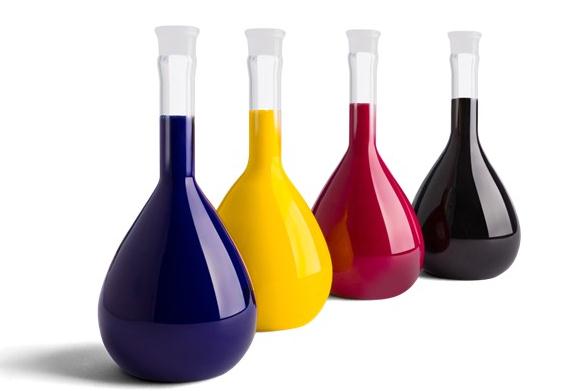
The secret to prints that jump off the page lies in the interplay between pigment load and dispersion quality. High pigment concentration alone won't cut it—the particles must be uniformly distributed and stabilized within the vehicle to prevent color muddiness. When formulators fine-tune this balance, the result is crisp, saturated hues that hold their ground even on challenging substrates, without the need for heavy layering or topcoats.
Durability often hinges on binder chemistry, which determines how well the ink film adheres and flexes. Acrylics offer a cost-effective solution for short-term applications, while polyurethane-based systems provide abrasion resistance and elasticity for banners and textiles exposed to repeated handling. The trick lies in matching the binder's glass transition temperature and crosslinking density to the expected wear patterns—get it wrong, and you'll see cracking or peeling well before the color fades.
Less visible but equally critical are the additives that control flow, foam, and surface wetting. Silicone-free defoamers, for instance, can prevent micro-bubbles that diffuse light and dull the finish, while rheology modifiers tailor the ink's behavior under different printing speeds. These components must be selected carefully to avoid interfering with pigment bonds or creating off-gassing issues during curing, ensuring that the final print retains its gloss and depth for years rather than months.
How Chinese Manufacturers Balance Cost and Performance
It starts with a different mindset about what “performance” actually means. While Western firms often chase the latest specifications, many Chinese manufacturers focus tightly on the exact requirements of the market tier they serve. They strip away non-essential features that only a fraction of users will ever notice, and double down on the components that drive real, everyday reliability. A mid-range smartphone might skip wireless charging but invest in a battery that easily lasts two days, or a drone may lack cinematic 6K recording but include robust obstacle avoidance that a delivery fleet actually needs. This ruthless prioritization keeps the bill of materials lean without sacrificing the experience that the target customer values most.
Another layer comes from how supply chains are structured. In hubs like Shenzhen, component makers, assembly plants, and testing labs are often clustered within a single industrial park. This proximity slashes logistics costs and lets engineering teams iterate almost overnight. When a heat sink supplier is a ten-minute walk away, a design tweak can be prototyped before a competitor in another country has even booked a conference call. The ecosystem also fosters intense but practical cost competition: if one capacitor vendor can’t hit a price target, three more are competing within the same district. That constant, informal pressure compresses margins across the board, allowing the final product to hit a price point that seems impossible from the outside.
Perhaps the most undervalued factor is how production is designed for scalability from day one. Instead of treating mass manufacturing as a later stage, engineers build constraints around labor, machine time, and material waste directly into the product architecture. Molds are simplified, snap-fits replace screws, and sub-assemblies are designed so they can be tested independently before final integration. This doesn’t just reduce unit cost—it drastically cuts the defect rate and rework, which is often the hidden killer of performance consistency. A product that’s easier to make correctly across a million units is, in practice, a higher-performing product, because it delivers that performance to every single customer, not just the first batch off a carefully supervised pilot line.
Environmental Shifts Driving Innovation in Ink Production
The tightening of volatile organic compound (VOC) emission standards has reshaped the ink industry, compelling manufacturers to move beyond conventional solvent-based systems. Regulations like the European Union's REACH and similar frameworks in North America now impose strict limits on harmful air pollutants. This shift has accelerated the development of water-based and UV-curable inks that significantly reduce solvent content, cutting down hazardous releases during the printing process. Formulators are exploring novel resin chemistries and reactive diluents to maintain performance while complying with these tighter environmental mandates.
Growing concerns over plastic waste and the carbon footprint of packaging have prompted a surge in demand for bio-derived and biodegradable inks. Suppliers are experimenting with renewable raw materials such as soy, algae, and citrus-based solvents to replace petroleum-derived components. These alternatives not only lower the overall environmental impact but also align with the circular economy principles adopted by major brand owners. At the same time, the push for compostable flexible packaging has led to inks that can break down harmlessly, avoiding contamination in industrial composting streams.
Climate resilience and energy efficiency are becoming central to ink production strategies. Facilities are adopting closed-loop water recycling systems and low-temperature curing technologies to reduce both water usage and energy consumption. Some manufacturers are even utilizing captured carbon dioxide as a feedstock for ink pigments, turning a greenhouse gas into a resource. These operational improvements reflect a broader industry commitment to responsible stewardship, driven by both regulatory pressure and a genuine desire to minimize ecological harm across the supply chain.
Real-World Performance: Insights from Print Shops and Studios
In bustling print shops where deadlines are tight and volumes surge unexpectedly, the true test of any equipment happens in real time. We've seen shops that invested in high-speed printers only to find that paper handling quirks and inconsistent ink drying times ate away at their hoped-for throughput. One commercial printer told us they learned to never trust manufacturer speed ratings until they had run their own mix of heavy-coated cardstock and lightweight flyers, observing where jams clustered and how color calibration held up over a 10,000-print job. The numbers on a spec sheet rarely capture the need to pause and clean printheads or the frustration of a Saturday afternoon when a critical job reprint throws the entire schedule off balance.
Studios, on the other hand, often face a quieter but equally telling performance metric: the ability to replicate fine art prints or photographer's proofs with zero perceivable drift. A fine art giclée studio shared how they run a control strip alongside every job, not out of obsessive perfectionism, but because past experience taught them that subtle shifts in humidity or paper batch can knock a monochrome gradient out of spec by the time the third edition is finished. That level of consistency is what separates equipment that looks good in a demo from equipment that earns trust across hundreds of client orders. They also noted that the real productivity killer isn't raw print speed, but how long it takes to switch between a matte fine art rag and a glossy photo base without a single misstep in profile loading or platen gap adjustment.
What stands out across both print shops and studios is how much the notion of "performance" depends on the human element: the operator who knows which drawer catches static-laden sheets, the prepress workflow tweak that avoids a day's worth of reprints, or the service tech who dials in a firmware setting that finally stabilizes color on a difficult media. These anecdotes don't show up in marketing literature, but they shape whether a printer becomes a profit center or a bottleneck. When you listen closely to what owners and master printers actually curse about, you realize that real-world performance is a mosaic of tiny victories and infuriating surprises that no test lab can fully simulate.
Choosing the Right Chinese Ink for Your Printer and Projects
Chinese ink isn't a one-size-fits-all product, and the right choice often comes down to the printer technology you're using. Inkjet printers thrive on dye-based or pigment-based Chinese inks, each with its own quirks. Dye-based inks offer rich, vibrant colors and deep saturation, ideal for photographic reproductions on coated papers, but they fade faster under light. Pigment inks, by contrast, are chunkier and sit on the paper's surface, delivering superb durability and water resistance—perfect for archival prints or calligraphy practice sheets that need to withstand handling.
Beyond the printer, the paper you pair it with transforms the final result. Xuan paper, the traditional choice for calligraphy, absorbs moisture beautifully, allowing ink to bleed softly along its fibers for a classic feathered edge. Modern inkjet-compatible rice papers are coated to accept ink without smudging, yet still manage to echo that timeless aesthetic. Regular copy paper will work in a pinch, but it won't grant you the same depth; the ink tends to sit flat and can warp the sheet if you lay down too much. Experimenting with different stock makes a noticeable difference.
Lastly, consider the project's purpose. If you're recreating ancient scrolls or menus for a themed event, a high-density pigment ink on aged-style paper yields tactile results that feel genuine. For daily practice, a cost-effective dye-based ink set matched with machine-made calligraphy paper keeps expenses down without sacrificing playfulness of brush strokes. Always test a small puddle first: observe how the ink dries, whether it cracks or shifts color, and whether it respects the tooth of the paper. That hands-on check sidesteps disappointment and guides you to a pairing that truly brings the work to life.
FAQ
Quality hinges on several aspects, including the purity of the pigments or dyes used, the consistency of the ink formulation, and the compatibility with printhead technology. Premium Chinese inks often undergo rigorous testing to ensure vibrant color reproduction, quick drying times, and minimal clogging. The manufacturing environment and adherence to industry standards also play a crucial role.
Dye-based inks deliver bright, vivid colors and are ideal for photo printing on glossy paper, but they tend to fade faster when exposed to light. In contrast, pigment-based inks use solid color particles that sit on the paper surface, offering superior water and light resistance, making them perfect for documents and archival prints. Chinese manufacturers offer both types, often tailored to specific printer models and user needs.
Many Chinese ink suppliers produce compatible cartridges and refill inks designed to work seamlessly with popular brands like Epson, Canon, HP, and Brother. However, compatibility can vary, and it's essential to choose inks that explicitly state support for your printer model. Using high-quality Chinese inks can yield results comparable to OEM products at a lower cost, but users should verify chip compatibility and regional printer firmware updates.
Look for suppliers with a proven track record, transparent manufacturing processes, and positive customer feedback. Reliable suppliers often provide detailed product specifications, material safety data sheets, and batch testing reports. Certifications such as ISO 9001 for quality management and ISO 14001 for environmental standards are strong indicators of a supplier’s commitment to excellence. Also, assess their packaging and shelf-life guarantees to ensure the ink remains stable during storage.
Printhead clogging is often caused by dried ink or impurities. To minimize this risk, use inks from reputable Chinese brands that filter their products to remove contaminants. Regular printer usage helps keep the nozzles clear. Additionally, perform routine cleaning cycles as recommended by the printer manufacturer, and store ink cartridges in a cool, dry place. If switching ink types, purge the system thoroughly to avoid chemical reactions between different formulations.
Many Chinese ink producers are shifting towards eco-friendly formulations, such as water-based inks with low volatile organic compound (VOC) levels, biodegradable packaging, and recycled materials. Some companies have adopted green manufacturing practices to reduce energy consumption and waste. By choosing Chinese inks with recognized eco-certifications, users can lower their environmental impact without sacrificing print quality.
Chinese inkjet inks typically offer significant cost savings, often up to 50-70% less than OEM cartridges, making them an attractive option for high-volume printing. However, the total cost of ownership should factor in potential risks like compatibility issues or the need for more frequent cleaning cycles. Opting for premium Chinese brands that prioritize quality and provide guarantees can help balance affordability with reliable performance.
Chinese R&D has led to innovations such as UV-resistant pigment dispersions for outdoor signage, high-density black inks for crisp text, and latex-based inks for flexible media. Additionally, nanotechnology is being utilized to create finer pigment particles that enhance color gamut and prevent settling. These developments position Chinese inks as competitive alternatives for graphic design, fine art reproduction, and industrial applications.
Conclusion
Chinese inkjet inks have carved a distinct niche globally, thanks to rigorous refinement of both pigment and dye formulations. These inks don't just match international standards—they often exceed expectations for vibrancy and archival quality. Producers deftly balance cost and performance by optimizing raw material sourcing and production scale, delivering products that rival pricier counterparts without sacrificing print longevity. Meanwhile, a quiet revolution in eco-friendly manufacturing is reshaping the sector, with water-based and low-VOC options becoming the norm, driven by forward-looking domestic regulations and consumer demand.
In daily use across print shops and creative studios, these inks demonstrate reliable jetting consistency and rapid drying on diverse media, from glossy photo papers to uncoated cardstocks. Operators frequently note reduced clogging and maintenance downtime, even in high-volume runs. When selecting an ink, it's crucial to match the formulation to your printer's printhead technology and your specific output needs—whether for gallery-grade art, bulk flyers, or textile transfers. Proper profiling further ensures that the ink's full color gamut is realized, turning a budget-friendly choice into a professional-grade tool.
Contact Us
Contact Person: Jacky
Email: [email protected]
Tel/WhatsApp: 086 15000607053
Website: https://www.danmajet.com