

Chinese Corrugated Plastic Box: The Ultimate Guide to Durable Packaging Solutions
2026-07-18
When it comes to shipping fragile goods or organizing heavy-duty storage, standard cardboard often falls short—but have you considered the rugged versatility of Chinese corrugated plastic boxes? These lightweight yet virtually indestructible containers are redefining durability, and leading manufacturers like ShiTeng Packaging are at the forefront of this revolution. In this guide, we’ll unpack why corrugated plastic outperforms traditional materials, explore its surprising range of applications, and show you how to choose the right solution for your needs.
How Corrugated Plastic Outperforms Cardboard in Wet Conditions
Cardboard might seem sturdy at first, but add moisture and it quickly loses all structural integrity. Corrugated plastic, on the other hand, is inherently water-resistant. Its polypropylene construction won’t absorb spills, rain, or condensation, meaning it stays rigid and protective even when fully drenched. You can literally hose it down without worrying about warping, mushiness, or mold taking hold.
This moisture immunity translates directly into reliability during shipping and storage. A cardboard box caught in an unexpected downpour can turn a shipment into a soggy mess, damaging the contents and creating cleanup headaches. Corrugated plastic keeps goods dry and secure, no matter what the weather throws at it. Because it doesn’t break down when wet, it also lasts through multiple uses—unlike cardboard, which is often a one-and-done solution once it sees water.
Beyond simple water exposure, corrugated plastic shrugs off high humidity, chemical splashes, and repeated washdowns. This makes it a go-to in industries like agriculture, food processing, and outdoor logistics where damp conditions are the norm rather than the exception. The material won’t delaminate or turn into a breeding ground for bacteria, so it helps maintain hygienic storage without the constant replacement costs that cardboard demands.
The Truth About Impact Resistance in Double-Wall Designs
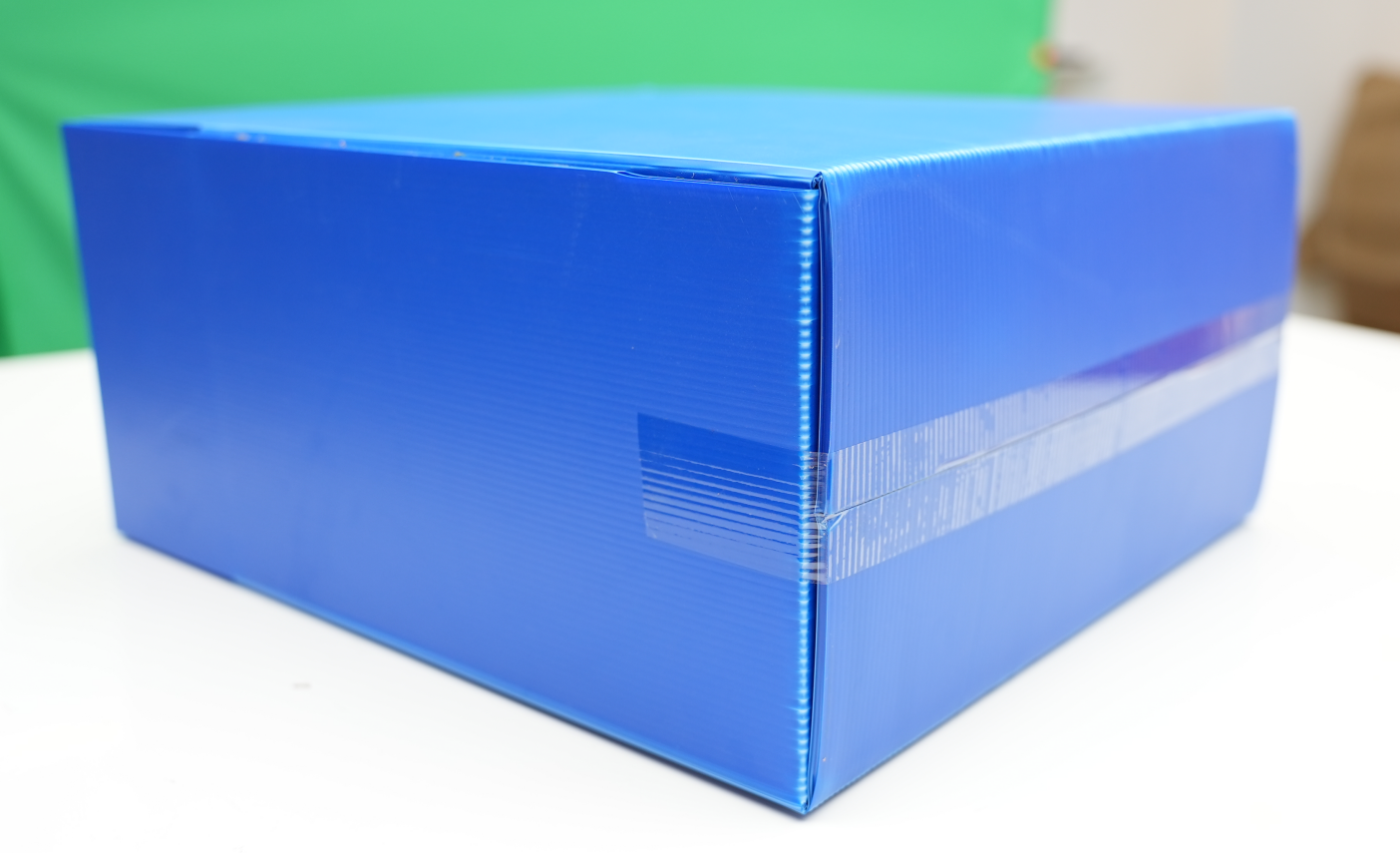
Double-wall designs often get praised for their toughness, but the reality is more nuanced. The outer layer can deform under impact, absorbing energy that would otherwise transfer to the inner wall. This isn't a flaw—it's an intentional trade-off. The cavity between the walls acts like a crumple zone, and the material's ability to flex without cracking determines whether the structure survives a hit.
Many assume thicker walls automatically mean better protection, but that ignores how shockwaves travel. A rigid double-wall panel can transmit vibration straight through, while a slightly flexible one disperses it. The key is in the bonding: too rigid an interface and you lose the damping effect; too weak and the layers separate over time. Testing reveals that optimized spacing between walls often matters more than pure bulk.
What gets overlooked is how temperature and repeated stress reshape performance. A case that survives a single strike in warm conditions might shatter in the cold because the polymer stiffens. Real-world durability is about surviving thousands of micro-impacts, not just one dramatic drop. The best double-wall solutions balance stiffness, layer adhesion, and fatigue resistance—and that balance rarely shows up on a spec sheet.
Custom Printing That Survives UV Rays and Abrasion
If you’ve ever watched a printed sign slowly bleach out in the sun or get scratched up after just a few weeks outdoors, you know the frustration. Most prints aren’t built for harsh conditions—they fade, peel, and look worn way too fast. Our process flips that narrative completely. We’ve engineered a printing method that pushes back against UV degradation and physical wear without relying on flimsy coatings that crack over time. The secret lies in how we bond the inks at a molecular level, locking color deep inside the material rather than just laying it on the surface. It’s not just ink on substrate; it becomes part of the product itself, so even under relentless sun or frequent contact, the image holds its ground.
What really makes the difference are the pigments and the curing. We use high-grade, lightfast pigments that resist chemical breakdown when exposed to UV rays. Combined with a specialized curing process that hardens the print without making it brittle, the result is an output that stays vibrant and intact for years. You can scrub it, scrape it, or leave it baking in the desert, and it won’t ghost, crack, or lose its color integrity. That means less reprints, fewer replacements, and a finish that actually lasts as long as the project demands—whether it’s industrial labels, outdoor signage, or gear that gets abused daily.
Lightweight Stacking You Didn’t Think Was Possible
Stacking often feels like a heavyweight technique—layered models, complex pipelines, and resource-heavy computations. But what if you could get the benefits without the bloat? A lightweight approach strips away the unnecessary complexity, using compact base learners and a streamlined meta-learner that trains on cleverly selected subsets of predictions. The result is a model that punches above its weight class, delivering ensemble-level accuracy with a fraction of the memory and time overhead.
The secret lies in treating stacking not as a monolithic beast, but as a modular recipe. Instead of relying on half a dozen deep neural nets, you pair a couple of fast linear models with a single well-tuned tree-based estimator. The meta-learner then focuses on the disagreements between these simple models, learning where each one stumbles. This conflict resolution strategy often yields gains that rival far heavier setups, all while keeping training times in the seconds, not hours.
Deployment practicality is where lightweight stacking really shines. Because the individual components are lean by design, you can serialize the entire ensemble into a tiny artifact that runs happily on a Raspberry Pi or inside a browser with ONNX. There’s no heavy orchestration layer required—just a straightforward inference pipeline that anyone can reason about. That makes it a natural fit for edge devices, real-time APIs, and anywhere a minimal footprint matters more than squeezing out the last 0.1% of accuracy.
Reuse Cycles That Make Your Investment Pay Off
Rethinking how many times a product can circle back into use fundamentally changes its cost profile. Instead of a single linear journey from purchase to disposal, every additional cycle spreads the initial investment thinner. A packaging system designed for five closed-loop returns, for example, can slash per-trip expenses by up to 80% compared to disposable alternatives. This isn’t about marginal savings—it's about transforming a cost center into a durable asset that keeps working.
The math gets interesting when you stop counting uses and start counting cycles. A returnable container that lasts three years and completes 150 trips doesn’t just pay for itself; it generates compounding value that disposable options can’t match. The trick lies in tracking that value clearly: if each cycle costs a fraction of a single-use substitute, the original purchase price quickly becomes irrelevant. Businesses often overlook this because accounting systems aren’t set up to amortize packaging, but forward-thinking operators now treat reusable fleet as capital equipment—depreciating it over a realistic lifespan and recognizing the growing gap between book value and real-world utility.
Closing the Loop: Recycling Realities Beyond the Label
The recycling symbol on a package often feels like a green light to toss it in the blue bin without a second thought. But that little triangle of arrows doesn't tell the whole story. In reality, most plastics stamped with recycling codes never actually get turned into new products. They might be contaminated, or made from materials that are technically recyclable but economically unviable for facilities to process. So they end up in landfills or incinerators, despite our best intentions. The chasm between the label's promise and what actually happens is where the true challenge of closing the loop lives.
Beyond the label lies a tangled web of logistics, market demand, and material science. For a soda bottle, the journey from bin to new bottle is fairly straightforward, but for a clamshell container or a flexible pouch, the path is far less clear. Many recycling facilities simply can't handle the diversity of plastics, and even when they do, the resulting recycled material might be too degraded or contaminated to compete with cheap virgin plastic. This isn't just a failure of infrastructure; it's a design problem. If we design packaging without considering its end-of-life fate, we're essentially building a system that can't ever fully close the loop.
So where do we go from here? True progress means moving past feel-good labels and demanding transparency. It means supporting policies that make producers responsible for the entire lifecycle of their products, and investing in technology that can sort and reprocess materials more effectively. But it also requires a shift in mindset: we need to see recycling not as a magic act, but as a complex industrial process that only works when products are designed for circularity from the start. The loop won't close itself—it takes deliberate effort at every step, from factory to bin to reprocessing, to turn today's packaging into tomorrow's resources.
FAQ
They use high-quality polypropylene with a fluted structure that resists impacts, moisture, and chemicals. The welded seems and reinforced corners add extra strength, so they last through repeated use without cracking.
They’re widely used in automotive, electronics, agriculture, and logistics. The boxes protect delicate parts during transport, organize produce harvests, and serve as reusable containers for supply chains.
You can adjust size, thickness, color, and add features like anti-static coatings, printing, dividers, and secure lids. Manufacturers often work from your spec sheets to create tailored solutions.
Yes, they’re reusable and recyclable. Many Chinese producers use recycled polypropylene, reducing single-use waste. Their long lifespan also means fewer resources consumed over time.
They typically withstand -20°C to 80°C, making them suitable for cold storage and hot environments without becoming brittle or warping.
Check for certifications like ISO 9001, request material test reports, and ask for samples. Reputable suppliers often share client references and allow factory audits before bulk orders.
Absolutely. They’re lighter, immune to pests, and exempt from wood packaging regulations like ISPM 15. Many exporters switch to avoid fumigation costs and reduce shipping weight.
Conclusion
Chinese corrugated plastic boxes stand out as a smarter alternative to conventional packaging, especially in wet or rough environments. Unlike cardboard, which quickly loses strength when damp, these boxes maintain rigidity and protect contents from moisture, chemicals, and contaminants. Double-wall designs add a layer of shock absorption that drastically reduces damage from drops or collisions—real-world resilience that outperforms many expectations. Despite their toughness, they are surprisingly lightweight, enabling stacked configurations that maximize storage and transport efficiency without overburdening racks or vehicles. Custom graphics, printed with UV-stable and abrasion-resistant techniques, remain sharp and vibrant through extended outdoor exposure and repeated handling, reinforcing brand presence on every trip.
Beyond immediate performance, the long-term economics reshape packaging budgets. A single corrugated plastic box can endure dozens of use cycles, sharply cutting per-shipment costs compared to expendable materials. This reusability turns a basic container into a strategic asset, paying dividends over its lifespan. When retirement finally arrives, many Chinese manufacturers have established real recycling streams that reprocess the material into new products, moving past hollow sustainability claims. It’s a practical cycle that addresses waste at the source, offering businesses a packaging solution that delivers toughness, durability, branding, and genuine environmental alignment without compromise.
Contact Us
Contact Person: Mr. Ge Man
Email: [email protected]
Tel/WhatsApp: 8613710506492
Website: https://www.shitengzx.com