

China High Pressure Membrane Filter Press: The Ultimate Guide to Efficient Filtration
2026-08-07
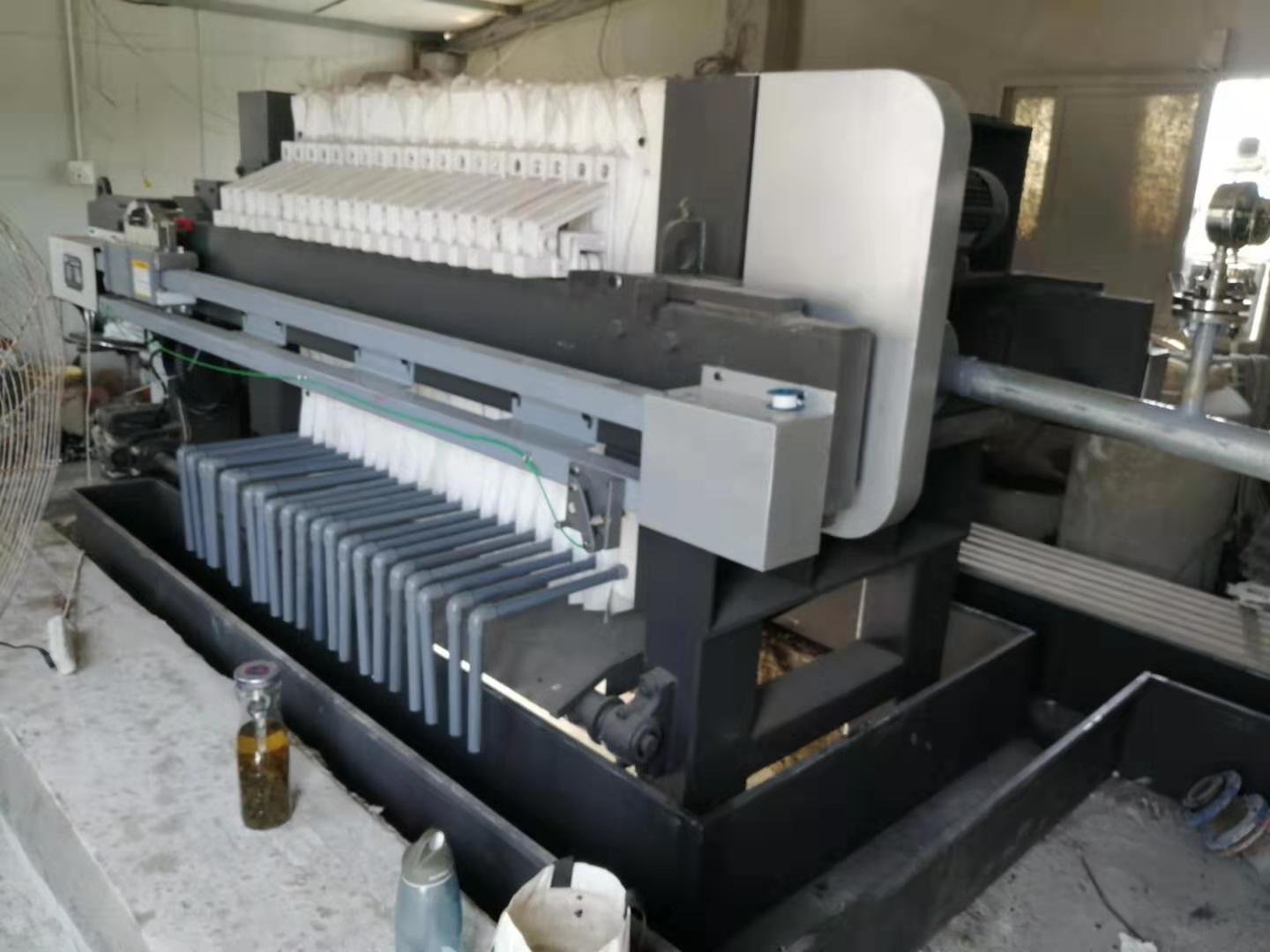
Discover the unmatched efficiency of China high pressure membrane filter presses, a game-changer in industrial dewatering. Whether you're tackling slurry treatment, chemical processing, or mining tailings, these advanced systems deliver drier filter cakes and lower operational costs. In this guide, we explore how Sinou engineers cutting-edge solutions that set new benchmarks in filtration performance, reliability, and sustainability. Get ready to transform your process—keep reading to uncover every critical detail.
Why High Pressure Membrane Presses Are Replacing Traditional Filters
Traditional filtration systems, like rotary drum filters and belt presses, have long been the workhorses of dewatering. Yet they often stumble when faced with challenging sludges or the demand for ultra-dry cakes. High pressure membrane presses sidestep these limits entirely. By combining initial hydraulic filling with a secondary squeezing phase—where a flexible membrane exerts up to 100 bar or more—they squeeze out far more moisture. The result is a cake that’s noticeably drier, often by 10 to 20 percentage points. This isn’t just a minor tweak; it’s a leap in efficiency that slashes haulage costs and opens the door to beneficial reuse or incineration without the penalty of excess water weight.
Another quiet revolution happens inside the press. Older methods rely heavily on continuous chemical dosing to condition the slurry, creating a steady stream of recurring expenses and sludge volume. Membrane presses, by contrast, make the most of every gram of flocculant. The high pressure squeeze rearranges the solids into a denser, more porous structure, so you often need less chemical treatment to hit the same clarity targets. Over a year of operation, the savings on polymers alone can be startling. Beyond that, the automated plate shifting and cake discharge mean fewer hands on deck. A membrane press largely runs itself, freeing operators from the constant attention that older filters demand.
Rethinking the footprint tells the story from a different angle. Traditional filters and their ancillaries sprawl across the plant floor, while a single high pressure membrane press can handle the same throughput in a fraction of the space. This compact nature transforms plant layouts, especially when retrofitting existing facilities. The secret lies in high corner pressures and deep chambers that accept thicker cakes, cutting cycle times without reducing total solids. It’s a concept that resonates with plant managers: do more with less, and do it cleaner. Maintenance habits shift too, since cloths last longer under the controlled squeeze and wash automatically, reducing the downtime that plagued older generations of dewatering equipment.
The Science Behind Faster Cycles and Drier Filter Cakes
The relationship between filtration pressure and cake moisture content is directly linked to the compressibility of the solids. As pressure increases, particles are forced closer together, expelling capillary-bound liquid from the interstitial spaces. This compression behavior, however, isn’t linear; most industrial slurries exhibit a plateau beyond which additional pressure yields minimal dewatering improvement, simply compacting an already impermeable layer. Understanding the specific compressibility curve of your material avoids wasted energy and cycle time.
Another critical factor is the kinetics of liquid displacement during the air-drying phase. Once the cake is formed, replacing pore liquid with air involves overcoming capillary forces and navigating complex pore networks. The air-drying efficiency hinges on parameters like pore throat size distribution and surface tension. Fine particles often create tortuous, narrow channels that trap moisture, making air drying sluggish even under high pressure. Adjusting air flow rate and duration can sometimes exploit natural cracks and fissures in the cake to evacuate residual moisture more effectively.
Cycle time reduction isn’t simply about aggressive pumping; it’s about balancing slurry conditioning with mechanical design. Pre-treatment methods like flocculation modify the agglomerate structure to create larger, more porous flocs that drain faster. On the equipment side, optimizing chamber fill profiles and using graduated pressure ramps can prevent blinding of the filter cloth, maintaining consistent permeability throughout the cycle. When these elements align, the cake reaches a critical moisture threshold sooner, allowing a shorter overall process without sacrificing cake discharge integrity.
A Tour Through Applications Where Filtration Efficiency Is Critical
From the sterile corridors of pharmaceutical manufacturing to the precision-driven floors of semiconductor fabs, filtration efficiency isn't just a technical specification—it's the invisible barrier between success and catastrophic failure. In drug production, a single airborne microbe can compromise an entire batch of injectable medications, turning life-saving therapies into health hazards. The filters working silently in these environments must trap particles as small as 0.1 microns with near-perfect reliability, ensuring that every vial leaving the line is safe for the patient at the other end.
Moving beyond medicine, the food and beverage industry relies on filtration to do more than extend shelf life. Clarifying beer, stabilizing wine, or removing spoilage organisms from dairy products involves a delicate balance: strip away the unwanted without scrubbing out the flavors and aromas that define the product. The right filtration setup preserves the sensory fingerprint of an artisanal craft while industrial-scale production hums along unaffected. Even in less obvious places, like commercial kitchens where exhaust hoods channel grease-laden vapors away from open flames, filtration protects infrastructure and lives by preventing flammable buildup and maintaining air quality.
Perhaps nowhere is the demand for clean air more visceral than in hospital operating rooms and protective isolation units. Here, HEPA filters create a laminar flow that sweeps airborne threats away from the patient, reducing infection risks during transplants, joint replacements, and other high-stakes procedures. The same principle translates to laboratories handling sensitive genetic material or nanoscale research, where a single speck of dust can derail weeks of meticulous work. In each of these settings, the common thread is uncompromising performance—because when filtration efficiency slips, the consequences ripple far beyond a spec sheet.
Finding a Reliable Supplier: What Chinese Manufacturers Offer
Sourcing from China can feel like navigating a maze, but the right partner makes all the difference. Many manufacturers here have moved far beyond simple low-cost production. They often provide integrated services—from design and prototyping to packaging and logistics—allowing you to manage your supply chain with fewer headaches. The key is to look for suppliers who view you as a long-term collaborator, not just a one-time order.
What truly sets certain Chinese manufacturers apart is their willingness to adapt. They frequently invest in advanced equipment and offer flexible minimum order quantities, which is a game-changer for small to mid-sized businesses. You'll find that the most reliable ones are transparent about materials, lead times, and even introduce you to their quality control process without being asked. This openness builds trust from the ground up.
Don't underestimate the value of factory visits or video tours. Seeing the production floor in real time reveals a lot about working conditions and workflow. A supplier who openly shares these details and has responsive communication—often in clear English—signals a professionalism that goes beyond just making products. It’s about building a partnership where your success is genuinely their priority.
Keeping Operations Smooth: Practical Upkeep From Experts
Real-world maintenance isn’t about following a generic checklist—it’s about reading the subtle signals your equipment sends before a minor hiccup turns into a full-blown halt. Experts know that smooth operations hinge on preemptive tinkering: listening for the faint rattle, feeling for vibrations that don’t belong, and swapping a cheap bearing before it shreds the shaft. It’s this hands-on, slightly obsessive attention that keeps production flowing while others are still waiting for a failure alert.
Seasoned technicians treat every routine inspection as a conversation with the machine. They note not just what’s worn, but why—was it heat, misalignment, or a bad batch of lubricant? That insight fuels tiny adjustments, from recalibrating tension to tweaking cleaning schedules, creating a bespoke upkeep rhythm that a generic manual could never prescribe. Over time, these small acts of care accumulate into a resilience that no software can replicate.
Innovations on the Horizon for Membrane Filtration Technology
Membrane filtration is entering a phase where material science and process engineering converge to push performance boundaries further than ever before. One of the most compelling shifts involves the integration of biomimetic and stimuli-responsive membranes. Drawing inspiration from aquaporins—nature’s own highly selective water channels—researchers are fabricating membranes that promise unprecedented permeability without sacrificing selectivity. These bioinspired designs are coupled with smart polymers that alter pore size or surface charge in response to pH, temperature, or light. The result is a new class of membranes that can dynamically adapt to changing feed conditions, reducing the need for chemical cleaning and extending operational life.
Nanotechnology is also rewriting the rules of fouling resistance and catalytic degradation. Instead of simple passive barriers, tomorrow’s membranes will function as active participants in contaminant removal. Nanoparticles such as titanium dioxide, zinc oxide, and carbon nanotubes are being embedded into polymer matrices, enabling in-situ degradation of organic foulants under visible light. Meanwhile, the emergence of two-dimensional materials like graphene oxide and MXenes is unlocking angstrom-scale precision in ion sieving. These ultra-thin, laminar structures exhibit remarkable separation properties, from desalination to organic solvent nanofiltration, all while operating at lower energy inputs than conventional polyamide membranes.
At the system level, digital twins and advanced sensors are poised to transform how we operate and maintain membrane plants. Real-time monitoring of flux, pressure, and even foulant layer thickness is becoming feasible through impedance spectroscopy and ultrasonic reflectometry embedded within membrane modules. This data feeds into predictive models that simulate membrane aging and fouling evolution, enabling operators to schedule cleaning cycles only when truly needed—not by calendar. Such intelligence-driven operation cuts chemical use, reduces downtime, and ultimately extends membrane lifespan, making high-performance filtration more sustainable and cost-effective across industries ranging from food processing to pharmaceutical manufacturing.
FAQ
A high pressure membrane filter press is an advanced solid-liquid separation device that uses a flexible membrane to squeeze the filter cake under very high pressures, typically above 15 bar. Unlike a regular plate and frame press, it has chambers lined with membranes that inflate with water or air, applying uniform pressure directly onto the slurry. This results in a much drier cake, shorter cycle times, and lower residual moisture — often a deciding factor when dealing with sticky or hard-to-dewater materials.
The process begins by pumping slurry into the chambers between the filter plates. The liquid passes through the filter cloth, leaving solids behind to form a cake. Once the chambers are full and the initial filtration flow slows down, the real magic happens: the membranes are inflated using high-pressure fluid. This mechanical squeeze compacts the cake, forcing out trapped water far beyond what gravity or feed pressure alone could achieve. Finally, the plates open, and the dry cakes drop out, often as self-supporting slabs ready for disposal or further processing.
The biggest wins are drastically reduced cake moisture (often below 30% for many materials), faster cycle times — sometimes half that of a non-membrane press — and lower energy costs for drying. You also get consistent performance batch after batch, minimal wash water consumption if cake washing is needed, and the ability to handle abrasive or corrosive slurries with appropriate plate materials. Plus, the dry cakes mean cheaper transport and disposal, which adds up quickly in high-volume operations.
You'll find these machines everywhere from mining and mineral processing to chemical manufacturing, pharmaceuticals, food and beverage, and municipal sludge treatment. They're particularly valuable in applications like metal concentrate dewatering, dye intermediate recovery, starch processing, and even wine lees filtration. Anywhere you need to separate fine solids from liquid and want the cake as dry as possible, this technology tends to outperform alternatives like vacuum drums or belt presses.
Start with the slurry characteristics: solids type, particle size distribution, concentration, and chemical properties like pH and temperature. Then consider the required production rate and target cake moisture. The plate size, number of chambers, and material (polypropylene, rubber, or metal-reinforced) all hinge on these factors. Don't overlook the feed pump — it needs to deliver the right pressure profile. Also check automation features, especially for membrane inflation control and plate shifting, because manual operation can become a bottleneck in high-throughput plants.
The filter cloths are the workhorses and need regular inspection for tears or blinding — replacing them on a schedule prevents most headaches. Plate surfaces must stay clean and free of caked-on residue; using automated cloth washing systems helps. The hydraulic system, including the cylinder and closing mechanism, requires periodic checks and fluid changes. Pay attention to the membrane condition too: look for swelling or delamination. With proper care, a well-built press can run for decades with minimal downtime, but neglect often leads to costly unscheduled repairs.
Conclusion
High pressure membrane filter presses are reshaping the landscape of industrial solid-liquid separation, steadily displacing older chamber presses and belt filters through a marked improvement in both output and cake quality. The operational advantage lies in the secondary membrane squeezing stage that follows the initial feed cycle, compressing the filter cake to a degree traditional methods cannot match. This not only shortens cycle times dramatically but also consistently delivers drier cakes with moisture contents often reduced by 10–20%, which translates directly into lower drying costs downstream. Whether it is dewatering mining tailings, recovering precious metals, or clarifying municipal sludge, the membrane press handles the broad range of challenging slurry compositions that define today’s critical filtration tasks. In chemical and pharmaceutical processes, the ability to achieve near-total recovery of solids while maintaining high throughput has made these systems indispensable for both volume reduction and product recovery.
Chinese manufacturers have become a focal point for this technology, offering robust engineering at competitive price points without skimping on the automation and safety features expected in modern plants. What sets the best suppliers apart is not just the hardware but the depth of process knowledge they bring—helping clients match plate pack configurations, cloth materials, and feed pressures to the specific rheology of their slurry. Day-to-day reliability hinges on pragmatic upkeep: routine cloth inspection, hydraulic system monitoring, and paying attention to plate alignment can forestall most common failures. As the industry pushes forward, innovations such as intelligent control systems that adjust squeeze profiles in real time and the use of high-durability composite plate materials are poised to further extend maintenance intervals and cut energy consumption. These advances promise to keep the high pressure membrane filter press at the heart of efficient, cost-effective filtration for years to come.
Contact Us
Contact Person: HaiYan
Email: [email protected]
Tel/WhatsApp: +86 18957325588
Website: https://www.senyoubeton.com/