

China Coconut Shell Activated Carbon: Unlocking Pure Water and Air Filtration
2026-07-26
In the quest for pristine water and crisp air, a humble material from China is making waves—coconut shell activated carbon. Its remarkable porosity and eco-friendly nature set it apart, but not all carbon is created equal. That’s where Tundrr steps in, harnessing this natural powerhouse with precision engineering. Dive in to discover how this dynamic duo transforms everyday filtration from ordinary to extraordinary.
Why China’s Coconut Shell Carbon Stands Apart
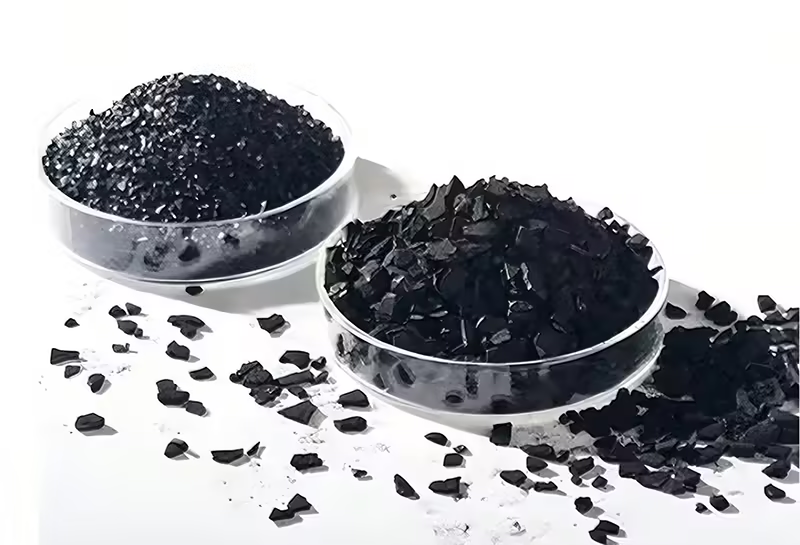
China’s dominance in coconut shell carbon production isn’t just about scale—it’s rooted in a rare combination of raw material access and refined technique. The southern provinces, particularly Hainan, offer an abundant supply of mature coconuts with exceptionally dense shells, yielding activated carbon with a naturally high microporosity. This structural advantage translates directly into superior adsorption kinetics, making the material highly effective for air and water purification without needing aggressive chemical treatments.
Beyond the raw feedstock, Chinese manufacturers have perfected a slow, multi‑stage steam activation process that preserves the shell’s intrinsic hardness. The result is a product with low attrition loss and minimal dust generation, which sets it apart in critical applications like point‑of‑use water filters and respirator cartridges. While competitors often blend coconut shell with other char sources to cut costs, leading Chinese suppliers maintain strict single‑source integrity, ensuring batch‑to‑batch consistency that industrial buyers have come to rely on.
Another differentiator is the deep integration of quality control within the production chain. Instead of relying solely on post‑activation sampling, the best facilities employ real‑time monitoring of pore development and iodine number across the rotary kilns. This data‑informed approach, paired with a culture of continuous particle size optimization, allows Chinese activated carbon to meet niche demands—whether for ultra‑fine powder in pharmaceutical purification or large granular media in biogas scrubbing—with a responsiveness that few other origins can match.
The Science Behind Crystal-Clear Water
Achieving crystal-clear water involves a delicate interplay of physical and chemical processes. At its core, clarity depends on removing suspended particles that scatter light, making water appear cloudy. These particles range from fine silt and organic debris to microscopic organisms. Filtration is the primary physical mechanism, passing water through media like sand, diatomaceous earth, or modern membranes, which physically strain out impurities. But the real magic often lies in coagulation and flocculation—chemical methods where substances like alum are added to neutralize particle charges, allowing them to clump into larger aggregates that settle or get trapped more easily.
Beyond visible particles, dissolved organic compounds and metals can impart a tint or haze. Oxidation processes, using ozone or chlorine, break down these dissolved contaminants into simpler, less colorful molecules, while activated carbon adsorption pulls remaining dissolved organics out of solution. In natural water bodies, clarity is often a sign of low algal density, maintained by a balance of predators like zooplankton and limited nutrients. Ultraviolet light can also play a role, both in disinfection and in breaking down some organic compounds. The combination of these treatments ensures that light can pass through with minimal interference, giving that pristine, sparkling look.
Temperature and pH subtly influence all these processes. For instance, colder water can hold more dissolved gases, affecting oxidation efficiency, while pH shifts alter the effectiveness of coagulants. Advanced systems may employ real-time sensors and adaptive dosing to fine-tune the balance continuously. In the end, crystal-clear water isn’t just about what you remove—it’s about orchestrating a series of precise reactions to achieve a state of molecular order where nothing remains to disrupt the passage of light.
Breathing Easier: Air Purification Redefined
The air we breathe indoors often carries more than we realize—dust, allergens, and unseen particles that linger in every corner. Modern purification has stepped beyond simple filters, embracing smarter designs that adapt to our living spaces. It’s no longer about bulky machines humming in the background; it’s about seamless integration that quietly reclaims the atmosphere you share with your family.
What sets this apart is a focus on how purification can feel almost invisible, yet remarkably effective. Imagine a system that reads the room’s air quality and adjusts on the fly, without you ever touching a dial. Materials matter too—using natural elements like activated carbon from coconut shells or photocatalytic coatings that break down pollutants at a molecular level, rather than just trapping them.
This redefinition isn’t just technological—it’s human. It’s about crafting an environment where deep breaths come naturally, free from the micro-irritants that dull our senses. From whisper-quiet operation at night to an intuitive awareness of when to ramp up during cooking or allergy season, the goal is to make clean air a given, not a chore.
A Greener Route to Filtration Excellence
Sustainability in filtration isn't just a buzzword—it's a fundamental rethinking of how we approach purity. By swapping out energy-intensive processes for smarter, eco-conscious alternatives, we're discovering that high performance doesn't have to come at the planet's expense. Advanced bio-based filter media, for example, are now rivaling synthetic counterparts in both durability and efficiency, while biodegrading naturally at the end of their lifecycle.
The shift toward circular design is closing the loop on waste. Reusable and recyclable filter components, paired with modular systems that reduce replacement frequency, are cutting down landfill contributions significantly. These innovations aren't niche experiments; they're becoming standard in forward-thinking industries, proving that responsible manufacturing and operational excellence can go hand in hand.
Ultimately, a greener route is about more than materials—it's about minimizing the total environmental footprint. From water-based production methods that eliminate harmful solvents to energy recovery systems that capture and repurpose heat, every step of the filtration lifecycle is being reexamined. The result is a new breed of filtration solutions that deliver clarity not just in output, but in purpose.
From Households to Heavy Industry: Real-World Impact
Walk into any modern home and the quiet efficiency of AI is already at work – your thermostat learns your schedule to save energy, your fridge suggests recipes based on what’s inside, and voice assistants manage everything from shopping lists to bedtime stories. These aren't futuristic concepts; they're everyday conveniences that have seamlessly woven themselves into domestic life, reducing waste and freeing up time for what matters most. The ripple effect is tangible: lower utility bills, less spoiled food, and a sense of control that makes households run smoother without anyone needing to be a tech expert.
Step beyond the front door and the impact scales dramatically. In heavy industry, the same underlying intelligence transforms operations on a massive scale. Predictive maintenance on factory floors prevents costly breakdowns before they happen, cutting downtime by up to 50% in some sectors. Smart grids balance energy loads across entire cities, responding in real time to demand spikes without human intervention. It’s not about replacing workers but giving them superhuman insight – a technician can now pinpoint a failing component weeks before it would have been noticed, simply by following an alert generated by vibration sensors and machine learning models.
The connection between these worlds is closer than it seems. The algorithms that optimize a family’s weekly grocery delivery also route thousands of trucks for just-in-time manufacturing supply chains. The voice recognition that sets a kitchen timer also enables hands-free control in hazardous environments, keeping workers safe. This quiet revolution hasn't arrived with a bang; it's been layered into existing systems so gradually that we sometimes forget how much has shifted. The real-world impact isn't about robots taking over – it’s about incremental improvements that compound into massive gains in efficiency, safety, and sustainability, from the living room to the factory floor.
Beyond Basic Filtration: Unlocking Hidden Potential
Most filtration systems do exactly what they’re designed to do—remove particles, reduce turbidity, and keep things flowing. But sticking to basic function leaves a lot on the table. The real opportunity lies in looking at filtration not just as a barrier, but as a point of transformation. By rethinking filter media, flow dynamics, and even the materials being processed, you can capture value that goes far beyond simple separation. It might mean recovering compounds that would otherwise be wasted, improving downstream efficiency, or creating a more stable process that uses less energy and fewer resources.
Unlocking that hidden potential often starts with asking different questions. Instead of “How do we meet spec?” try “What could we do with what we’re removing?” Shifting from a defensive mindset to a value-creation perspective opens up surprising possibilities. Something as simple as tweaking pore structure or layering media can turn a passive component into an active part of the system, catalyzing reactions, extending equipment life, or enabling closed-loop cycles. The difference between basic and breakthrough is rarely about massive overhauls—it’s about paying attention to the subtle interactions that most people miss.
The best part is that these gains are often sitting right in front of us, disguised as routine operations. When filtration becomes a strategic lever, it stops being a cost center and starts driving real advantages—like pulling high-purity byproducts from a waste stream or stabilizing conditions that let you run faster without sacrificing quality. This isn’t about chasing perfection; it’s about recognizing that the familiar has more to give, and that with small, deliberate changes, you can turn an everyday necessity into a quiet competitive edge.
FAQ
Coconut shell activated carbon is a microporous form of carbon processed from coconut shells, known for its high surface area and hardness. Unlike coal or wood-based carbons, it has a tighter pore structure that excels at trapping small organic molecules, making it ideal for water purification and air filtration where precise contaminant removal is needed.
China is one of the world's largest producers of coconuts and has advanced manufacturing infrastructure. The country's carbon producers benefit from consistent raw material sourcing and decades of engineering expertise, leading to products with high iodine numbers and low ash content—key indicators of adsorptive capacity and purity.
It works through adsorption, where contaminants in water adhere to the carbon’s vast internal surface area. As water passes through, organic compounds, chlorine, and certain heavy metals get trapped in the micropores. This physical and chemical bonding process effectively removes tastes, odors, and harmful substances without adding anything back to the water.
Yes, coconut shell activated carbon is excellent for air filtration. Its dense micropore network captures volatile organic compounds (VOCs), fumes, and odors from household products, cooking, and off-gassing furniture. It is commonly used in air purifiers, HVAC filters, and respirators to create cleaner breathing environments.
It offers a combination of high efficiency, longevity, and mechanical strength. The material is hard and resists attrition, so it produces less dust during backwashing. Its high adsorption capacity means fewer changeouts, and it does not leach contaminants back once adsorbed. It is also cost-effective compared to many synthetic alternatives.
Coconut shells are a renewable byproduct of the food industry, diverting waste from landfills. The activation process, while energy-intensive, is offset by the material's long service life and ability to be reactivated in some cases. Overall, it supports a circular economy by transforming agricultural waste into a valuable purification tool without relying on fossil resources.
The lifespan depends on contaminant load, flow rate, and the specific application. In a typical home water filter, it might last 6-12 months. For industrial air treatment, it can function for years with proper maintenance. Regular monitoring of effluent quality or pressure drop indicates when replacement is necessary. Some systems allow thermal reactivation to extend life.
Conclusion
China's coconut shell activated carbon has steadily earned a reputation that extends well beyond cost advantage. The secret starts with raw material—coconut shells sourced from tropical regions provide a uniquely dense and microporous structure, far surpassing coal or wood-based alternatives. When processed through carefully controlled high-temperature steam activation, this material develops an intricate network of pores that can trap contaminants at the molecular level. For water treatment, it strips away organic compounds, chlorine, and unpleasant odours, yielding a crisp, neutral taste without adding anything back. In air purification, the same porous architecture captures volatile organic compounds, smoke, and industrial fumes, making indoor environments noticeably fresher. What truly sets China's production apart is a deep-running marriage of time-honoured carbonisation techniques with modern quality control—every batch is fine-tuned for specific Iodine numbers and surface areas, ensuring performance that rivals laboratory-grade media. This balance of art and precision means the carbon is not just a commodity, but a carefully engineered filtration solution.
Beyond the lab, this material quietly reshapes daily life and heavy industry alike. Household water pitchers, refrigerator filters, and countertop purifiers depend on it for clean-tasting water without the plastic waste of bottled alternatives. Breweries and distilleries lean on its ability to remove trace impurities without altering flavour profiles, while pharmaceutical installations use it to safeguard product purity. On a larger scale, factories handle solvent recovery and wastewater polishing with the same carbon, its high mechanical strength allowing repeated regeneration without crumbling. A less obvious but fast-growing frontier is biogas upgrading and landfill gas treatment, where tailored grades strip hydrogen sulphide and siloxanes that would otherwise corrode engines. Environmentally, the story improves further: repurposing coconut shells diverts agricultural waste from burning or decay, while the activation process itself increasingly taps renewable energy sources. The carbon can often be reactivated several times, cutting lifecycle footprints. In urban hospitals, museums, and data centres, it is the invisible shield against corrosive gases and particulates, preserving everything from sensitive equipment to priceless artefacts. What begins as a simple coconut shell ends up quietly enabling cleaner water, safer air, and more sustainable industry—proving that high-performance filtration does not have to come at the planet’s expense.
Contact Us
Contact Person: Ellen Zhang
Email: [email protected]
Tel/WhatsApp: +86(21) 2287 6756
Website: https://www.tundrr.com/en/