
Chemical Soil Stabilizer for Unpaved Roads: Your Essential Guide to Long-Lasting Dust Control and Erosion Prevention
2026-07-31
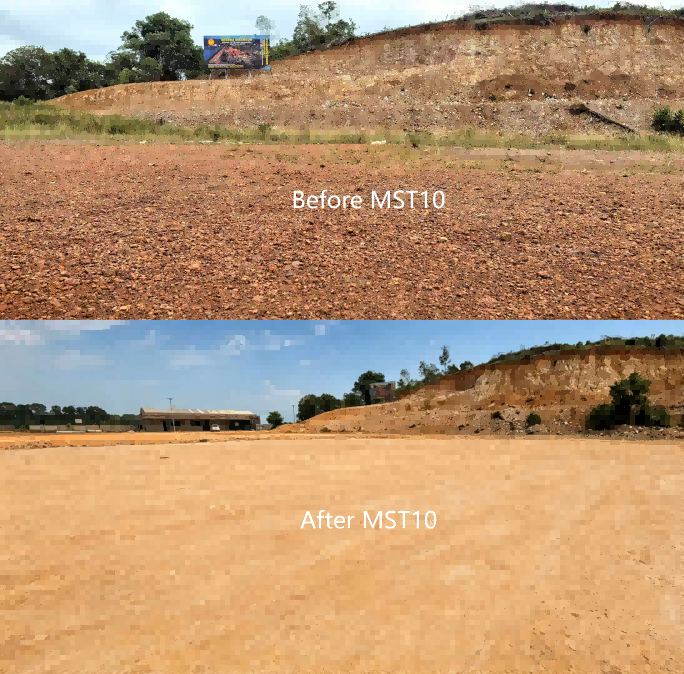
Unpaved roads are the lifelines of rural and industrial areas, but they come with a constant battle against dust, erosion, and costly maintenance. If you're tired of endless grading and water trucks that only offer temporary relief, it's time to explore a smarter solution. Chemical soil stabilization is transforming how we manage unpaved surfaces, delivering long-lasting durability with minimal upkeep. At the forefront of this innovation is MST, a proven range of stabilizers that lock in soil particles to eliminate dust and build a resilient, all-weather surface. Let’s dive into how you can finally put an end to road deterioration before your next project takes a toll on your budget and safety.
The Science Behind Soil Binding Agents
At the microscopic level, soil binding agents function by altering the electrochemical relationships between individual particles. Clay and silt platelets carry negative charges on their surfaces, creating repulsive forces that keep them dispersed. When polyvalent cations like calcium or magnesium are introduced, they bridge these charges, allowing particles to flocculate into larger aggregates. Synthetic polymers go further, their long carbon chains intertwining with soil grains to form a three-dimensional matrix that resists both wind and water erosion. This electrostatic attraction is not just surface chemistry—it reshapes the soil's internal architecture, increasing pore stability and improving water infiltration drastically.
Biological binding agents operate through a completely different paradigm. Plant roots exude polysaccharides and proteins that act as natural glues, while mycorrhizal fungi weave a living net of hyphae that physically enmesh soil particles. A standout performer is glomalin, a glycoprotein produced by these fungi that is remarkably resistant to decay and can persist for decades. As microbial communities thrive, they secrete extracellular polymeric substances—think of them as biological concrete—that cement microaggregates into the larger, more stable macroaggregates essential for healthy soil structure. This living fraction is dynamic, responding to root growth, seasonal shifts, and management practices.
No single binding mechanism works in isolation; there is a hierarchy of aggregation that scientists describe as the aggregate cascade. Short-term binding from roots and fresh organic matter creates transient stability, while iron oxides and clay minerals provide more persistent bonds. The most durable structures, often lasting centuries, emerge when inorganic cements like calcium carbonate crystallize within pores. Understanding this interplay allows us to engineer solutions—whether by adding humic substances to stimulate microbial activity or by precisely adjusting soil pH to optimize the charge distribution on particle surfaces—that work with nature's own soil-building processes rather than against them.
Key Factors for Selecting a Suitable Stabilizer
When evaluating stabilizers, the first detail to scrutinize is compatibility with the intended material or system. A stabilizer that performs exceptionally in one polymer may cause discoloration, reduced transparency, or even degradation in another. It’s essential to match the stabilizer’s chemical nature—whether it’s a heat stabilizer, UV absorber, or antioxidant—to the specific vulnerabilities of the base material. For example, outdoor applications demand robust UV resistance, while high-temperature processing calls for thermal stability without compromising mechanical properties. Overlooking this match can lead to premature failure, no matter how premium the additive seems on paper.
Beyond basic compatibility, the stabilizer’s long-term durability under real-world conditions matters immensely. Laboratory data often paints an ideal picture, but field exposure introduces variables like humidity, cyclic loading, and chemical contact that accelerate aging. A practical approach involves prioritizing formulations that have demonstrated resilience in environments similar to the final application. Additionally, consider the stabilizer’s migration resistance and extraction behavior—if it leaches out over time, protection fades. Often, a synergistic blend of stabilizers yields better all-around defense than a single high-dose component, though it requires careful balancing to avoid antagonistic interactions.
Finally, practical and economic factors shape the selection process. Processing conditions, such as extrusion temperatures and residence times, dictate whether a stabilizer can survive the manufacturing stage without volatilizing or decomposing. Regulatory compliance adds another layer—certain stabilizers face restrictions in food-contact or medical applications. Cost naturally plays a role, but it’s wise to weigh price against performance longevity. A cheaper alternative that demands frequent replacement or compromises product lifespan often proves costlier in the long run. Ultimately, the right stabilizer integrates seamlessly into production, meets all safety requirements, and delivers consistent protection throughout the product’s expected service life.
Application Methods That Make a Difference
Many developers stick to familiar routines when applying for roles, but small shifts in approach often separate standout candidates from the crowd. Instead of sending the same resume to every opening, tailoring the language to mirror the challenges mentioned in the job description creates an immediate connection. A concise cover note that opens with a genuine observation about the company’s recent work—rather than a recycled first line—shows you’ve done your homework and care about the outcome.
Timing and channel choice also play a bigger role than most assume. Applying directly through a company’s careers page after engaging with their content on social platforms can flag you as a more invested prospect. If you’ve interacted with a team member at an event, referencing that exchange in your application ties a real-world thread to your submission, making it harder to overlook.
Real-World Performance in Challenging Climates
Extreme heat, freezing cold, relentless humidity — these aren't just weather patterns, they're the proving grounds where true engineering emerges. In real-world conditions, a product's ability to maintain speed, stability, and efficiency under duress separates polished prototypes from dependable tools you can count on day after day.
Take sub-zero environments as an example. Here, batteries can drain in minutes, materials become brittle, and displays lag or fail entirely. Yet, thoughtful design — from thermally adaptive power management to reinforced chassis and anti-condensation coatings — allows a device to wake instantly and operate smoothly, even when ice crystals form on its surface. It's not about lab simulations; it's about the unscripted moments when an Arctic gust hits without warning.
And then there's the other extreme: arid deserts or tropical monsoon zones. Dust clogs ventilation, sand scores optical surfaces, and humidity penetrates seals that looked perfect on paper. True resilience means building in multi-stage filtration, self-cleaning camera modules, and corrosion-resistant internals that don't just survive the intrusion but keep performing without throttling back. Because out there, performance isn't a spec sheet metric — it's the confidence that your gear won't let you down when the climate throws its worst at you.
Comparing Costs and Long-Term Value
When weighing the decision between two seemingly similar options, the sticker price rarely tells the whole story. A product or service that appears cheaper upfront might carry hidden fees, require frequent repairs, or become obsolete faster, draining your wallet over time. On the other hand, a higher initial investment can sometimes translate into lower maintenance costs, greater durability, and sustained performance that ultimately saves money. This isn't about always choosing the premium option—it's about dissecting the full lifecycle cost, including installation, energy consumption, replacement parts, and even the potential productivity gains or losses attached to each choice.
Long-term value extends beyond just financial metrics. Reliability, customer support quality, and adaptability to future needs all factor in. Consider how a tool or service fits into your daily routine: if it reduces friction, minimizes downtime, or adapts as your requirements evolve, it can offer benefits that are difficult to quantify but impossible to ignore. Sometimes, the option with a lower lifetime cost still falls short because it lacks the flexibility or user experience that makes your life easier. True value lies at the crossroads of practicality, longevity, and the intangible ease that comes with a well-made decision.
Practical Maintenance Tips for Lasting Results
Dirt and debris are the silent enemies of any well-loved item. A quick wipe-down with a microfiber cloth after each use prevents buildup that can lead to scratches or dullness over time. For deeper cleans, stick to mild, non-abrasive cleaners and avoid anything with harsh chemicals that might strip protective coatings. Think of it as a small daily ritual—barely a minute spent—that pays off in years of like-new performance.
Storage choices often make the difference between something that ages gracefully and something that falls apart too soon. Keep items out of direct sunlight, which can fade colors and weaken materials, and away from damp areas where mold and rust thrive. Using breathable cotton covers instead of plastic allows air to circulate, preventing trapped moisture. The key is consistency: always returning things to their designated spot not only protects them but also saves you the headache of searching later.
Routine inspections catch small issues before they become costly problems. Set a recurring calendar reminder—maybe once a season—to tighten any loose screws, check for early signs of wear, and lubricate moving parts if needed. Addressing a squeaky hinge or a frayed thread right away keeps minor flaws from spiraling into irreparable damage. It’s not about being obsessive; it’s about respecting what you own enough to give it a regular, practical check-up.
FAQ
A chemical soil stabilizer is a liquid or powder additive that physically and chemically alters the soil structure to improve its strength and durability. When applied to an unpaved road, it binds the fine particles together, filling the voids between them and creating a denser, more cohesive surface. This reduces the amount of loose dust and helps the road resist wear from traffic and weather.
Traditional approaches provide only short-lived relief. Watering suppresses dust temporarily but evaporates quickly, and grading merely smooths the surface without addressing the underlying instability. Chemical stabilization fundamentally changes the road’s composition, offering months or even years of reduced maintenance, lower water usage, and a consistently firmer driving surface.
When properly applied, the effects are far from temporary. Many products create a durable crust or bind the soil particles at a microscopic level, often lasting an entire dry season or longer before any touch-ups are needed. The longevity depends on traffic volume, weather conditions, and the specific formulation, but the goal is always a long-term solution, not a quick fix.
By increasing the soil’s cohesion and weight-bearing capacity, the treated surface becomes less susceptible to being washed away by rain or blown away by wind. It essentially hardens the top layer so that water sheets off rather than cutting ruts, and the bound particles resist displacement. This protection is particularly valuable on slopes or in areas with heavy runoff.
Modern formulations prioritize safety, with many being non-toxic, biodegradable, or even derived from natural sources like lignin or plant-based polymers. That said, it’s essential to choose a product suited to the local ecosystem and follow application guidelines to avoid runoff into waterways. When used correctly, the environmental impact is minimal, especially compared to the constant dust and sediment pollution from untreated roads.
Almost any unpaved surface can benefit, but it’s especially effective for high-traffic rural roads, mine haul routes, forestry access tracks, construction site entrances, and recreational trails. It’s also an excellent choice for areas where dust poses a health hazard or visibility risk, or where frequent grading is impractical due to cost or remoteness.
Durability varies widely based on factors like soil type, traffic, and climate, but a single application can last anywhere from six months to over two years. Roads with heavy truck traffic may need more frequent maintenance, while lightly used paths can remain stable for several seasons. Many users plan for an annual or biannual refresh just before the dusty period.
The basics are straightforward: the stabilizer is mixed with water and sprayed onto the road surface, then compacted. For small areas, a handheld sprayer and a plate compactor may suffice, but larger jobs often require specialized equipment like water trucks and rollers. While a knowledgeable property owner can handle a short driveway, for a public road or high-traffic area it’s wise to bring in professionals to ensure even coverage and proper curing.
Conclusion
Understanding how chemical soil stabilizers work is the first step toward effective dust suppression and erosion control. These binders react with soil particles at a molecular level, creating strong physicochemical bonds that transform loose, dusty surfaces into a compact, durable matrix. The choice of stabilizer—whether it's a polymer, lignosulfonate, or salt-based compound—depends heavily on local soil composition, climate conditions, and traffic volume. A thorough soil analysis is essential to match the right binder to the native material, as mismatches can lead to poor performance or environmental concerns. Once selected, application method becomes critical; spray-on treatments require precise dilution and uniform coverage, while soil mixing demands consistent incorporation to achieve deep stabilization. The best results come from tailoring the approach to the specific site, ensuring the stabilizer penetrates sufficiently and cures properly under ambient conditions.
In practice, these solutions demonstrate remarkable resilience across diverse environments, from arid regions plagued by dust storms to humid areas prone to washboarding. They significantly reduce maintenance frequency and water usage, offering true long-term value that often outweighs initial expenses when compared to traditional gravel or water spraying. A simple cost analysis over a 5-year period usually reveals savings in material and labor. To maximize durability, routine inspections and timely repairs of small cracks or potholes are vital, as is periodic reapplication of a light topcoat to protect the treated surface. With proper care, a stabilized unpaved road can remain dust-free and erosion-resistant for years, providing a safer, more pleasant driving experience and minimizing environmental impact.
Contact Us
Contact Person: Helen
Email: [email protected]
Tel/WhatsApp: 86 18630661160
Website: https://www.roadmilestone.com/