

Bulk Heavy Duty Caster Wheels Manufacturer: Your Guide to Industrial-Grade Mobility Solutions
2026-08-26
Moving heavy loads doesn't have to be a daily struggle. In this guide, we break down what to look for in bulk heavy duty caster wheels and why CMCL has become a trusted name for industrial-grade mobility solutions. From load capacity to wheel materials, you'll find practical insights to keep your operations rolling smoothly.
What Sets Heavy-Duty Casters Apart in Load-Bearing Environments
The real differentiator in heavy-duty casters isn't just a thicker bracket—it's how the entire assembly handles uneven stress. Forged steel or ductile iron frames resist bending under load, while tapered roller bearings distribute force across a wider surface than standard ball bearings. That matters when a fully loaded cart crosses a floor joint or a dock plate, where momentary shock loads can exceed the rated capacity by a wide margin.
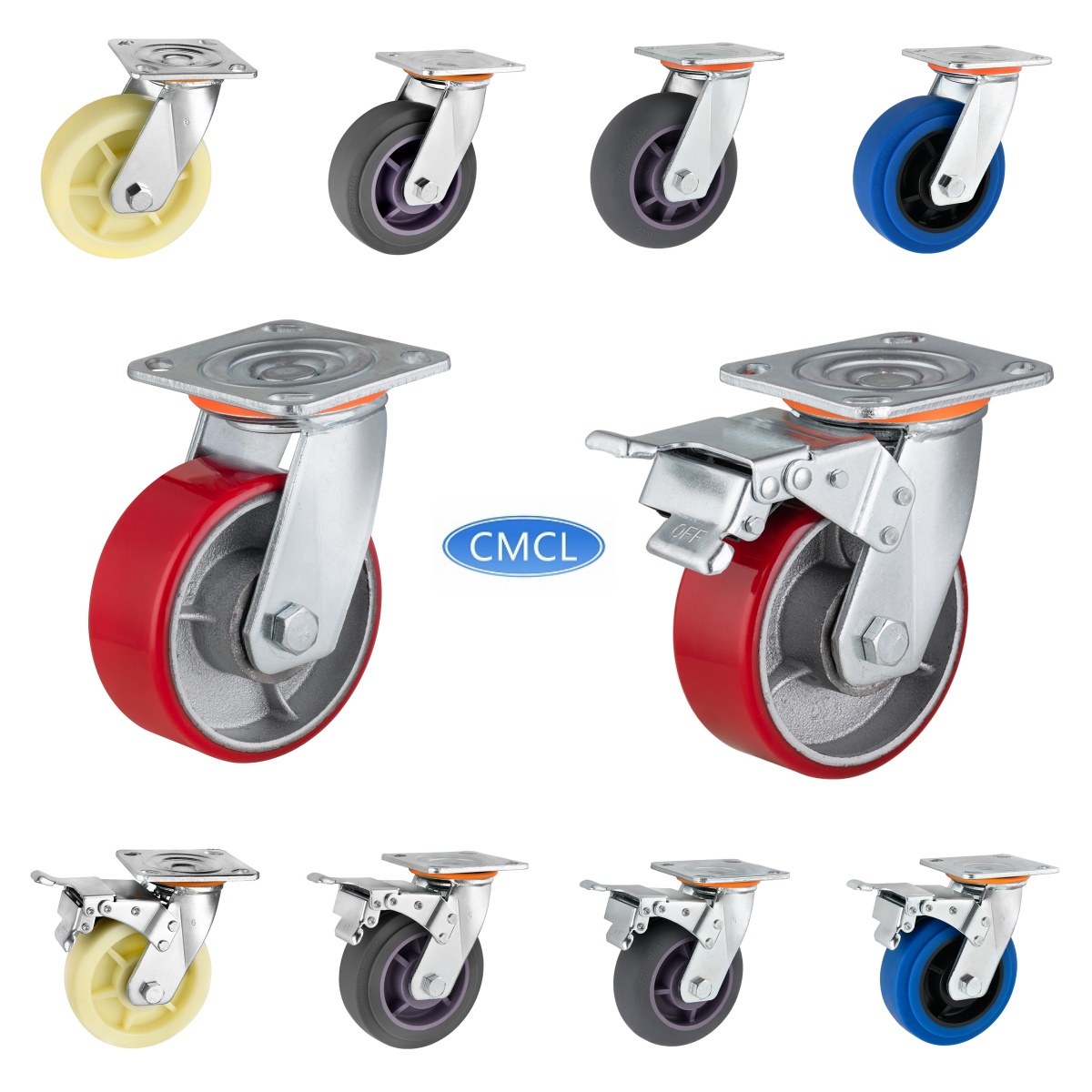
Wheel selection separates industrial workhorses from warehouse casters as well. A high-quality polyurethane tread bonded to a cast iron or aluminum core offers a balance of resilience and rigidity, so the wheel won't flatten under sustained weight yet still rolls smoothly over debris. Harder compounds reduce rolling resistance, but going too hard invites floor damage and vibration; the best designs tune durometer to the specific floor surface and load profile.
Finally, build details like sealed swivel sections, hardened kingpins, and accessible grease fittings keep these casters serviceable in demanding environments. Dust, metal shavings, and washdown fluids quickly destroy lighter units, but well-engineered heavy-duty models isolate the bearing path and allow relubrication without disassembly. That maintenance access, combined with precision-machined mounting plates, means the caster keeps tracking straight instead of wandering or seizing when the load pushes against it.
Material and Design Choices That Influence Wheel Performance
Aluminum remains a popular choice for wheels because it balances weight, strength, and cost better than most alternatives. Forged aluminum wheels, for instance, compress the metal to align its grain structure, which lets manufacturers shave off unsprung mass without giving up load capacity. Less weight at each corner means the suspension can react faster to bumps, and that translates into more predictable handling and shorter braking distances.
The shape of a wheel matters just as much as what it’s made from. Spoke geometry, barrel thickness, and the placement of material around the rim all affect how forces travel from the tire contact patch into the hub. A wheel with a thinner outer lip but reinforced spokes may reduce rotational inertia while still resisting cornering loads, improving steering response without making the ride harsh.
Composite wheels, though less common, push the limits further. Carbon fiber barrels and forged magnesium centers cut unsprung weight dramatically, but they demand careful design to avoid fatigue cracks. Even small changes—like moving a bolt circle outward or adding a slight concave profile—can shift stress concentration points, so wheel builders often rely on finite element analysis to match the material to the specific load path.
Matching Caster Specifications to Your Facility’s Floor Conditions
Concrete, epoxy, tile, and carpet each interact with wheels differently. On smooth epoxy, hard nylon or phenolic wheels can chatter and slip, while softer polyurethane may grip well but could leave marks if the floor coating is sensitive. Rough concrete demands a wheel that resists chunking and flat-spotting, such as a high-durometer polyurethane or forged steel with a poly tread. Even the presence of expansion joints or saw-cut grooves matters—small wheels can drop into these gaps and cause abrupt stops.
If your floors have cracks, thresholds, or debris, prioritize larger diameters. A 6-inch wheel rolls over a 1/2-inch gap far more easily than a 3-inch wheel, reducing jolts to both the cart and the operator. For areas exposed to oils, solvents, or cleaning agents, standard rubber can swell or degrade quickly. In those cases, choose a wheel made from nylon, polyolefin, or a chemical-resistant polyurethane. Facilities with wood or luxury vinyl tile should lean toward non-marking, soft treads to avoid scuffs and indentations.
Load distribution is often overlooked. A heavy cart with small, narrow wheels creates high contact pressure that can crack tile or permanently dent softer flooring. Wider treads, dual wheels, or a larger diameter help spread the load. Also consider how floor condition changes over time: polished concrete may become more slippery with dust, and painted floors can wear down to expose abrasive substrate. Review caster choices whenever surface coatings or cleaning routines change.
Bulk Ordering Considerations for Consistent Supply and Cost Control
Many purchasing mistakes trace back to guessing demand instead of measuring it. Before committing to a bulk order, pull at least six months of actual usage data, factor in known seasonal spikes, and confirm the supplier's real lead time—not the one quoted in the catalogue. A quick formula like average monthly use plus lead-time demand plus a small buffer often works better than ordering a round number that feels safe. If your lead time is four weeks and usage varies between 90 and 140 units a month, ordering 600 units because the price drops at that quantity creates more risk than it removes.
Volume discounts are useful only if the total cost of ownership stays low. Storage, insurance, spoilage, and the chance of product changes or obsolescence all eat into the per-unit savings. Compare the landed cost of a larger order against several smaller deliveries, including the cost of capital tied up in inventory. Sometimes a moderate price break at a quantity you will actually use in 60 days beats a steep discount on a 12-month supply that sits in the warehouse collecting dust and interest.
Set a review cycle for reorder points instead of locking them in once a year. Supplier performance shifts, demand patterns flatten or spike, and your own cash position changes. Recalculate order quantities quarterly and keep a backup supplier for the items that would shut down your operation if they went missing. A consistent supply comes less from placing one huge order than from adjusting order size, cadence, and safety stock as real conditions shift.
Maintenance Habits That Extend Service Life Under Stress
Most breakdowns under heavy load happen not because the machine was pushed too hard, but because small upkeep tasks were skipped in the name of saving time. Checking fluid levels before a demanding shift, feeling for unusual heat around bearings, and listening for subtle changes in operating noise can flag trouble long before a full failure. These habits cost minutes but often add hundreds of hours to a component's working life.
Cleanliness is another habit that pays off disproportionately when equipment runs hot and fast. Dust, metal shavings, and old grease don't just look bad—they act as abrasives and insulators, trapping heat exactly where it does the most damage. Wiping down seal areas, swapping clogged filters on schedule, and using the right grease for the load range all help keep stress from turning into wear. A clean machine tends to run cooler, and cooler parts last longer.
Finally, consistent record-keeping turns maintenance from guesswork into a rhythm. Note the hour meter reading when a belt was tensioned, mark down any vibration you felt by hand, and flag parts that are consuming more power than usual. Under stress, these small logs reveal patterns—a bearing that needs re-lubrication slightly sooner each week, or a coupling that drifts out of alignment after heavy use. Catching those shifts early is what keeps a stressed system from quietly eating itself.
Real-World Mobility Challenges in Manufacturing and Warehousing
Most warehouse and factory floors bear little resemblance to the clean, static testbeds where mobile platforms are originally validated. Expansion joints rattle pallet loads, dock plates create sudden inclines, and polished concrete gives way to cracked asphalt in transfer zones. Narrow aisles force lift trucks and autonomous carts into tight passing situations, while temporary staging areas block established routes several times a shift. Floor markings fade under constant traffic, and dust or shrink-wrap scraps can confuse sensors that rely on clear visual cues. These conditions mean that any mobility system has to tolerate degradation gracefully, rerouting or slowing down rather than halting the whole operation.
Infrastructure unevenness is just one layer. Wireless coverage frequently drops in high-bay racking, where steel beams create dead zones or multipath interference. A robot that loses its connection mid-task cannot simply stop in a travel lane, so local decision-making has to carry the process through blind spots. Battery logistics create their own bottlenecks: charging stations compete for floor space, fast-charge cycles shorten cell life, and swapping packs adds manual steps that erode the promised labor savings. On top of that, facility layouts rarely stay fixed. Seasonal product flows, new picking modules, and repurposed staging areas force frequent remapping, often with little notice to the automation vendor.
People remain the least predictable variable. Forklift drivers cut corners, pickers step backward into aisles, and maintenance crews leave tool carts in unexpected locations. Safety standards require that mobile equipment slow to a crawl around blind intersections, which can slash throughput if the path network hasn't been designed with those restrictions in mind. Cold storage, outdoor yards, and washdown zones introduce condensation, ice, and chemical exposure that gradually degrade wheels, connectors, and seals. A workable mobility rollout treats these frictions as normal operating conditions, not edge cases, and builds in the operational slack needed to absorb them.
FAQ
Heavy duty casters differ mainly in their load ratings and construction. Standard casters might handle a few hundred pounds, but heavy duty versions use thicker steel forks, hardened raceways, and often feature tapered roller bearings. They're built to survive impacts, continuous rolling, and harsh floors without deforming or seizing up.
A solid rule is to divide the total weight of your cart or equipment by the number of casters, then add a safety margin. Many engineers use a 33% cushion on top of that because loads rarely distribute evenly, especially over thresholds or debris. For example, a 4,000 lb load on four casters shouldn't mean 1,000 lb casters—aim for at least 1,500 lb capacity each.
On rough or broken concrete, polyurethane treads tend to win. They resist chunking and provide a quieter ride than phenolic or cast iron. But if the floor has metal shavings or extreme heat, you might need phenolic or steel wheels. The key is matching the tread to the floor's worst condition, not its average state.
Yes, most manufacturers that handle bulk orders will work with you on bolt hole patterns, swivel locks, or even special finishes. The real question is tooling cost and lead time. Some shops already have multiple top plate sizes in stock, so you can avoid custom charges by adapting your equipment to an existing pattern.
It's less about fancy maintenance and more about consistent inspection. Check for loose axle nuts, debris wrapped around the swivel race, and flat spots on the tread. A monthly walk-through with a torque wrench and a flashlight catches most failures before they cause a cart to drop a load.
Larger diameter wheels roll over cracks and expansion joints with far less effort. A 4-inch wheel might catch on a half-inch gap, but an 8-inch wheel will glide over it. That reduces the shock load on bearings and the force workers need to push. However, bigger wheels raise the overall height, so you need to check clearance under equipment.
Polyurethane is great for many floors, but it's not ideal around high heat or prolonged exposure to certain solvents. Foundries, bakeries with oven discharge areas, and chemical plants often do better with phenolic or high-temp nylon wheels. Also, if you're moving extremely heavy loads slowly, polyurethane can develop flat spots—though premium grades resist that.
Look for a manufacturer that asks about your floor conditions, load distribution, and duty cycle before quoting. Cheap casters fail when a single wheel gets overloaded on a ramp, and a good supplier will flag that risk. Also check if they stock replacement parts like axles and swivel seals—if they only sell complete units, long-term maintenance gets expensive.
Conclusion
Choosing the right heavy-duty caster wheels means looking beyond load ratings to how they actually behave under constant stress. In busy plants, these casters face shock loads, uneven expansion joints, and abrasive debris that quickly destroy standard wheels. The difference often comes down to wheel material and construction: forged steel cores with thick polyurethane treads resist chunking and flat-spotting, while ductile iron or phenolic options handle extreme heat or chemical exposure. Floor conditions also shape the decision—smooth sealed concrete tolerates harder treads for lower rolling resistance, but cracked or debris-strewn floors require softer, larger diameters to bridge gaps and keep carts moving without jolting the load. A manufacturer that asks about your floor type, tow speed, and duty cycle before recommending a caster is one that understands mobility as a system rather than a single component.
Bulk purchasing introduces another layer of strategy. Ordering consistent caster models across your fleet lowers spare parts complexity and lets you negotiate better pricing while keeping replacement stock predictable. However, the real cost comes later: poor maintenance habits erase those savings. Checking axle nuts for tightness, cleaning thread debris from swivel races, and monitoring tread wear before it exposes the core can double or triple service life, especially in three-shift operations. Real-world problems—like a cart loaded with machined castings that must start and stop dozens of times per shift or a warehouse tugger train that crosses metal dock plates every hour—demand casters designed for specific duty cycles, not just generic 'heavy duty' labels. The best bulk suppliers offer test wheels, load-deflection data, and long-term field support, turning a commodity purchase into a tailored mobility solution that holds up when production pressures peak.
Contact Us
Contact Person: Ruby
Email: [email protected]
Tel/WhatsApp: +86 13360379367
Website: https://www.cmcl-casters.com