

Boron Carbide Ceramic Exporter Criteria for Global Buyers
2026-09-11
Global buyers evaluating boron carbide ceramic exporters often get buried in spec sheets that look identical—same purity claims, same density numbers, same polite sales promises. The difference between a supplier and a strategic partner shows up later: in batch-to-batch consistency, honest documentation when things deviate, and the willingness to share process data instead of hiding behind trade secrets. Before you shortlist your next vendor, it's worth rethinking what "exporter criteria" should actually measure. At HUAYI TECH, we've built our export process around the questions serious procurement teams ask—but rarely see answered in a catalog.
What Separates a Dependable Boron Carbide Supplier from a One-Time Seller
A dependable boron carbide supplier builds trust through consistent material traceability. Every batch comes with clear documentation showing the source of raw powders, processing parameters, and final particle size distribution. One-time sellers often rely on vague certificates or repackaged stock, leaving buyers to guess what actually arrived. The difference becomes obvious when a lot fails a density test or shows unexpected contamination—the reliable partner can trace the problem in hours, not weeks.
Beyond paperwork, steady suppliers invest in grinding and classification capacity that holds tight tolerances across repeat orders. If you need F240 grit for lapping or a submicron powder for armor-grade hot pressing, they can reproduce the same particle shape and oxygen content run after run. A one-time seller may offer a tempting price, but the material often comes from mixed batches with uneven hardness and unpredictable sintering behavior.
Finally, dependable suppliers treat technical support as part of the sale. They ask about your binder system, pressing method, and sintering furnace before recommending a grade. If a powder does not flow well or green strength drops, they adjust the surface treatment or particle blend. One-time sellers rarely have that depth—they ship a bag and move on. That ongoing problem-solving is what turns a simple transaction into a reliable supply chain.
Certifications That Hold Up When Your Shipment Crosses a Border
When a shipment reaches a new country, the first thing border officials often check is whether the product carries a mark they recognize and trust. In the European Union, the CE mark remains non-negotiable for most electronics, machinery, and medical devices, but it only works if the technical file behind it is complete. A CE mark without the corresponding Declaration of Conformity or test reports can trigger a hold. Similarly, goods headed to the United States that fall under FCC rules for radio frequency devices need an FCC ID or a Supplier's Declaration of Conformity—not just a label, but a record that matches the product exactly.
Beyond regional marks, some certifications travel better than others because they are built on international standards. The IEC CB Scheme, for example, lets you use one set of test reports to obtain national safety marks in over 50 countries, which reduces the risk of a border rejection when your product's own country certification isn't recognized. For hazardous materials or equipment used in explosive atmospheres, an IECEx certificate often carries more weight than a local-only approval because customs officers can verify it against a public online database.
The real test is whether the certificate can be validated quickly and independently. Third-party marks from organizations like TÜV, UL, or Intertek are widely accepted, but only when the certificate number matches the product model, factory location, and current standards revision. If any of these details are outdated or missing, the shipment can still be flagged for inspection. Keeping certificates updated and aligned with the exact goods in the container is what turns a piece of paper into a border-crossing asset.
Why Consistent Density Beats a Polished Data Sheet Every Time
A glossy spec sheet can make a material look unbeatable on paper, but it rarely tells you how the foam will behave after three months of daily compression. Consistent density, on the other hand, reveals itself slowly. You notice it in the way a cushion still springs back after a year, or how a gasket holds its seal through temperature swings. That kind of dependability doesn't come from a single impressive number—it comes from the same cell structure repeating predictably across every batch, every inch.
Polished data sheets tend to highlight peak performance under ideal conditions. But real-world applications are messy: uneven loads, abrasive contact, humidity cycles. A foam with consistent density absorbs those variables without sudden weak spots. It's the difference between a product that passes a lab test and one that survives the warehouse floor. When you hold two samples of the same grade and they feel identical—same rebound, same firmness, same quiet confidence—you know the manufacturer controlled the process, not just the final report.
That's why seasoned engineers ask for density tolerance ranges and batch-to-batch data before they even glance at the marketing claims. A flashy datasheet can be generated in an afternoon. Consistent density has to be earned through raw material discipline, precise mixing, and honest curing times. Over the long run, it's the unglamorous metric that prevents failures, reduces returns, and builds trust. When every part performs exactly like the last one, you stop checking the spec sheet—because you already know what you're getting.
Packaging Choices That Keep Dense Ceramic Parts Intact in Transit
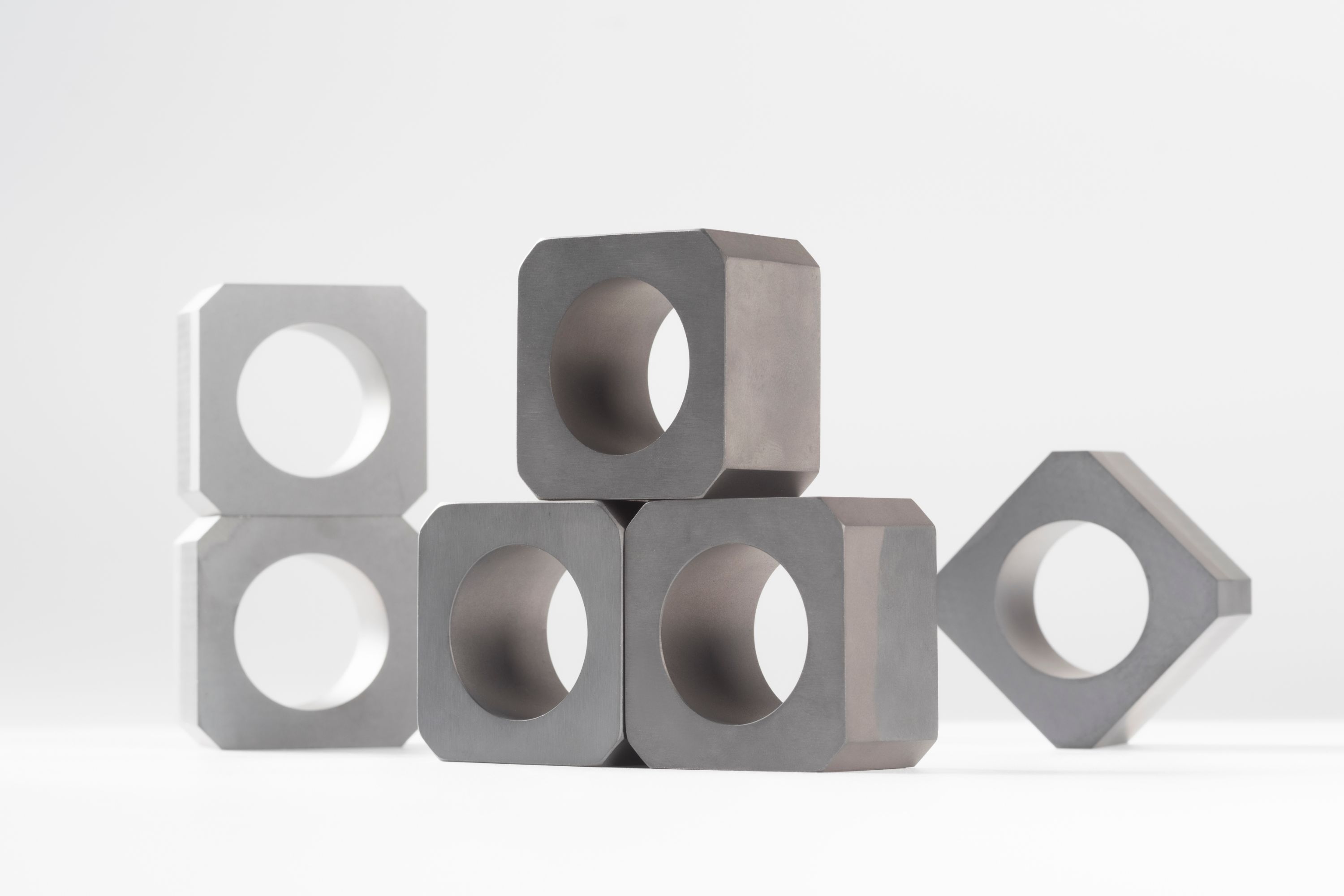
Dense ceramic parts handle compressive loads well but crack easily under sharp impacts or uneven pressure. The first packaging decision isn't about padding thickness—it's about immobilizing each piece so no two surfaces can strike each other. Custom-cut foam inserts, often made from closed-cell polyethylene or polyurethane, are shaped to the exact profile of the component. They hold the part snugly without touching fragile edges or thin walls. For heavier ceramics, a suspended cradle design works better: the part rests in a rigid frame with elastomeric supports at specific nodes, allowing slight vibration absorption while preventing lateral shift.
Outer box strength matters less than how force travels from the box to the part. Multi-layer construction solves this. The innermost layer is a soft, non-abrasive film—think low-density foam or microfiber—to guard against micro-scratches that can become fracture origins. The middle layer is a stiff but crushable material like corrugated fiberboard or honeycomb cardboard, cut into a grid that distributes a drop's energy across a wide area. The outer carton should be double-walled corrugated, sized so there's at least four centimeters of total cushioning on all six faces. Avoid loose fill peanuts or crumpled paper; they settle during transit and leave the ceramic resting directly against the box wall.
For very dense, high-value parts like silicon carbide or alumina substrates, active monitoring adds another layer of confidence. Shock indicator labels or tilt sensors placed inside the box record whether the package experienced a damaging event. This doesn't prevent damage, but it lets the receiver know immediately if a hidden crack is likely. Pair that with a simple moisture barrier bag and a desiccant pack, because dense ceramics can absorb humidity that later leads to thermal stress during use. Finally, train handlers with visual cues: a bright label showing the part's center of gravity and a "this side up" arrow do more than generic fragile warnings. The goal is to design packaging that assumes rough handling—and still delivers an intact part.
Custom Geometries Without the Usual Lead-Time Runaround
Getting a custom-shaped part usually means watching the calendar and chasing emails for weeks. The so-called quick turnarounds often stretch into months, especially when the geometry is anything but standard. That delay isn't just frustrating—it clogs your entire production schedule and forces you to build in buffers that eat away at margins. We've rebuilt the process from the ground up so that custom geometries don't come with a side of waiting. By keeping every step in-house, from initial CAD review to final inspection, we remove the handoffs that typically add days of dead time. What used to take six weeks can now be on your loading dock in as little as ten days, without a single phone call asking for an update.
The usual lead-time runaround comes from outsourcing and batch processing. A shop might queue up dozens of jobs before yours even gets touched, then send the part out for finishing or coating, adding another round of transit and scheduling. We handle custom geometries as a continuous flow, not a batch-and-hold project. Our machining cells are set up to switch from one part number to another in minutes, not hours. That means a one-off bracket with a compound angle gets the same priority as a repeat production order. You send the file, we run a design-for-manufacturing check the same day, and the tool paths are generated while the raw material is being staged. There's no mystery about whether your part is in the queue—because there's no queue.
What really kills lead times on custom geometry is the back-and-forth over manufacturability. A feature that looks fine in CAD might be impossible to machine or require a special fixture. Instead of discovering that after three weeks of waiting, our engineers flag potential issues within hours of receiving your file. We suggest practical tweaks that don't compromise your design intent but do shave days off the process. For example, relaxing a tight internal radius by a few thousandths can turn a five-axis nightmare into a standard three-axis job. That kind of proactive problem solving is what allows us to promise custom geometries without the usual lead-time runaround—and actually deliver on that promise, not just put it on a sales sheet.
Support That Continues After the Final Invoice Is Paid
Once the final invoice clears, the relationship shifts rather than ends. You get a direct channel to the same team that built the work, not a rotating door of call-center agents. If something wobbles in the first month, we fix it without issuing a new quote. If a process needs tweaking after real-world use, we schedule a working session instead of telling you to read the manual.
That continuity shows up in small, concrete ways. A check-in call thirty days after launch, a shared log of open questions, and a standing invitation to flag anything that feels off. For larger builds, we keep a lightweight retainer that covers monitoring, minor updates, and periodic health checks—so you're not reopening negotiations every time you need a quick adjustment.
Most importantly, you're never left wondering who to contact. The engineer who handled the final handoff stays your point person for the first quarter. If they leave, someone with full context steps in and reviews the project history before replying. It's the kind of support that makes the invoice feel less like a finish line and more like a starting gun.
FAQ
Buyers should look beyond nominal composition and request measured values for density, hardness, flexural strength, and fracture toughness. Reputable exporters provide batch-specific test data rather than generic datasheet figures.
Ask for ballistic test reports from independent laboratories, including V50 or defeat velocities against specified threats. The exporter should also disclose the exact ceramic tile dimensions, areal density, and backing configuration used during testing.
Fine and uniform grain size reduces microcracking and improves hardness and wear resistance. Buyers should request polished micrographs or average grain size measurements, not just a claimed sintering temperature.
Look for ISO 9001 certification plus process-specific controls such as in-process density checks, ultrasonic scanning for internal flaws, and traceability from raw powder lot to finished part.
Evaluate their precision machining equipment and metrology. Ask for examples of previously delivered geometries, achievable flatness, parallelism, and surface roughness values, and request a first-article inspection report.
Reliable exporters use rigid foam-lined crates, vacuum-sealed barrier bags with desiccant, and clearly labeled fragility warnings. They should also provide documented drop-test or vibration-test results for their packaging.
Yes. Be cautious of exporters who reuse identical microstructure images across different product grades, avoid answering questions about raw powder sources, or cannot provide traceable certificates for density and hardness values.
Request information on raw material inventory levels, alternative powder suppliers, production capacity utilization, and past performance during supply disruptions. A strong exporter will share a risk mitigation plan without hesitation.
Conclusion
When sourcing boron carbide ceramic components across international markets, buyers quickly learn that a dependable exporter operates more like a long-term partner than a one-time seller. A supplier worth keeping on file treats every shipment as a reference point for the next one—answering technical questions before the order, flagging lead-time risks early, and never swapping raw material grades without approval. Certifications only matter if they survive a customs desk, so look for documents that match the actual consignment, including composition reports, lot traceability, and origin papers that hold up under border inspection. Beyond paperwork, the real difference shows up in density. A polished data sheet can promise 2.5 g/cm³, but a consistent batch proves it. Buyers who measure density across multiple parts—not just the sample—find that repeatable sintering control beats impressive-looking averages every time, because armor plates, nozzles, and wear parts all fail the same way when porosity drifts.
Packaging is where many otherwise good suppliers fall short. Dense ceramic parts need more than bubble wrap; they demand rigid separation, moisture barriers, and custom foam or wooden cradles that prevent edge chipping during long ocean or air transits. A thoughtful exporter will also handle custom geometries without the usual lead-time runaround—offering CNC grinding or near-net pressing adjustments without pushing delivery dates out by months. And support should not end at the final invoice. The best partners follow up on installation tolerances, offer re-grinding advice, and stay reachable when a reorder needs urgent sizing changes. That ongoing responsiveness is what separates a genuine boron carbide exporter from a middleman with a website.
Contact Us
Contact Person: Junting Leo
Email: [email protected]
Tel/WhatsApp: +86 18615009766
Website: https://www.huayimaterial-china.com/