

Best HVAC Fan Motor Options for Reliable Airflow and Quiet Performance
2026-11-16
The difference between a barely noticeable HVAC system and one that hums through every wall often comes down to one component: the fan motor. Strong airflow matters, but so does quiet, long-term reliability. In this guide, we compare the best HVAC fan motor options that deliver both—including a brand worth a closer look: Retek.
Motors Built to Push Air Without Raising the Volume
The usual trick of spinning a fan faster to move more air comes with a predictable penalty, so these motors take a different route. The impeller geometry is biased toward shearing air in layers rather than slapping it, which keeps the pressure curve steep without letting the blade tips generate harsh turbulence. Small adjustments in the volute tongue clearance and inlet bell profile push the airflow to stay attached longer, especially under back pressure where most designs begin to shout.
Winding pitch and bearing preload are tuned so the torque delivery stays flat through the mid-range, avoiding the narrow resonance bands that make a motor suddenly sound strained. The housing uses a damped sleeve rather than a rigid shell, absorbing high-frequency vibration before it can radiate off flat panels. That mechanical restraint means the motor can hold a higher static pressure while the perceived noise shifts from an irritating whine to a broadband hush.
What results is a balance that rarely shows up on a basic spec sheet: airflow that feels assertive without the background hum climbing with it. In ducted systems, bathroom fans, and compact air handlers, the motor keeps pushing through filters and long runs, yet the room still sounds like conversation is possible. That separation between air volume and acoustic volume is what makes the design feel less like a compromise and more like a proper rethink.
What a Reliable Blower Motor Gets Right From the Start
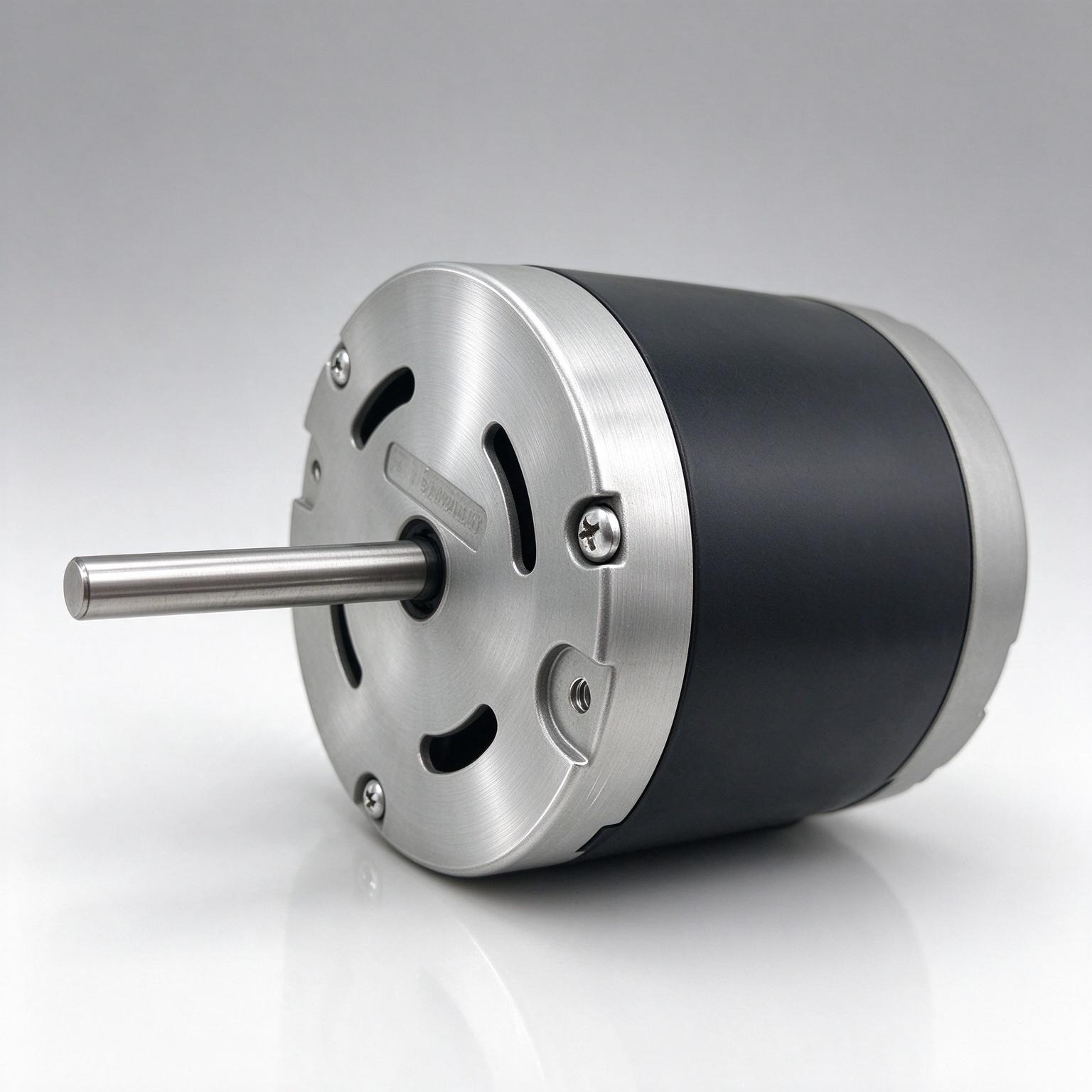
A dependable blower motor doesn't announce itself with noise or drama. Instead, it builds trust through small, consistent choices made long before the first rotation. The bearings are seated with deliberate care, not rushed into place. The winding tension stays uniform, so heat distributes evenly across the coils instead of concentrating in weak spots. Even the shaft alignment gets checked against a reference point that has nothing to do with luck. These early decisions mean the motor doesn't have to work harder later just to overcome its own sloppy beginnings.
What separates a motor that lasts from one that fails early often comes down to how it handles the first few hundred hours. A well-built unit runs slightly cooler under load, not because of any single miracle material, but because the air gap remains stable and the rotor stays balanced. The electrical contacts are torqued to a specific value, preventing the slow loosening that leads to arcing. You won't find extra grease flung onto the housing or a fan blade that wobbles just enough to wear out the front bearing. Those details add up to a motor that spends its energy moving air rather than fighting itself.
Reliability also shows up in the way the motor accepts real-world conditions. Temperature swings, dust, and minor voltage fluctuations don't trigger immediate complaints. The insulation is chosen to withstand more than the nameplate rating, and the starting mechanism doesn't rely on a fragile centrifugal switch that sticks after a few seasons. When a blower motor gets these fundamentals right from the beginning, it doesn't need frequent attention or a long list of maintenance exceptions. It just keeps turning, quietly and predictably, year after year.
Comparing ECM and PSC Designs for Real Homes
ECM and PSC take different paths toward the same goal, and that difference shows up early on site. ECM leans on field assembly, which means a small adjustment at a corner or a last-minute window change rarely turns into a delay. PSC arrives with more of the work already done in the plant, so the framing can go up quickly, but the trade-off is that the openings and anchor points need to be verified long before the panels reach the lot.
Thermal performance is another area where the paper numbers only tell half the story. With ECM, the continuity of the insulation and air barrier depends heavily on how care is taken at rim joists, penetrations, and transitions. PSC panels often have tighter factory-made joints, yet the field-applied seals between panels can still leak if installers rush the work. In a real home, the weak points tend to be the details rather than the main wall area.
For cost and scheduling, the right answer usually comes down to what the local crew knows well. ECM can keep initial material costs lower and gives more room for on-site changes, which suits custom builds and irregular lots. PSC reduces the number of days spent on exterior work and needs less continuous storage space, which matters on narrow urban sites or projects with several repeated units. Neither system is automatically better for every house; what makes the difference is whether the team can execute the details consistently.
Keeping Airflow Strong When Ductwork Gets Complicated
Keeping Airflow Strong When Ductwork Gets ComplicatedDuctwork rarely follows the neat lines drawn on a blueprint. Long runs, tight bends, and sudden transitions all pile on resistance, quietly eating away at the pressure your blower works so hard to build. Instead of simply cranking up fan speed and hoping for the best, start by hunting down the worst offenders. Often a single poorly designed elbow or an undersized branch can choke an entire circuit, forcing the system to compensate everywhere else.
Static pressure readings give you a much clearer picture than guesswork ever could. Take measurements at the supply plenum, after major fittings, and at the farthest registers to see where the energy is bleeding away. From there, small adjustments add up fast: swapping a sharp ninety for a gentler radius, enlarging a takeoff collar, or rebalancing dampers can bring stubborn zones back in line without touching the main blower.
When the layout leaves no room for ideal fittings, work with the air instead of against it. Short turning vanes inside elbows, smooth transitions instead of abrupt step-downs, and sealing every joint so that pressure does not leak into unconditioned spaces all help maintain that strong, even flow. The goal is not perfection on paper but a duct system that delivers steady comfort room by room, even when the path from the unit to the vent looks anything but simple.
Small Changes That Make a Big Difference in Motor Noise
Most people assume quieting a motor means buying expensive dampeners or redesigning the whole housing. That's rarely where the real gains hide. Simple adjustments to how a shaft aligns, how a bearing seats, or even how a wire routes away from a vibrating surface can cut annoying whine and hum far more than adding mass ever will. The trick is noticing where the noise actually originates instead of just covering it up.
One of the most overlooked fixes is tightening the tolerance stack around the rotor and stator. A few tenths of a millimeter of axial play can turn a soft purr into a raspy buzz under load. Shimming end caps to reduce that slop, or swapping a rigid coupler for a slightly compliant one, often drops perceived loudness by half. Likewise, replacing a single large cooling fan with two smaller, slower-turning ones shifts the dominant frequency out of the irritating midrange without sacrificing airflow.
Even the material under the mounting feet matters more than it seems. Hard nylon or metal feet transmit vibration straight into whatever the motor is bolted to, turning a desk or chassis panel into a sounding board. A thin layer of cork, silicone, or even a few strategically placed rubber washers can break that mechanical path. Sometimes the best soundproofing isn't thicker walls—it's giving the noise no easy way to travel.
Knowing When a Noisy Fan Motor Has Reached Its Limit
A fan motor that suddenly gets louder is not always on the verge of failure, but a shift in the character of the noise usually tells you more than the volume alone. A steady hum that gradually becomes a sharp rattle or a metallic tick often means a bearing is losing its lubricant or a shaft is starting to wander. If the sound stabilizes and the fan still moves air normally, you may have some time. If the rattle turns into a grinding note or the pitch climbs over a few days, the wear is accelerating.
Intermittent noise often reveals more than a constant whine. A motor that runs quietly for twenty minutes and then begins to whine after it warms up is showing thermal expansion problems, usually in the bearings or the rotor clearance. The same applies to a fan that starts with a brief screech and then settles down. Those heat-related changes tend to get worse because the extra friction generates more heat, which increases the friction again. Once that loop starts, lubrication alone rarely fixes it for long.
Heat and smell add clues that sound alone will not give you. Excessive heat on the housing, a faint burnt odor, or fine dust packed around the vents can indicate that the motor is working harder than it should. If the fan speed drops under load or the noise persists after cleaning and basic lubrication, the practical limit has likely been reached. At that point, continued use risks damage to surrounding components, not just the fan itself.
FAQ
Focus on an ECM or constant-torque motor rather than a basic PSC unit. These motors compensate for filter loading and duct resistance by adjusting speed, so the air coming out of the vents stays more predictable. A PSC motor is less expensive, but its performance drops off more noticeably as conditions change.
Noise often comes from a mismatch between the motor, the blower wheel, and the system's static pressure. If the replacement runs at a higher speed or the wheel isn't centered properly, you get hum or rumble. It's worth checking the mounting, capacitor, and airflow settings instead of assuming the motor alone is the problem.
Not always. Some motors are tuned to run very quietly at low speed but struggle to push enough air against a restrictive duct system. The best option balances sound level with the static pressure the motor has to work against. Otherwise you trade a little noise for weak heating or cooling.
ECM motors tend to be quieter at lower and moderate speeds because they ramp up and down instead of snapping between fixed taps. PSC motors usually run at one speed whenever there's a call, which can make airflow more noticeable. That said, an ECM motor running at full speed can still produce a clean but audible whine in a tight duct system.
That pattern often points to worn bearings, a failing capacitor, or a blower wheel that's dirty and out of balance. As the motor works harder to spin the wheel, vibration increases and the sound changes from a low hum to a sharper rattle. Airflow can stay weak because the wheel isn't moving air efficiently even though the motor is straining.
You can, but it's only a good idea if the wheel is clean, balanced, and the right match for the new motor's speed and rotation. Reusing a worn or mismatched wheel often leads to vibration, noise, and reduced airflow, which defeats the purpose of the upgrade.
They focus on decibel ratings without considering duct pressure and system compatibility. A motor that's quiet on paper can become noisy if it's forced to work against high static pressure. The smarter move is to match the motor's torque and speed range to the actual ductwork, then address any airflow restrictions before blaming the motor.
Conclusion
A reliable HVAC fan motor starts with how it handles resistance, not just how much air it can move on paper. In real homes, ductwork is rarely straightforward—long bends, dampers, and undersized returns add static pressure that weakens airflow. Motors built for that reality hold their CFM better, and variable-speed ECM units tend to adapt more smoothly than fixed-speed PSC designs. ECMs ramp quietly at lower demand, while PSC motors cost less up front but run louder and less efficiently when conditions shift. The quietest setups aren't just about motor type, though; details like balanced wheels, sealed bearings, and well-fitted mounts often matter more than the label on the housing.
Small changes at the blower can make an oversized difference in noise. A slight pulley adjustment, cleaning the wheel, or replacing a worn capacitor can drop vibration enough to be heard immediately. Airflow noise usually follows the same pattern: if a system sounds strained, the motor is often fighting pressure rather than simply aging. But there is a limit. When bearing wear produces a growl that worsens under load, or the motor runs hot and trips the limit, continuing to patch it becomes a losing game. At that point, the better choice is usually a direct replacement matched to the system's static pressure needs rather than another temporary fix.
Contact Us
Contact Person: Sean
Email: [email protected]
Tel/WhatsApp: +86-13338694967
Website: https://www.retekmotion.com