

Anti-Static Floor Supplier: How to Choose the Right ESD Flooring Partner
2026-11-16
Most procurement teams spend hours comparing anti-static floor prices, but few ask the question that actually matters: does this supplier understand ESD risk well enough to protect your equipment? The right partner doesn’t just sell panels—they help you design a static-safe environment. So how do you separate true ESD expertise from generic flooring sales? In this guide, we’ll walk through the key signs of a reliable partner, and you’ll see why Huahong keeps showing up in shortlists for labs, server rooms, and cleanrooms.
Question Their Experience With Cleanrooms and Labs, Not Just Warehouses
When vetting a fulfillment partner, many brands stop at warehouse square footage and pick/pack speed. That misses a huge chunk of risk if your product touches cleanroom or lab environments. You need to ask whether they’ve handled ISO-classified spaces, controlled contamination protocols, and equipment calibration—not just whether they can move pallets fast.
A team that only knows standard warehousing will underestimate things like particulate counts, gowning procedures, or traceability for sensitive materials. Ask for specific examples: Which cleanroom classes have they worked in? How do they validate environmental monitoring? What happened when a deviation occurred? Their answers reveal whether they truly understand controlled environments or are just renting space with a fancy air filter.
Don’t let a slick warehouse tour distract you. The real questions live in the details of lab logistics—temperature mapping, chain of custody, validation documentation, and staff training records. If they can’t speak fluently about those, your cleanroom-grade product is in the hands of a generalist.
Look for Specifics on Static Dissipative vs. Conductive Flooring
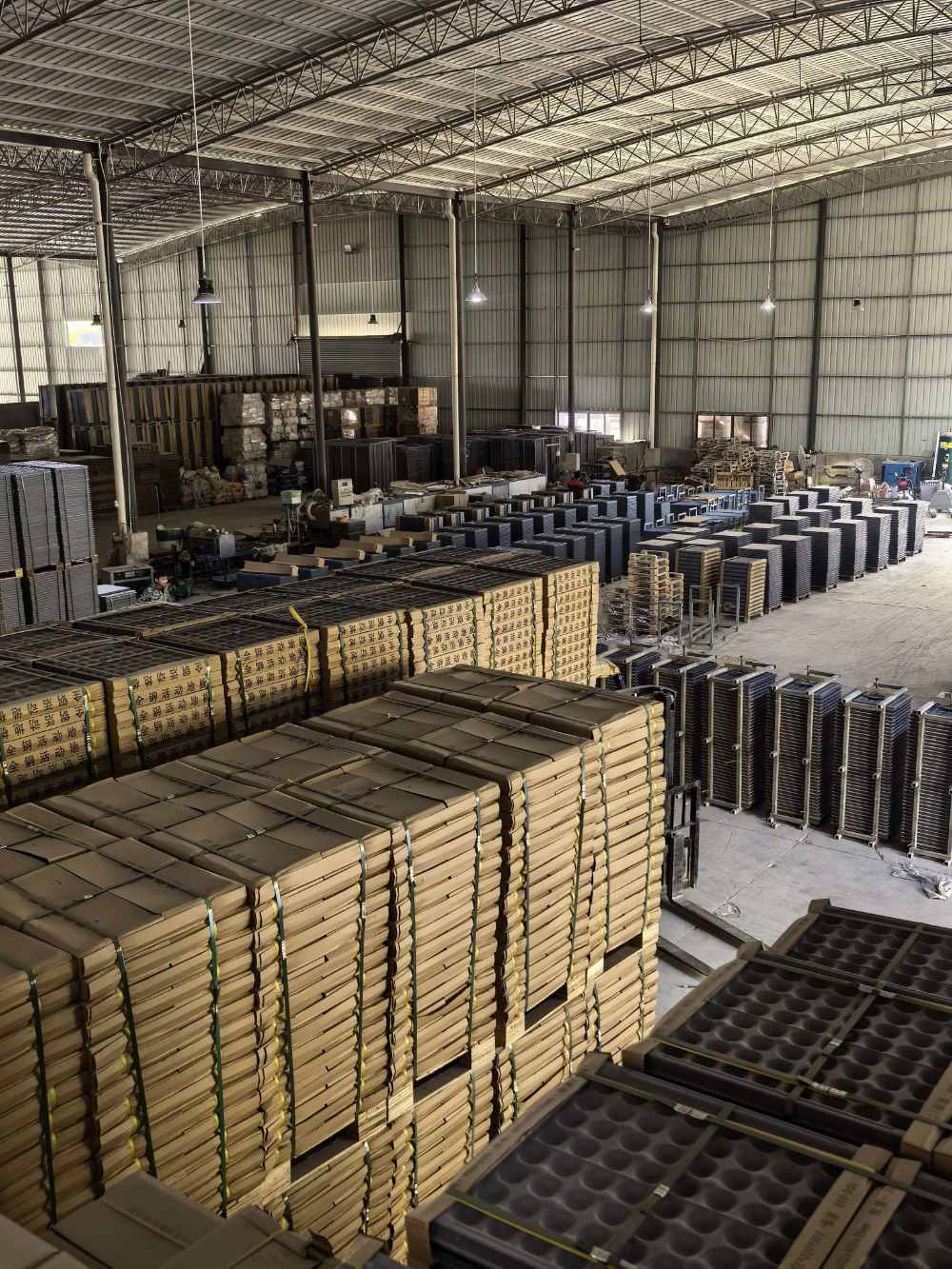
Static dissipative and conductive flooring are not interchangeable terms, even though both are designed to control electrostatic discharge. The core difference lies in how quickly they move a charge to ground. A static dissipative floor has a surface resistance typically between 1.0 x 10^6 and 1.0 x 10^9 ohms, which allows charge to bleed off gradually and safely. Conductive flooring, on the other hand, shows resistance below 1.0 x 10^6 ohms and provides a much faster path to ground.
That difference matters more than most people realize. In an electronics assembly area, a conductive floor can drain a charge so quickly that it may damage sensitive components or create an unexpected spark if there is a fault. Static dissipative flooring is often preferred in those environments because it balances speed with safety. Meanwhile, conductive flooring is commonly used in explosive handling areas or operating rooms where a rapid discharge is the priority.
When comparing products, ask for third-party test reports that list surface resistance, system resistance, and charge generation under the actual footwear and environmental conditions you plan to use. A manufacturer that only says "anti-static" without specifying the resistance range is not giving you enough to make a sound decision. Look for numbers tied to ANSI/ESD S20.20 or IEC 61340-5-1, and verify whether the floor maintains its properties after cleaning and wear, not just when it is new.
Ask About Copper Grounding Grids and How They Test Resistance
Copper grounding grids are buried networks of conductors, typically arranged in a lattice beneath substations, power plants, and industrial sites. Their job is simple but critical: give fault current and lightning a low-impedance path into the earth while keeping step and touch voltages within safe limits. Copper is favored because it handles high current surges without breaking down, resists corrosion in most soils, and remains workable for field connections even after years underground.
Testing resistance of these grids usually starts with a fall-of-potential method. A test current is injected into the grid, a probe is driven at a known distance, and voltage drop is measured to calculate resistance. The challenge with large grids is distance; the probe often needs to be placed far enough away to reach flat ground potential. Some crews use the 62% rule as a quick check, but for critical sites a full profile is plotted to account for soil variation and grid geometry.
Modern alternatives include clamp-on ground testers that work without disconnecting the grid, though their readings are best for relative comparisons rather than absolute values. Soil resistivity surveys beforehand help model expected performance, and periodic retesting catches broken conductors or corroded joints. A low resistance number alone does not guarantee safety; the actual touch and step potentials under fault conditions must be simulated using software and verified against design limits.
Check If They Offer On-Site Testing After Installation
A clean handoff doesn't end with the last bolt tightened. Ask early whether the crew runs a full operational test before they pack up. Some teams treat the final walkthrough as optional, while others won't leave until they've cycled the system, checked for leaks or fault codes, and confirmed that every control responds the way it should. If the answer is vague, that's usually your cue to push for specifics.
On-site testing matters because small installation mistakes rarely show up right away. A loose connection, a misaligned sensor, or an unnoticed kink in a line can quietly undermine performance for weeks. A contractor who tests in front of you is also more likely to catch those issues before they become callbacks. Ask what the test includes, how long it takes, and whether you'll get a short written summary of the readings and results before they leave.
Read Their Warranty for Exclusions That Matter in Your Space
Too many people skim the headline warranty duration and miss the fine print that actually decides whether a product survives in a humid bathroom, a sun-blasted patio, or a kitchen prone to grease splatter. The real story lives in the exclusions: a ten-year frame warranty means nothing if the coating fails after eighteen months and corrosion isn't covered. Pull up the actual PDF, not the marketing bullet points, and scan for phrases like "not covered under conditions of high moisture," "indoor use only despite outdoor styling," or "damage from common household cleaners voids this warranty." Those lines tell you what the manufacturer genuinely expects the product to endure.
Then compare those exclusions against your specific environment. A gorgeous wooden countertop with a five-year finish warranty might be perfect for a dry hallway console but a terrible idea above a dishwasher vent that pumps steam daily. Likewise, a metal light fixture rated for "dry locations only" will start pitting and flaking within a season if you hang it on a covered porch that still catches wind-driven rain. Write down the three most aggressive conditions in your space—direct afternoon sun, salt air, condensation cycles, abrasive cleaning routines—and cross-check each against the warranty's "what's not covered" section. That mismatch is where most product disappointments begin.
If the warranty language feels vague or uses terms like "normal wear and tear" without defining them, email the manufacturer and ask for a written clarification before you buy. Legitimate companies answer quickly and specifically; ones that dodge or send canned replies are signaling how they'll treat a future claim. Also note whether the warranty covers labor, shipping, or only the replacement part cost—a "lifetime" guarantee that makes you pay $85 freight each time a bracket snaps is barely worth the paper it's printed on. Save the full warranty document with your receipt, and take a photo of the product in place during installation. When the inevitable claim arises, you'll have the evidence and the exact exclusion language needed to hold them accountable instead of getting lost in a support ticket loop.
Talk to a Past Client About What Went Wrong During Installation
Reaching out to a past client after an installation hiccup isn't about reopening wounds—it's about understanding the exact moment things went sideways. Start with a simple, honest question: "What surprised you most during the process?" Avoid leading them toward a blame game. Instead, let them walk you through their side of the timeline. You'll often hear details that never made it into the project notes, like a lag in communication right before a critical step or a material that looked fine on paper but fell short in practice.
Listen for patterns, not just single incidents. One client may mention the crew arrived late, another might point to unclear change orders. Those are different problems with different fixes. But if three people independently mention the same day or the same sub-contractor, you've found a thread worth pulling. Ask them to be blunt: "If you had to redo this, what's the one thing you'd change on our end?" Their answer often reveals a gap between your internal process and what clients actually experience.
Close the conversation by turning insight into action. Summarize what you heard and tell them what you'll adjust—maybe a clearer pre-installation checklist, a direct line to the project lead, or better dry-run testing before the final day. Thank them for their candor, and mean it. That kind of feedback is cheaper than a lawsuit and more valuable than a five-star review you didn't earn yet.
FAQ
Look beyond the glossy spec sheet. Ask about the total system resistance from the floor surface to the ground point, the copper foil grid layout and spacing underneath the panels, and the type of conductive adhesive or grounding mechanism used. A credible partner will walk you through their installation methodology, including how they deal with subfloor preparation, moisture barriers, and connection points to the building's earth ground. If they can't explain these clearly or rely on vague claims, that's a red flag.
Request a pre-installation sample and have an independent third party test it according to IEC 61340-4-1 or ANSI/ESD S7.1. The key values are point-to-point resistance and resistance-to-ground, which should typically fall between 1 x 10^6 and 1 x 10^9 ohms for dissipative flooring. During and after installation, insist on a documented test report from every 100 square meters or each room. A trustworthy partner won't hesitate to provide these readings or allow you to bring your own tester.
One giveaway is when they don't ask about your specific environment - humidity levels, type of equipment, foot traffic patterns, or whether you use carts or heavy machinery. Another is if they offer only one generic product without discussing different material options like vinyl, rubber, or epoxy. Watch out for suppliers who skip the subfloor inspection or promise fast installation without a site survey. A seasoned partner will do a detailed walkthrough, identify potential grounding issues, and recommend a solution tailored to your work areas rather than pushing a one-size-fits-all floor.
First, they should diagnose why the old floor failed - maybe it was worn out, the adhesive lost conductivity, or the grounding connections corroded. A good partner will measure the current resistance levels and inspect the copper strips before suggesting replacement. They should also discuss whether only certain zones need new flooring or if the whole system needs re-grounding. Avoid suppliers who immediately quote a full tear-out without investigating. Look for one who provides a detailed failure analysis and then offers options to extend the life of the remaining floor where possible.
Ask for case studies or references from similar controlled environments. The right partner should understand the interplay between static dissipative properties and particle generation, and recommend materials like conductive vinyl tiles with low outgassing or seamless epoxy coatings. They must be familiar with cleanroom classifications (ISO 14644) and know how to install floors without creating contamination. In data centers, they need to address raised floor systems, airflow management, and the grounding of equipment racks. If they can't speak to these specifics, keep looking.
A solid supplier will stand behind their product for at least 5 to 10 years, but more importantly, they'll offer a performance warranty that covers static dissipative properties, not just material defects. After installation, they should provide a maintenance plan including recommended cleaning products and periodic resistance testing schedules. If issues arise, they should respond quickly with troubleshooting rather than disappearing. Ask upfront how they handle warranty claims, whether they have local service technicians, and if they provide training for your maintenance staff. A partner who offers ongoing support is worth the investment.
Yes, but it requires careful material selection. Conductive pigments and special coatings can achieve various colors without sacrificing conductivity. For safety markings, such as aisle lines or hazard zones, the supplier should use ESD-safe paints or pre-cut conductive vinyl in contrasting colors that maintain the same resistance range. However, you need to verify that any customization doesn't create insulating patches. A knowledgeable partner will test the final custom design to ensure uniform static dissipation across the entire surface, including the marked areas.
You should get a complete handover package: as-built drawings showing the grounding points and copper grid layout, a detailed test report with resistance measurements for each area (with date, tester serial number, and environmental conditions), material certificates of conformity, installation warranty, and a recommended maintenance schedule. If the supplier also provides training on how to interpret the test results and when to re-test, that's a bonus. This documentation is critical for internal audits and insurance purposes, and a reputable partner will deliver it without you having to chase them.
Conclusion
Selecting an anti-static floor supplier goes beyond checking if they sell tiles. You need someone who has actually worked in cleanrooms, labs, or electronics manufacturing environments, not just warehouses. Ask how they differentiate between static dissipative and conductive flooring—what surface resistance ranges they target and why. Pay attention to whether they mention copper grounding grids, how grids are laid out, and how they verify resistance before turnover. A supplier who glosses over these details is not ready for your controlled space.
After installation, the real test is what they do next. A reliable partner offers on-site resistance testing and gives you a written report, not just a verbal okay. Go through their warranty with a fine-tooth comb; exclusions for chemical spills, heavy rolling loads, or humidity swings can leave you exposed. Finally, ask to speak with a past client about what went wrong during their installation—every project has hiccups, and how the supplier handled them tells you more than a polished case study. Choose a partner who is transparent about failures and fixes.
Contact Us
Contact Person: Hai-Bo Xiao
Email: [email protected]
Tel/WhatsApp: 8618898711810
Website: https://www.huahongfloor.com